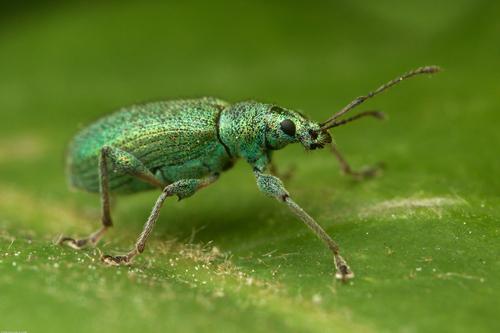
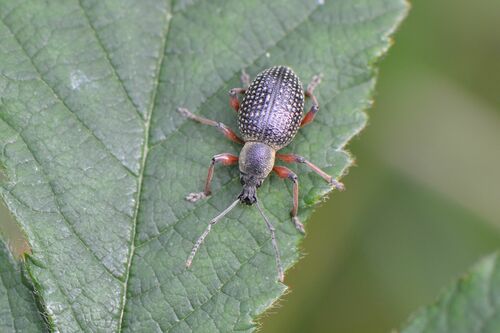
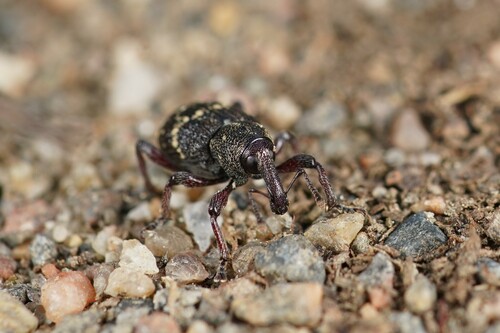
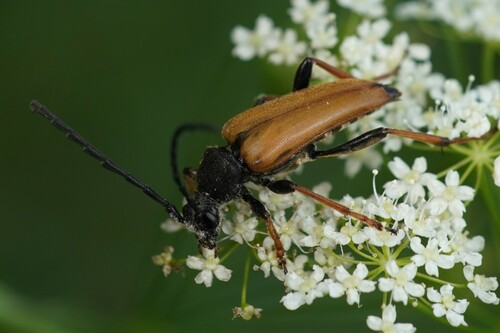
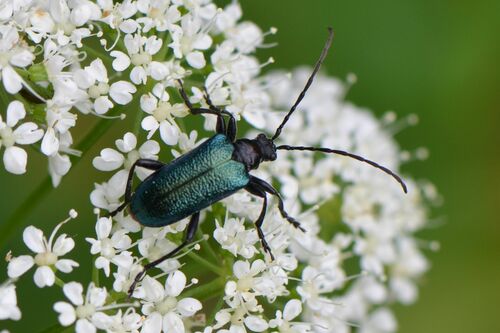
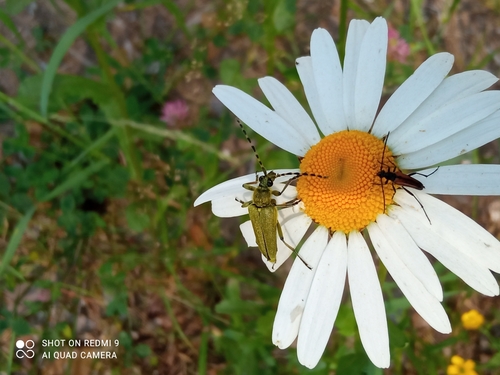
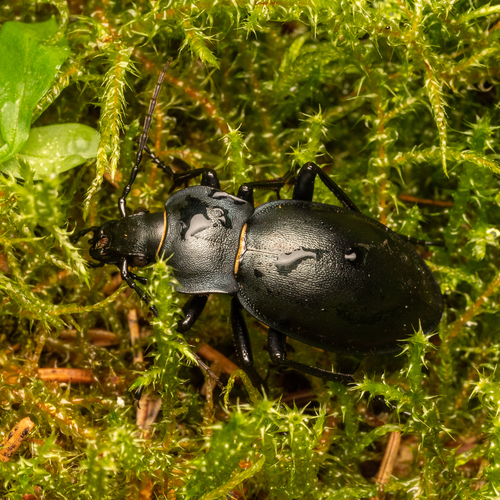
Phyllobius glaucus

Phyllobius glaucus

Phyllobius glaucus

Daily sighting probability ~10% · With luck
at Tatra National Park

In 3 days ~30% in a week ~60%

9 Verified sightings at Tatra National Park From 2019 to 2026
24 In all 3 parks
June Best month
☀️ Diurnal When it's spotted

About the Phyllobius glaucus

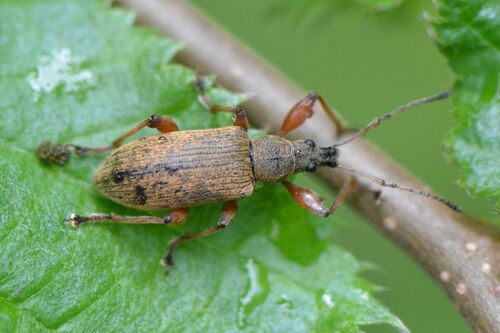
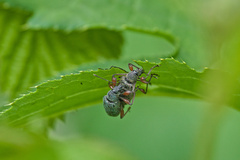
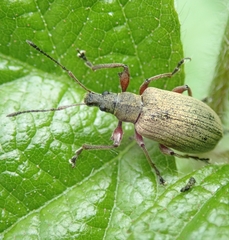
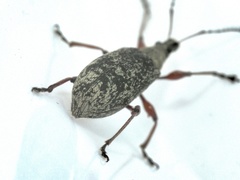
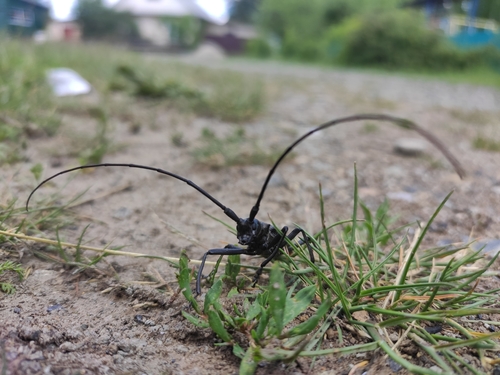
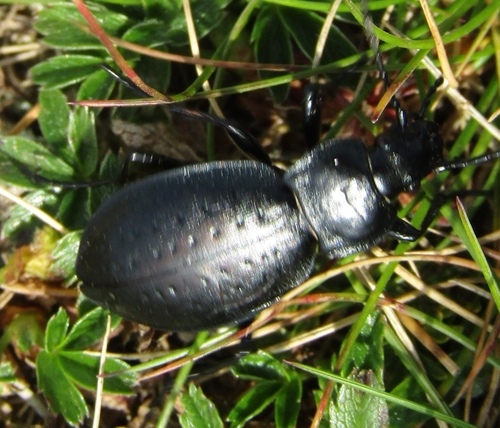
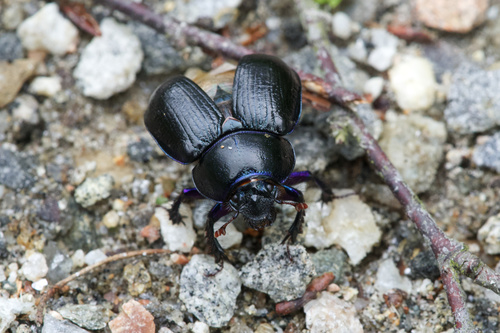
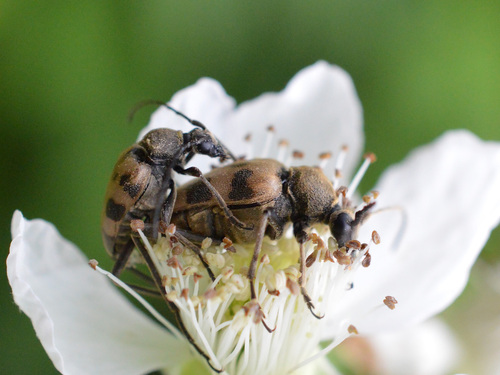
Phyllobius glaucus is a species of weevil found across Europe, especially in carrs. It is a pest of a variety of fruit trees, but has little economic effect. It was first described by Giovanni Antonio Scopoli in 1763. Adults grow to 8–12 millimetres (0.3–0.5 in) long. The body is black, but is covered with elongate, hair-like scales that give the animal a very variable, greenish-brown appearance. The legs are reddish brown.

Phyllobius glaucus is common and widespread in Europe. A single specimen of P. glaucus (under the name P. calcaratus) has been recorded from Canada, but this is thought to be an error. Phyllobius glaucus is associated with a wide range of trees and shrubs, and is a minor pest of fruit trees, including apples, pears, cherries and plums. The insects chew small holes in the leaves and petals of the trees. It is a typical component of the fauna of alder carr in northwestern Europe.

Phyllobius glaucus was first described by Giovanni Antonio Scopoli in his 1763 work Entomologia Carniolica, under the name Curculio glaucus. A second species was later named Curculio glaucus, but has... Wikipedia →

Global Distribution

Parks Where Found

# Park Country Daily sighting probability
1 Tatra National Park 🇸🇰 Slovakia
~10%
2 Bavarian Forest National Park 🇩🇪 Germany
~10%
3 Wadden Sea National Park 🇩🇪 Germany
<5%

Cities Where Found

# City Country Daily sighting probability
1 Kyiv 🇺🇦 Ukraine
<5%
2 Copenhagen 🇩🇰 Denmark
<5%
3 Moscow 🇷🇺 Russia
<5%

Before you go

What are the chances of seeing a Phyllobius glaucus in Tatra National Park?

With luck

About 10% of wildlife watchers report a Phyllobius glaucus sighting in Tatra National Park on a given day, based on 9 verified sightings from GBIF citizen-science data from 2019 to 2026. It is the 85th most-seen of the 142 insects we can rate there. Over three days the chance rises to about 30%, and over a week to about 60%, if each day is a fresh chance.

When is the best time to see a Phyllobius glaucus in Tatra National Park?

June

In that month about 30% of wildlife watchers report a Phyllobius glaucus in Tatra National Park on a given day, against under 5% in August to May, the lowest months.

What time of day is best to see a Phyllobius glaucus?

Between 3 and 6 pm

Across all the parks we cover, that three-hour window holds the most Phyllobius glaucus sightings with a recorded time, and about 9 in 10 of them come between 6 am and 6 pm: it is a daytime animal.

Is Tatra National Park the best place to see a Phyllobius glaucus?

Yes

Of the 3 parks where we can rate Phyllobius glaucus sightings, Tatra National Park has the highest daily chance: about 10%. Next come Bavarian Forest National Park (Germany, about 10%) and Wadden Sea National Park (Germany, under 5%).

Where does the Phyllobius glaucus sighting chance come from?

GBIF citizen-science records

It is estimated from how often the Phyllobius glaucus is recorded against all the insects logged in Tatra National Park (9 verified sightings from 2019 to 2026), calibrated against known sighting rates. Figures are rounded to the nearest 10% because citizen-science data supports honest approximations, not decimals, and months with records from fewer than five people show "—". How it works.

← Back to Tatra National Park