Caspian Plover

Caspian Plover

Charadrius asiaticus

Silhouette: Ferran Sayol · PhyloPic

LCLeast ConcernNTVUENCR
Daily sighting probability <5% · Rare
at Tsavo East National Park

In 3 days <5% in a week ~10%

9 Verified sightings at Tsavo East National Park From 2019 to 2026
274 In all 10 parks
January Best month
☀️ Diurnal When it's spotted

About the Caspian Plover

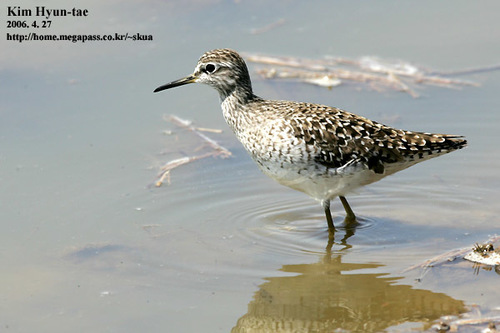
The Caspian plover (Anarhynchus asiaticus) is a wader in the plover family of birds. The specific asiaticus is Latin and means "Asian", although in binomials it usually means the type locality was India. This plover breeds in western and central Asia and migrates southward to eastern and southern Africa to escape the northern winter.

This plover is slightly larger than ringed plover, and it recalls greater sandplover and lesser sandplover in appearance. It is slimmer and longer-legged than the sandplovers, and has a much stronger white supercilium, and a long thin bill. It also lacks white tail sides and a weak wing bar.

Summer males have grey-brown backs and a white face and belly. The breast is chestnut, bordered black below. Other plumages have a grey-brown breast band, although the summer female may show a hint of chestnut. The call is a sharp chip.

The Caspian plover breeds in western Asia in the area of the Caspian Sea. Its range includes southern Russia, Turkey, Iran, Turkmenistan, Kazakhstan, Uzbekistan and Afghanistan. Its habitat is steppes, desert verges, saltpans and saline soils amongst sparse shrubby vegetation up to an... Wikipedia →

Sounds

Call0:12

Kazakhstan · 2025

© Frank Lambert · XC1029481 · CC BY-NC-ND 4.0

Song0:19

Cyprus · 2022

© Hans Matheve · XC962229 · CC BY-NC-ND 4.0

Call0:15

Kenya · 2018

© Stephanie Dolrenry · XC399779 · CC BY-NC-SA 4.0

Global Distribution

Parks Where Found

# Park Country Daily sighting probability
1 Masai Mara National Reserve 🇰🇪 Kenya
<5%
2 Etosha National Park 🇳🇦 Namibia
<5%
3 Murchison Falls National Park 🇺🇬 Uganda
<5%
4 Amboseli National Park 🇰🇪 Kenya
<5%
5 Tsavo East National Park 🇰🇪 Kenya
<5%
6 Queen Elizabeth National Park 🇺🇬 Uganda
<5%
7 Moremi Game Reserve 🇧🇼 Botswana
<5%
8 Serengeti National Park 🇹🇿 Tanzania
<5%
9 iSimangaliso Wetland Park 🇿🇦 South Africa
<5%
10 Kruger National Park 🇿🇦 South Africa
<5%

Before you go

What are the chances of seeing a Caspian Plover in Tsavo East National Park?

Rare

Under 5% of wildlife watchers report a Caspian Plover sighting in Tsavo East National Park on a given day, based on 9 verified sightings from GBIF citizen-science data from 2019 to 2026. It is the 289th most-seen of the 345 birds we can rate there. Over three days the chance rises to under 5%, and over a week to about 10%, if each day is a fresh chance.

When is the best time to see a Caspian Plover in Tsavo East National Park?

January

In that month about 10% of wildlife watchers report a Caspian Plover in Tsavo East National Park on a given day, against under 5% in February to December, the lowest months.

What time of day is best to see a Caspian Plover?

Between 9 am and noon

Across all the parks we cover, that three-hour window holds the most Caspian Plover sightings with a recorded time, and about 9 in 10 of them come between 6 am and 6 pm: it is a daytime animal.

Is Tsavo East National Park the best place to see a Caspian Plover?

Among the best

Of the 10 parks where we can rate Caspian Plover sightings, Tsavo East National Park ranks 5th at under 5%, level with the leaders once rounded. The best odds are in Masai Mara National Reserve (Kenya, under 5%), Etosha National Park (Namibia, under 5%) and Murchison Falls National Park (Uganda, under 5%).

Where does the Caspian Plover sighting chance come from?

GBIF citizen-science records

It is estimated from how often the Caspian Plover is recorded against all the birds logged in Tsavo East National Park (9 verified sightings from 2019 to 2026), calibrated against known sighting rates. Figures are rounded to the nearest 10% because citizen-science data supports honest approximations, not decimals, and months with records from fewer than five people show "—". How it works.

← Back to Tsavo East National Park