Birch Mocha

Birch Mocha

Cyclophora albipunctata

Daily sighting probability <5% · Rare
at Wadden Sea National Park

In 3 days ~10% in a week ~30%

10 Verified sightings at Wadden Sea National Park From 2019 to 2026
28 In all 3 parks
July Best month
☀️🌙 Day & Night When it's spotted

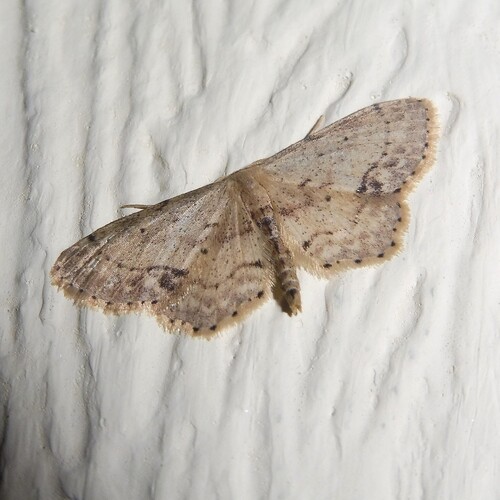
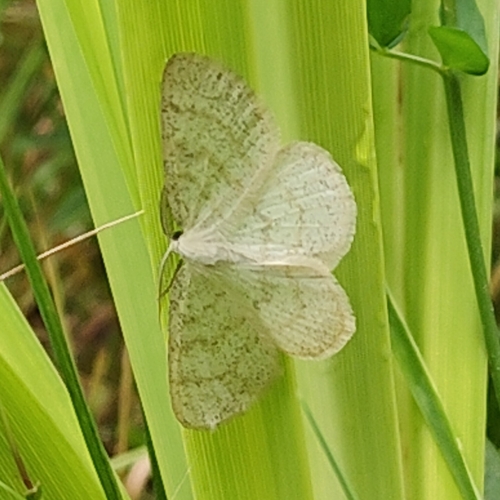
About the Birch Mocha

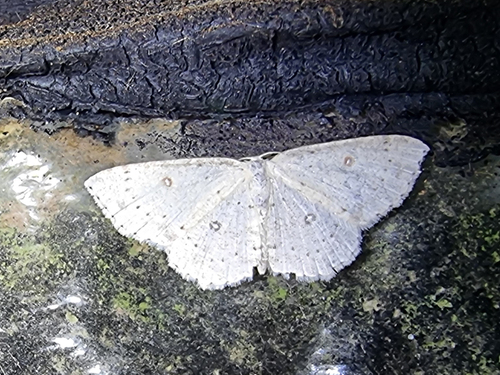
Cyclophora albipunctata, the birch mocha, is a moth of the family Geometridae. The species was first described by Johann Siegfried Hufnagel in 1767. It is found in the Palearctic. The southern boundary runs westward along the French Atlantic coast and to the British Isles and north of the Alps. In the east, the species ranges to the Pacific Ocean (Russian Far East). South of the northern Alps line, it is found at some high elevation areas and mountains. In the Pyrenees, the Massif Central, the southern Alps, the northern Dinaric Alps, in the western and northern Carpathians, in northern Turkey and the Caucasus. In the north, the range extends up to the Arctic Circle. In the Far East the nominate subspecies is replaced by Cyclophora albipunctata griseolata Staudinger, 1897.

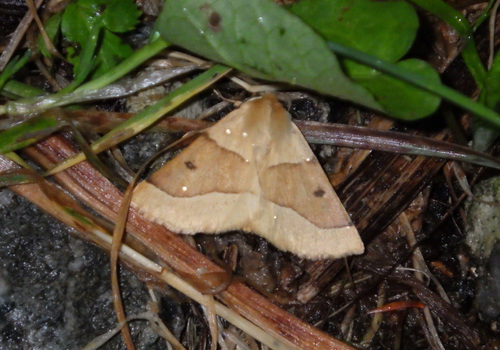
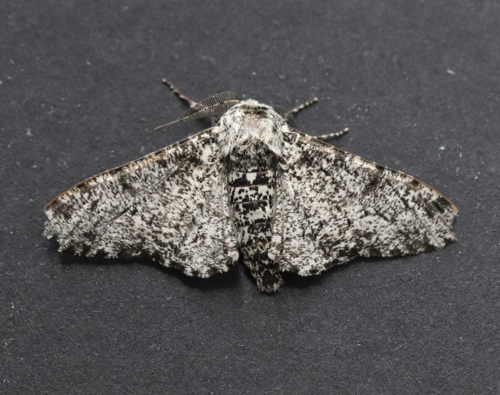
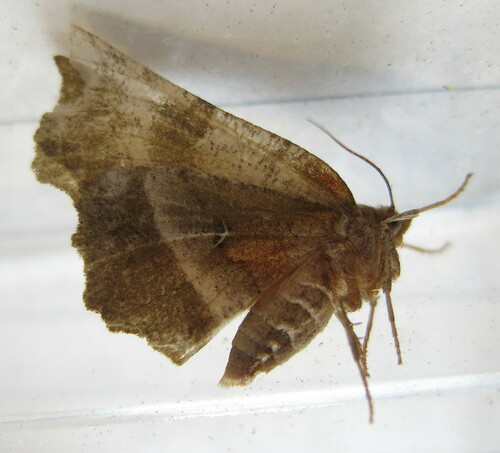
The wingspan is 20–25 mm. The apex of the forewing is slightly pointed. The ground colour is usually white, or whitish grey to light brown. Some specimens are over dusted with reddish. The pattern is very variable. Interior and exterior crosslines are almost always in a series of points or may be almost extinguished. Slight points are usually found on the costa: the costa can be over dusted dark in the basal half. A median band can be quite clearly present but also virtually absent. Margin stains are almost always developed, significant and mostly flowing into each other, slightly darker in the margin field. The discal spots are developed as a dark, white centred rings. These can be also slightly elliptical, or be reduced to simple, slightly reddish stains. The discal spots of the forewings are often bordered with brown red, but if present, the discal spots of the hindwings are, however, mostly black.

The larvae feed on Betula species, including B. verrucosa, B. pubescens, B. nana and B. pendula. Wikipedia →

Global Distribution

Parks Where Found

# Park Country Daily sighting probability
1 Cairngorms National Park 🇬🇧 United Kingdom
~10%
2 Bavarian Forest National Park 🇩🇪 Germany
~10%
3 Wadden Sea National Park 🇩🇪 Germany
<5%

Cities Where Found

# City Country Daily sighting probability
1 Helsinki 🇫🇮 Finland
<5%
2 Moscow 🇷🇺 Russia
<5%

Before you go

What are the chances of seeing a Birch Mocha in Wadden Sea National Park?

Rare

Under 5% of wildlife watchers report a Birch Mocha sighting in Wadden Sea National Park on a given day, based on 10 verified sightings from GBIF citizen-science data from 2019 to 2026. It is the 486th most-seen of the 818 insects we can rate there. Over three days the chance rises to about 10%, and over a week to about 30%, if each day is a fresh chance.

When is the best time to see a Birch Mocha in Wadden Sea National Park?

July and August

In those months about 10% of wildlife watchers report a Birch Mocha in Wadden Sea National Park on a given day, against under 5% in September to June, the lowest months.

What time of day is best to see a Birch Mocha?

Between 11 pm and 2 am

Across all the parks we cover, that three-hour window holds the most Birch Mocha sightings with a recorded time, and about half of them come between 6 pm and 6 am: it is seen both by day and at night.

Is Wadden Sea National Park the best place to see a Birch Mocha?

3rd of 3

Of the 3 parks where we can rate Birch Mocha sightings, Wadden Sea National Park ranks 3rd at under 5%. The best odds are in Cairngorms National Park (United Kingdom, about 10%) and Bavarian Forest National Park (Germany, about 10%).

Which relatives of the Birch Mocha live in Wadden Sea National Park?

Same family: Geometridae

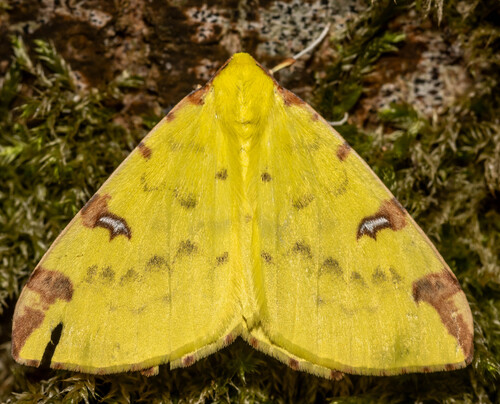
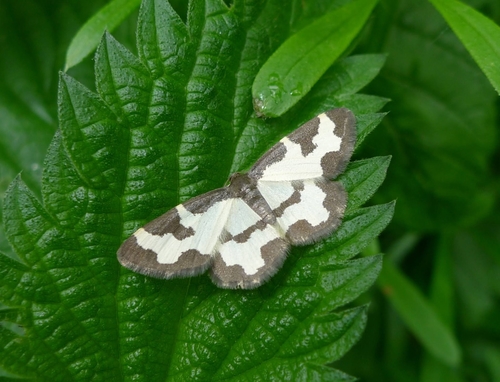
The closest relatives of the Birch Mocha that you can see in Wadden Sea National Park (family Geometridae, Geometer Moths) are Riband Wave (about 10%), Yellow Shell Moth (about 10%) and Small Engrailed (about 10%), with each one's daily chance of a sighting.

Where does the Birch Mocha sighting chance come from?

GBIF citizen-science records

It is estimated from how often the Birch Mocha is recorded against all the insects logged in Wadden Sea National Park (10 verified sightings from 2019 to 2026), calibrated against known sighting rates. Figures are rounded to the nearest 10% because citizen-science data supports honest approximations, not decimals, and months with records from fewer than five people show "—". How it works.

← Back to Wadden Sea National Park