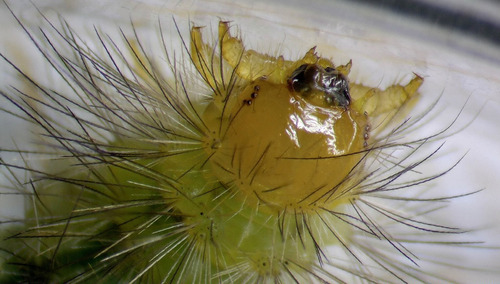
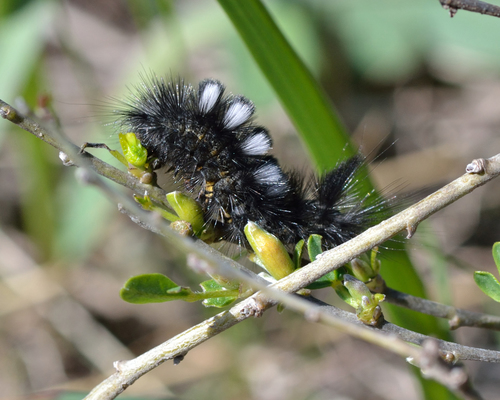
Dark Tussock

Dark Tussock

Dicallomera fascelina

Daily sighting probability <5% · Rare
at Wadden Sea National Park

In 3 days ~10% in a week ~20%

7 Verified sightings at Wadden Sea National Park From 2019 to 2026
35 In all 3 parks
June Best month
☀️ Diurnal When it's spotted

About the Dark Tussock

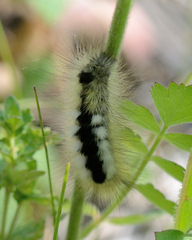
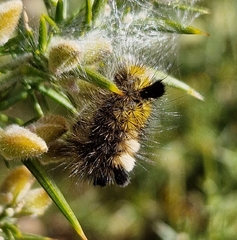
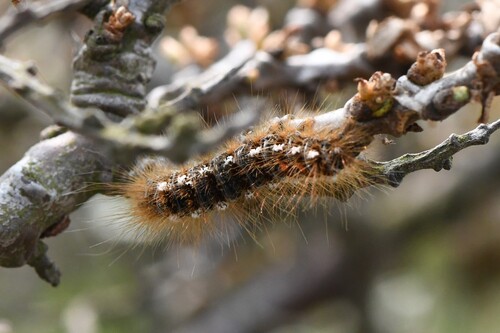
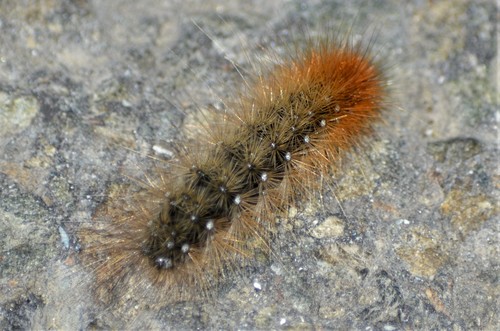
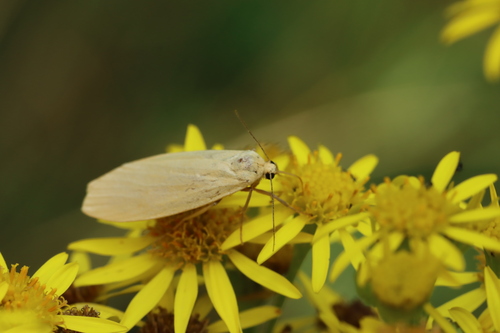
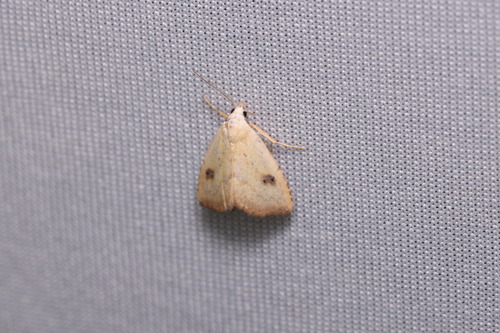
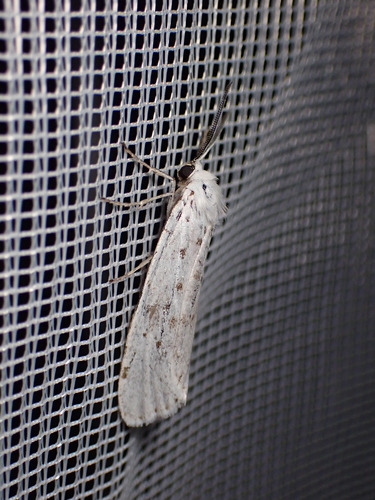
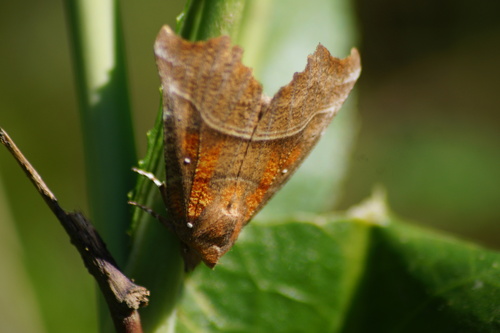
Dicallomera fascelina, the dark tussock, is a moth in the family Erebidae. The species was first described by Carl Linnaeus in his 1758 10th edition of Systema Naturae. It is found in most of Europe, through the Palearctic to Central Asia to Korea.

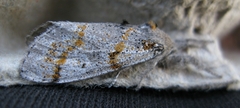
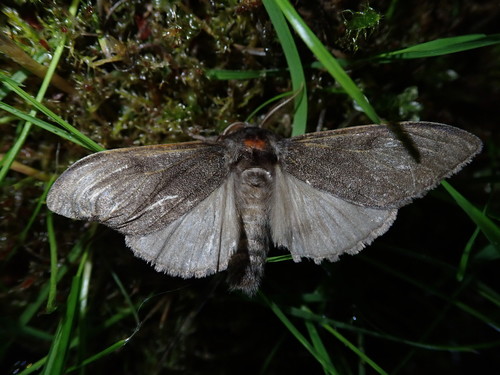
The wingspan is 35–45 mm. "Forewing ash-grey, lighter at the costal margin, with black and yellow irrorations, the median area bounded on the inner side by a regularly curved dark transverse line and on the outer side by a similar one twice or three times broken; both lines being most distinct at the costal margin. Hindwing grey or whitish. ab. proletaria Strand does not attain more than 29 mm. in the male; it is also distinguished by the ground colour of both wings being olive-grey, with the two transverse lines rather indistinct and not reaching the hindmargin, while the discocellular spot is more conspicuous than in true fascelina. - medicagitlis Hbn. is darker in the female. Forewing black-grey, the light costal area only indicated at the most, but the sharply defined discocellular spot situated in a white patch from whichextend long acute prolongations directed marginad; the outer transverse... Wikipedia →
Global Distribution

Parks Where Found

# Park Country Daily sighting probability
1 Cairngorms National Park 🇬🇧 United Kingdom
~10%
2 Ecrins National Park 🇫🇷 France
~10%
3 Wadden Sea National Park 🇩🇪 Germany
<5%

Before you go

What are the chances of seeing a Dark Tussock in Wadden Sea National Park?

Rare

Under 5% of wildlife watchers report a Dark Tussock sighting in Wadden Sea National Park on a given day, based on 7 verified sightings from GBIF citizen-science data from 2019 to 2026. It is the 536th most-seen of the 818 insects we can rate there. Over three days the chance rises to about 10%, and over a week to about 20%, if each day is a fresh chance.

When is the best time to see a Dark Tussock in Wadden Sea National Park?

June

In that month about 10% of wildlife watchers report a Dark Tussock in Wadden Sea National Park on a given day, against under 5% in July to May, the lowest months.

What time of day is best to see a Dark Tussock?

Between 11 am and 2 pm

Across all the parks we cover, that three-hour window holds the most Dark Tussock sightings with a recorded time, and about 8 in 10 of them come between 6 am and 6 pm: it is a daytime animal.

Is Wadden Sea National Park the best place to see a Dark Tussock?

3rd of 3

Of the 3 parks where we can rate Dark Tussock sightings, Wadden Sea National Park ranks 3rd at under 5%. The best odds are in Cairngorms National Park (United Kingdom, about 10%) and Ecrins National Park (France, about 10%).

Where does the Dark Tussock sighting chance come from?

GBIF citizen-science records

It is estimated from how often the Dark Tussock is recorded against all the insects logged in Wadden Sea National Park (7 verified sightings from 2019 to 2026), calibrated against known sighting rates. Figures are rounded to the nearest 10% because citizen-science data supports honest approximations, not decimals, and months with records from fewer than five people show "—". How it works.

← Back to Wadden Sea National Park