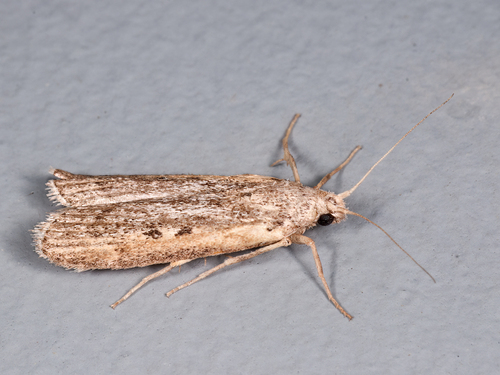
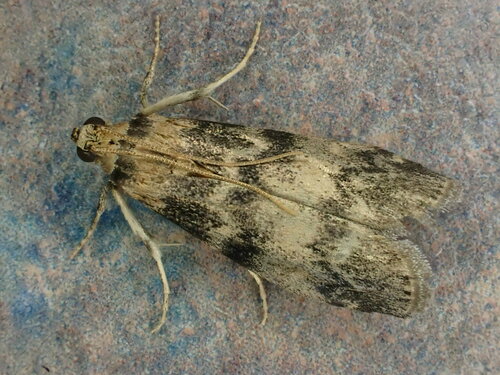
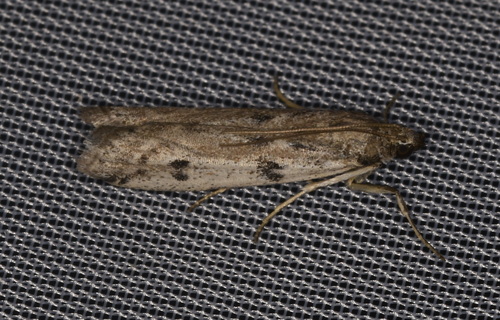
Double-Striped Tabby

Double-Striped Tabby

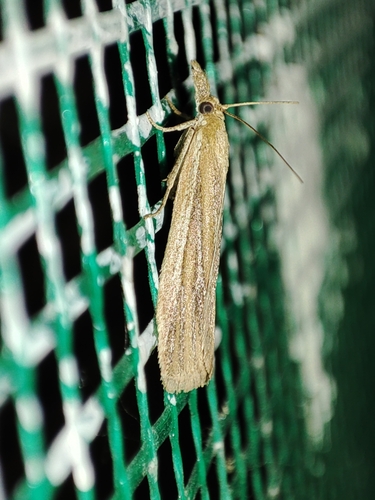
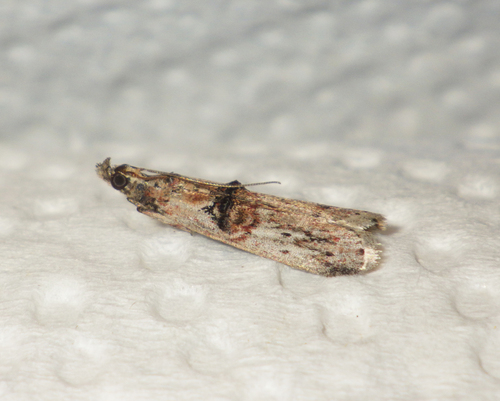
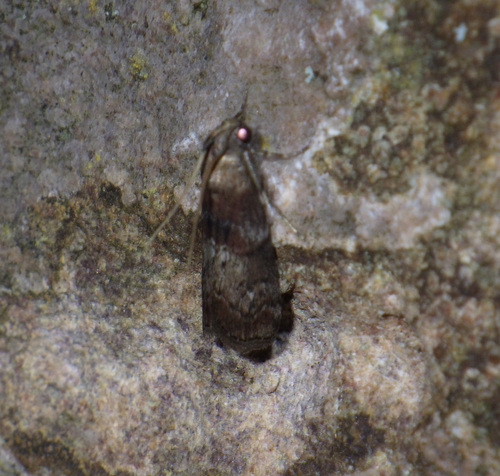
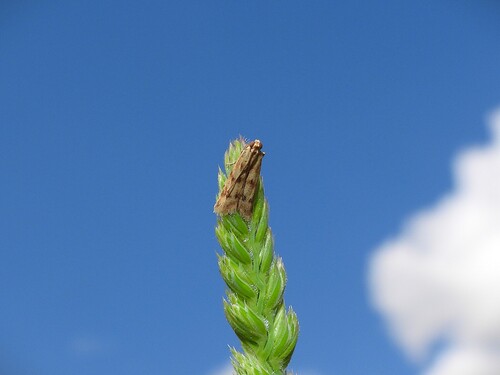
Hypsopygia glaucinalis

Daily sighting probability <5% · Rare
at Wadden Sea National Park

In 3 days ~10% in a week ~20%

7 Verified sightings at Wadden Sea National Park From 2019 to 2026
16 In all 2 parks
August Best month
🌅 Crepuscular When it's spotted

About the Double-Striped Tabby

Hypsopygia glaucinalis is a moth of the family Pyralidae. It is sometimes placed in the genus Orthopygia either alone or with a few other species. Being the type species of Orthopygia, as soon as O. glaucinalis is placed in Ocrasa (as is done here) "Orthopygia" is abolished. To further complicate matters, Ocrasa is now mostly treated as a synonym or subgenus of Hypsopygia.

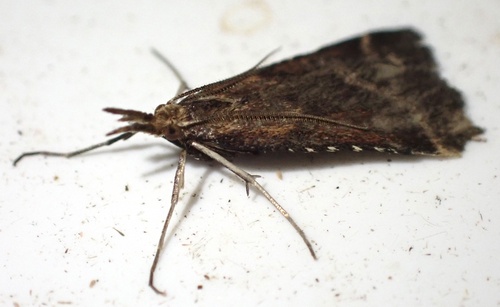
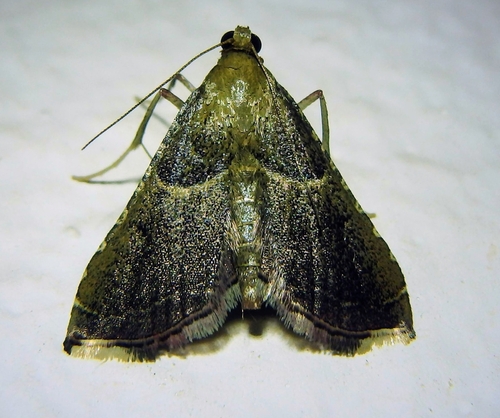
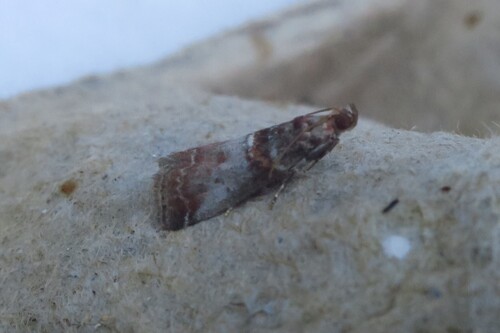
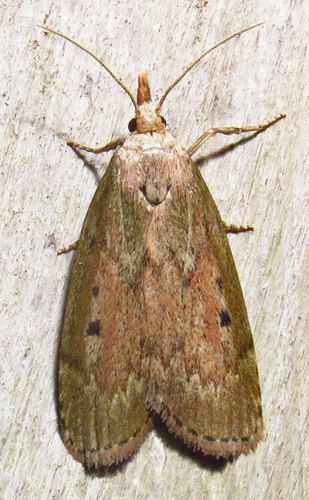
It is native to the European continent. The wingspan is 23–31 mm. The forewings are brownish-grey, on costa purplish; median part of costa dotted with yellow; lines pale ochreous, nearly straight, stronger and yellower on costa.

Hindwings grey; two fine whitish approximated lines, first twice sub angulated, second curved.The larva is blackish-green, lighter laterally; head and plate of 2 lighter: in silken galleries amongst decaying leaves and twigs of birch.

The adults fly from June to October in the temperate parts of its range (such as Belgium and the Netherlands). The caterpillars feed on decaying plants and dry leaves. They have been found in some fairly unusual locations, such as Buteo nests, straw and thatching, and discarded paper.

Grabe, Albert (1942): Eigenartige Geschmacksrichtungen... Wikipedia →
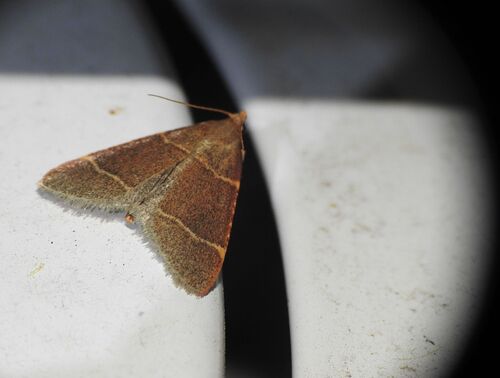
Global Distribution

Parks Where Found

# Park Country Daily sighting probability
1 Bavarian Forest National Park 🇩🇪 Germany
~10%
2 Wadden Sea National Park 🇩🇪 Germany
<5%

Cities Where Found

# City Country Daily sighting probability
1 Liverpool 🇬🇧 United Kingdom
~10%
2 Kyiv 🇺🇦 Ukraine
<5%
3 Porto 🇵🇹 Portugal
<5%
4 London 🇬🇧 United Kingdom
<5%
5 Essen 🇩🇪 Germany
<5%
6 Osaka 🇯🇵 Japan
<5%
7 Copenhagen 🇩🇰 Denmark
<5%
8 Nizhny Novgorod 🇷🇺 Russia
<5%
9 Seoul 🇰🇷 South Korea
<5%
10 Birmingham 🇬🇧 United Kingdom
<5%

Before you go

What are the chances of seeing a Double-Striped Tabby in Wadden Sea National Park?

Rare

Under 5% of wildlife watchers report a Double-Striped Tabby sighting in Wadden Sea National Park on a given day, based on 7 verified sightings from GBIF citizen-science data from 2019 to 2026. It is the 536th most-seen of the 818 insects we can rate there. Over three days the chance rises to about 10%, and over a week to about 20%, if each day is a fresh chance.

When is the best time to see a Double-Striped Tabby in Wadden Sea National Park?

June and August

In those months about 10% of wildlife watchers report a Double-Striped Tabby in Wadden Sea National Park on a given day, against under 5% in July and September–May, the lowest months.

What time of day is best to see a Double-Striped Tabby?

Between 6 and 9 am

Across all the parks we cover, that three-hour window holds the most Double-Striped Tabby sightings with a recorded time, and about 7 in 10 of them come between 6 am and 6 pm: it is most active around dawn and dusk.

Is Wadden Sea National Park the best place to see a Double-Striped Tabby?

2nd of 2

Of the 2 parks where we can rate Double-Striped Tabby sightings, Wadden Sea National Park ranks 2nd at under 5%. The best odds are in Bavarian Forest National Park (Germany, about 10%).

Which relatives of the Double-Striped Tabby live in Wadden Sea National Park?

Same family: Pyralidae

The closest relatives of the Double-Striped Tabby that you can see in Wadden Sea National Park (family Pyralidae, Pyralid Snout Moths) are Long-Legged Tabby (about 10%), Rosy Tabby (about 10%) and Rosy-Striped Knot-Horn (about 10%), with each one's daily chance of a sighting.

Where does the Double-Striped Tabby sighting chance come from?

GBIF citizen-science records

It is estimated from how often the Double-Striped Tabby is recorded against all the insects logged in Wadden Sea National Park (7 verified sightings from 2019 to 2026), calibrated against known sighting rates. Figures are rounded to the nearest 10% because citizen-science data supports honest approximations, not decimals, and months with records from fewer than five people show "—". How it works.

← Back to Wadden Sea National Park