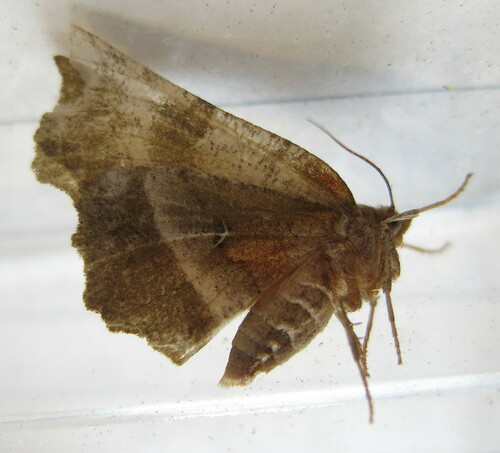
Grass Wave

Grass Wave

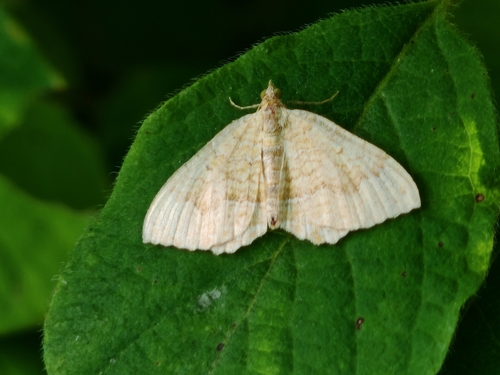
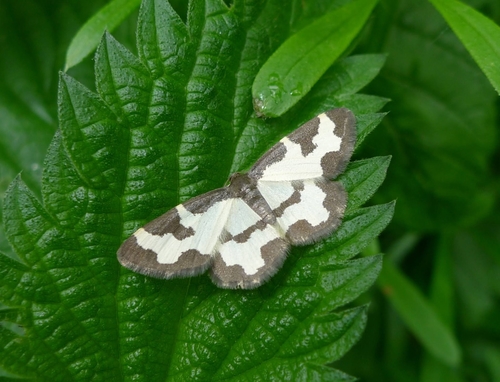
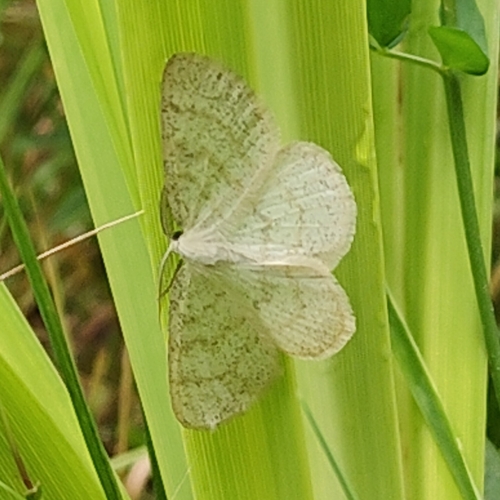
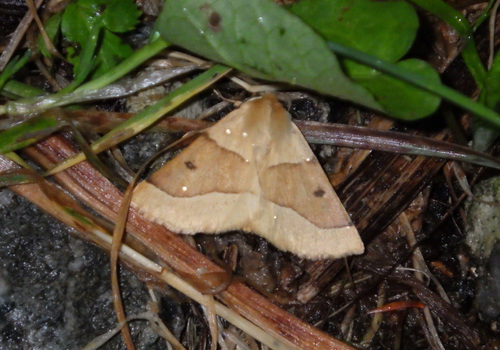
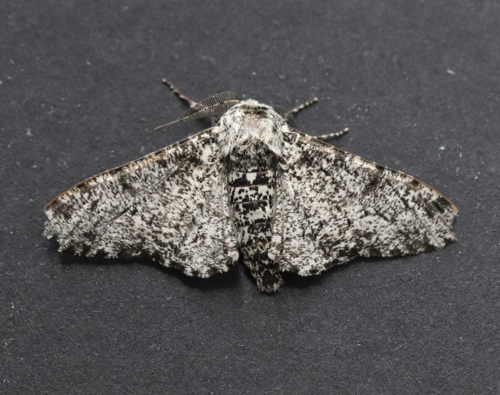
Perconia strigillaria

Daily sighting probability <5% · Rare
at Wadden Sea National Park

In 3 days ~10% in a week ~30%

13 Verified sightings at Wadden Sea National Park From 2019 to 2026
13 In 1 park
June Best month
☀️ Diurnal When it's spotted

About the Grass Wave

Perconia strigillaria, the grass wave, is a moth of the family Geometridae. The species was first described by Jacob Hübner in 1787. It can be found in Europe, east to the Urals, Asia Minor and China's Tarbagatai Mountains.

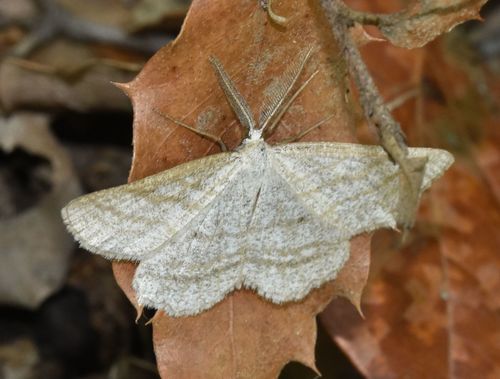
The wingspan is 36–41 mm. The forewing ground colour is white with fuscous irroration. The crosslines are wide The antennae are comb like. "White, with fuscous irroration; all the lines present, usually also a subterminal dark line. Median line (or shade) variable in position and thickness. - ab. herpeticaria Rbr. Antemedian and median lines of wing thick and closely approximated, sometimes confluent into a band. - grisearia Stgr. is a greyer form the white ground-colour nearly suppressed. Frequent in N. Europe, but not very sharply separable from the name-type. Most British examples are intermediate. - cretaria Ev. is a clearer white, weakly marked form from S. E. Russia, sometimes quite markingless."

The moths fly from June to July depending on the location. The larvae feed on Cytisus scoparius and Calluna, Erica and Ulex species. Wikipedia →

Global Distribution

Parks Where Found

# Park Country Daily sighting probability
1 Wadden Sea National Park 🇩🇪 Germany
<5%

More parks will be added in future updates.

Before you go

What are the chances of seeing a Grass Wave in Wadden Sea National Park?

Rare

Under 5% of wildlife watchers report a Grass Wave sighting in Wadden Sea National Park on a given day, based on 13 verified sightings from GBIF citizen-science data from 2019 to 2026. It is the 422nd most-seen of the 818 insects we can rate there. Over three days the chance rises to about 10%, and over a week to about 30%, if each day is a fresh chance.

When is the best time to see a Grass Wave in Wadden Sea National Park?

June

In that month about 10% of wildlife watchers report a Grass Wave in Wadden Sea National Park on a given day, against under 5% in July to May, the lowest months.

What time of day is best to see a Grass Wave?

Between 11 am and 2 pm

Across all the parks we cover, that three-hour window holds the most Grass Wave sightings with a recorded time, and about 8 in 10 of them come between 6 am and 6 pm: it is a daytime animal.

Where else can you see a Grass Wave?

Only Wadden Sea National Park, in our data

Wadden Sea National Park is the only park on Wallace's Line with enough records to rate Grass Wave sightings: under 5% of wildlife watchers there report one on a given day.

Which relatives of the Grass Wave live in Wadden Sea National Park?

Same family: Geometridae

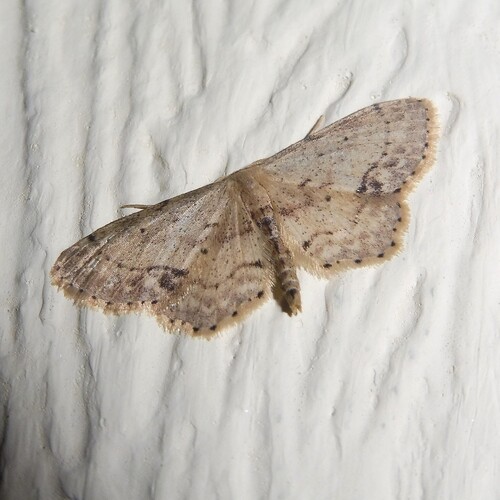
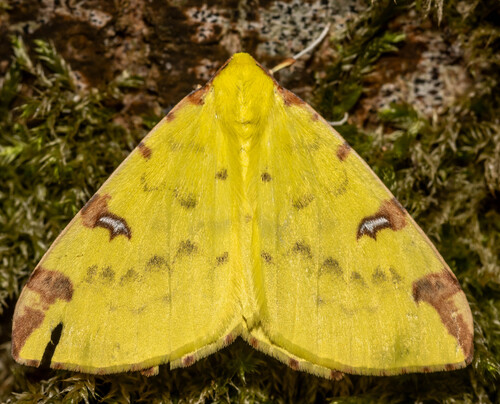
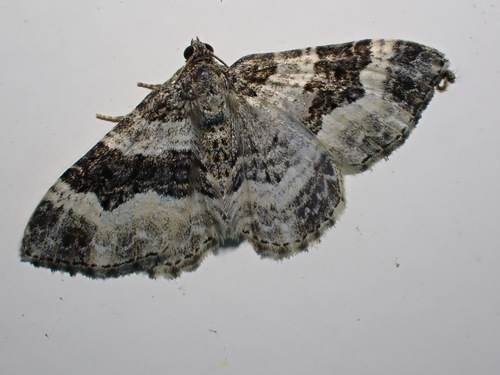
The closest relatives of the Grass Wave that you can see in Wadden Sea National Park (family Geometridae, Geometer Moths) are Riband Wave (about 10%), Yellow Shell Moth (about 10%) and Small Engrailed (about 10%), with each one's daily chance of a sighting.

Where does the Grass Wave sighting chance come from?

GBIF citizen-science records

It is estimated from how often the Grass Wave is recorded against all the insects logged in Wadden Sea National Park (13 verified sightings from 2019 to 2026), calibrated against known sighting rates. Figures are rounded to the nearest 10% because citizen-science data supports honest approximations, not decimals, and months with records from fewer than five people show "—". How it works.

← Back to Wadden Sea National Park