May Highflyer

May Highflyer

Hydriomena impluviata

Daily sighting probability ~10% · With luck
at Wadden Sea National Park

In 3 days ~20% in a week ~30%

21 Verified sightings at Wadden Sea National Park From 2019 to 2026
21 In 1 park
June Best month
🌅 Crepuscular When it's spotted

About the May Highflyer

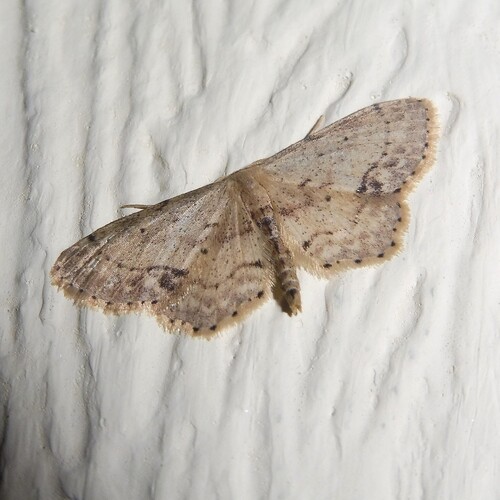
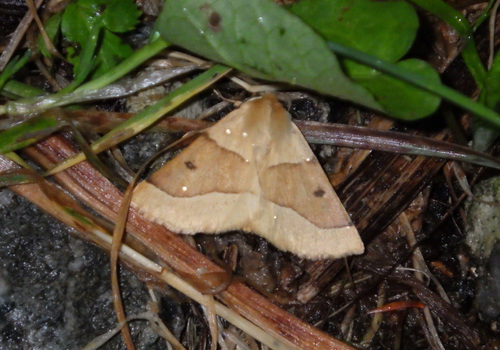
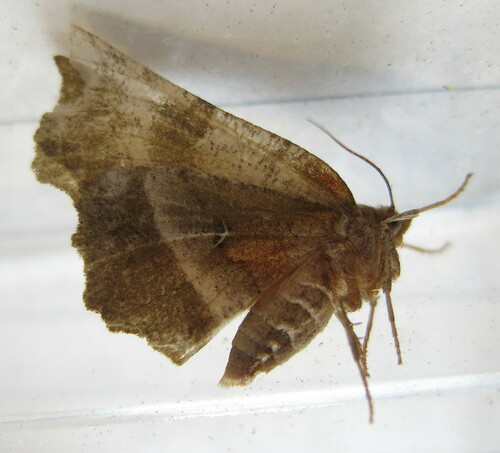
The May highflyer (Hydriomena impluviata) is a moth of the family Geometridae. It is found across the Palearctic region and the Near East although its range is largely determined by the presence of its larval food plant. The species was first described by Michael Denis and Ignaz Schiffermüller in 1775.

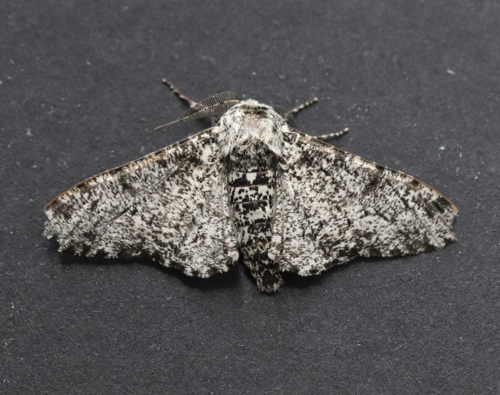
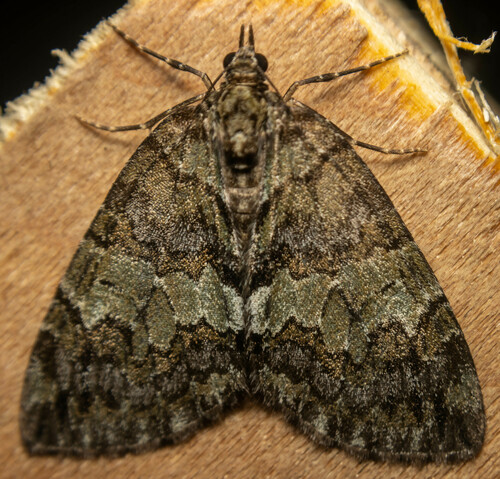
The wingspan is 30–34 mm and it is quite variable in markings, the best identification feature being four square spots along the costa of each forewing, although these may not be visible in the frequent melanic forms. "Individual specimens of coerulata (synonym of impluviata) bear a very close resemblance to Hydriomena ruberata. coerulata (impluviata) is perhaps on an average slightly smaller, is somewhat shorter-winged, oftener with a very pale, blue-green median band, the oblique subbasal line is straight, or only very weakly angulated in the cell, the black marks on the hindmargin of the forewing and on the anterior veins distally, which generally characterize both species, on an average less strongly developed than in ruberata but very variable in both species".

The larva is relatively powerful and dark red-purple in colour. It has some short setae. The species flies at night from May to July [1] and is attracted to light. The larva feeds on the leaves of alder, spinning two leaves together so it can feed undisturbed. The species overwinters as a pupa under loose alder bark.

^The flight season refers to the British Isles. This may vary in other parts of the range. Wikipedia →

Global Distribution

Parks Where Found

# Park Country Daily sighting probability
1 Wadden Sea National Park 🇩🇪 Germany
~10%

More parks will be added in future updates.

Cities Where Found

# City Country Daily sighting probability
1 Liverpool 🇬🇧 United Kingdom
~10%
2 Birmingham 🇬🇧 United Kingdom
<5%

Before you go

What are the chances of seeing a May Highflyer in Wadden Sea National Park?

With luck

About 10% of wildlife watchers report a May Highflyer sighting in Wadden Sea National Park on a given day, based on 21 verified sightings from GBIF citizen-science data from 2019 to 2026. It is the 312th most-seen of the 818 insects we can rate there. Over three days the chance rises to about 20%, and over a week to about 30%, if each day is a fresh chance.

When is the best time to see a May Highflyer in Wadden Sea National Park?

May to July

In those months about 10% of wildlife watchers report a May Highflyer in Wadden Sea National Park on a given day, against under 5% in August to April, the lowest months.

What time of day is best to see a May Highflyer?

Between 6 and 9 am

Across all the parks we cover, that three-hour window holds the most May Highflyer sightings with a recorded time, and about 7 in 10 of them come between 6 am and 6 pm: it is most active around dawn and dusk.

Where else can you see a May Highflyer?

Only Wadden Sea National Park, in our data

Wadden Sea National Park is the only park on Wallace's Line with enough records to rate May Highflyer sightings: about 10% of wildlife watchers there report one on a given day.

Which relatives of the May Highflyer live in Wadden Sea National Park?

Same family: Geometridae

The closest relatives of the May Highflyer that you can see in Wadden Sea National Park (family Geometridae, Geometer Moths) are Riband Wave (about 10%), Yellow Shell Moth (about 10%) and Small Engrailed (about 10%), with each one's daily chance of a sighting.

Where does the May Highflyer sighting chance come from?

GBIF citizen-science records

It is estimated from how often the May Highflyer is recorded against all the insects logged in Wadden Sea National Park (21 verified sightings from 2019 to 2026), calibrated against known sighting rates. Figures are rounded to the nearest 10% because citizen-science data supports honest approximations, not decimals, and months with records from fewer than five people show "—". How it works.

← Back to Wadden Sea National Park