Short-Cloaked Moth

Short-Cloaked Moth

Nola cucullatella

Daily sighting probability <5% · Rare
at Wadden Sea National Park

In 3 days ~10% in a week ~30%

11 Verified sightings at Wadden Sea National Park From 2019 to 2026
11 In 1 park
July Best month
🌅 Crepuscular When it's spotted

About the Short-Cloaked Moth

The short-cloaked moth (Nola cucullatella) is a moth of the family Nolidae. It is distributed through most of Europe. It was collected in 2008 in the greater Vancouver area of British Columbia (Westham Island). Vancouver is a major shipping port, and is the most probable source area of the introduction

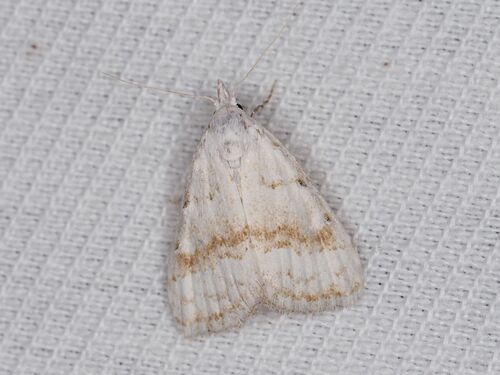
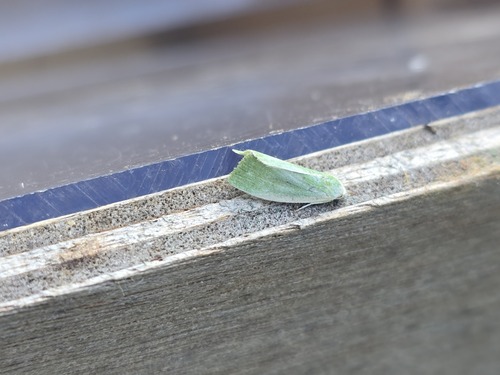
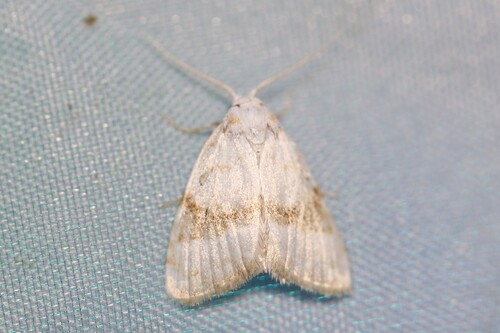
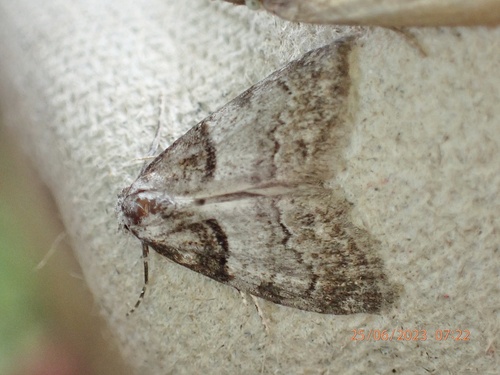
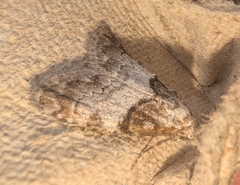
This is a small species (wingspan 15–20 mm) with grey or brown forewings with black basal areas which resemble a short cloak when the moth is at rest. The hindwings are uniform cream or grey. It flies at night in June and July [1] and is attracted to light.

The slightly hairy larva is reddish-brown with white marks along the back. It feeds on various rosaceous plants including apple, Cotoneaster, hawthorn, pear, Prunus, rowan and whitebeam. The species overwinters as a small larva.

^The flight season refers to the British Isles. This may vary in other parts of the range. Wikipedia →
Global Distribution

Parks Where Found

# Park Country Daily sighting probability
1 Wadden Sea National Park 🇩🇪 Germany
<5%

More parks will be added in future updates.

Cities Where Found

# City Country Daily sighting probability
1 Birmingham 🇬🇧 United Kingdom
<5%
2 London 🇬🇧 United Kingdom
<5%

Before you go

What are the chances of seeing a Short-Cloaked Moth in Wadden Sea National Park?

Rare

Under 5% of wildlife watchers report a Short-Cloaked Moth sighting in Wadden Sea National Park on a given day, based on 11 verified sightings from GBIF citizen-science data from 2019 to 2026. It is the 422nd most-seen of the 818 insects we can rate there. Over three days the chance rises to about 10%, and over a week to about 30%, if each day is a fresh chance.

When is the best time to see a Short-Cloaked Moth in Wadden Sea National Park?

July

In that month about 10% of wildlife watchers report a Short-Cloaked Moth in Wadden Sea National Park on a given day, against under 5% in August to June, the lowest months.

What time of day is best to see a Short-Cloaked Moth?

Between 4 and 7 am

Across all the parks we cover, that three-hour window holds the most Short-Cloaked Moth sightings with a recorded time, and about 6 in 10 of them come between 6 pm and 6 am: it is most active around dawn and dusk.

Where else can you see a Short-Cloaked Moth?

Only Wadden Sea National Park, in our data

Wadden Sea National Park is the only park on Wallace's Line with enough records to rate Short-Cloaked Moth sightings: under 5% of wildlife watchers there report one on a given day.

Where does the Short-Cloaked Moth sighting chance come from?

GBIF citizen-science records

It is estimated from how often the Short-Cloaked Moth is recorded against all the insects logged in Wadden Sea National Park (11 verified sightings from 2019 to 2026), calibrated against known sighting rates. Figures are rounded to the nearest 10% because citizen-science data supports honest approximations, not decimals, and months with records from fewer than five people show "—". How it works.

← Back to Wadden Sea National Park