Yellow-Faced Blowfly

Yellow-Faced Blowfly

Cynomya mortuorum

Daily sighting probability <5% · Rare
at Wadden Sea National Park

In 3 days ~10% in a week ~20%

7 Verified sightings at Wadden Sea National Park From 2019 to 2026
12 In all 2 parks
September Best month
☀️ Diurnal When it's spotted

About the Yellow-Faced Blowfly

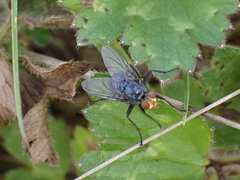
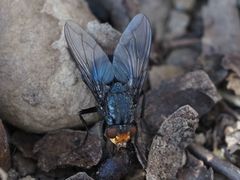
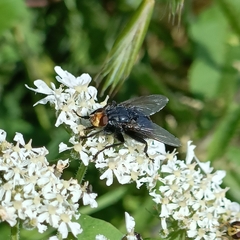
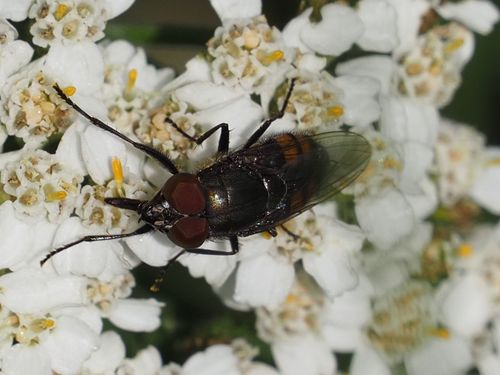
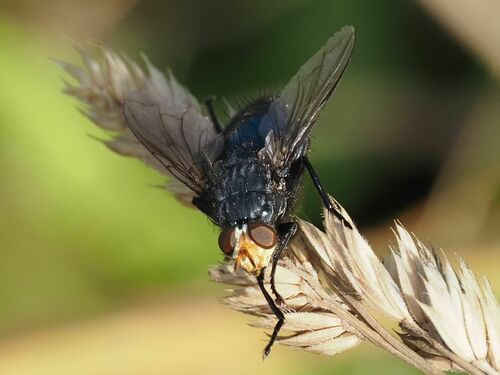
Cynomya mortuorum belongs to the order Diptera, sometimes referred to as "true flies". In English, the only common name occasionally used is "fly of the dead" (Totenfliege in German). It has a bluish-green appearance, similar to other Calliphoridae and is found in multiple geographic locations with a preference for colder regions. Belonging to the family Calliphoridae, it has been shown to have forensically relevant implications due to its appearance on carrion. Current research is being done to determine C. mortuorum's level of importance and usage within forensic entomology.

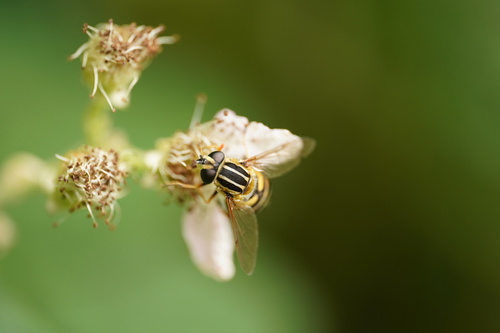
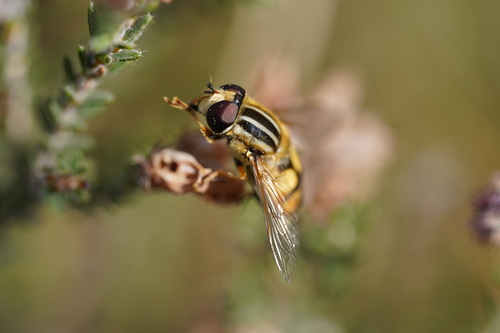
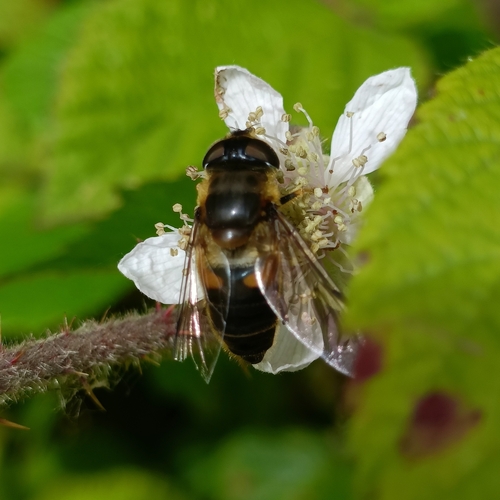
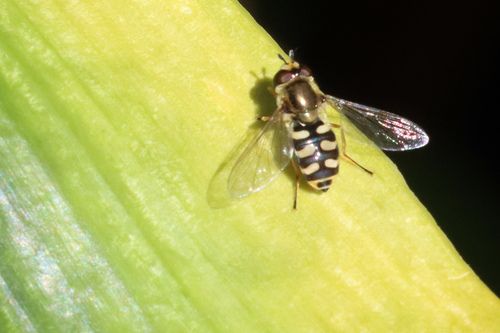
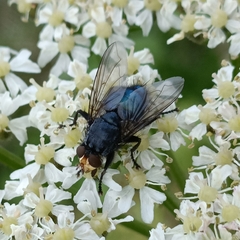
C. mortuorum is a deep blue-green shining metallic fly with a yellowish face and jowls, possessing a body length of 8–15 mm. This fly is a cold-adapted blowfly originally named by Carl Linnaeus in 1761. It lays its eggs on carrion, which provides food for the larvae and facilitates the larvae's development. The development lasts approximately 38 days. As do most blow flies, or members of the family Calliphoridae, C. mortuorum has a life cycle that includes an egg stage, three larval instars, and a pupal form before becoming an adult, or imago. Insects with this kind... Wikipedia →
Global Distribution

Parks Where Found

# Park Country Daily sighting probability
1 Cairngorms National Park 🇬🇧 United Kingdom
~10%
2 Wadden Sea National Park 🇩🇪 Germany
<5%

Cities Where Found

# City Country Daily sighting probability
1 Helsinki 🇫🇮 Finland
~10%
2 Copenhagen 🇩🇰 Denmark
<5%
3 Saint Petersburg 🇷🇺 Russia
<5%
4 Moscow 🇷🇺 Russia
<5%

Before you go

What are the chances of seeing a Yellow-Faced Blowfly in Wadden Sea National Park?

Rare

Under 5% of wildlife watchers report a Yellow-Faced Blowfly sighting in Wadden Sea National Park on a given day, based on 7 verified sightings from GBIF citizen-science data from 2019 to 2026. It is the 536th most-seen of the 818 insects we can rate there. Over three days the chance rises to about 10%, and over a week to about 20%, if each day is a fresh chance.

When is the best time to see a Yellow-Faced Blowfly in Wadden Sea National Park?

September

In that month about 10% of wildlife watchers report a Yellow-Faced Blowfly in Wadden Sea National Park on a given day, against under 5% in October to August, the lowest months.

What time of day is best to see a Yellow-Faced Blowfly?

Between noon and 3 pm

Across all the parks we cover, that three-hour window holds the most Yellow-Faced Blowfly sightings with a recorded time, and nearly all of them come between 6 am and 6 pm: it is a daytime animal.

Is Wadden Sea National Park the best place to see a Yellow-Faced Blowfly?

2nd of 2

Of the 2 parks where we can rate Yellow-Faced Blowfly sightings, Wadden Sea National Park ranks 2nd at under 5%. The best odds are in Cairngorms National Park (United Kingdom, about 10%).

Where does the Yellow-Faced Blowfly sighting chance come from?

GBIF citizen-science records

It is estimated from how often the Yellow-Faced Blowfly is recorded against all the insects logged in Wadden Sea National Park (7 verified sightings from 2019 to 2026), calibrated against known sighting rates. Figures are rounded to the nearest 10% because citizen-science data supports honest approximations, not decimals, and months with records from fewer than five people show "—". How it works.

← Back to Wadden Sea National Park