Malaysian Honeyguide

Malaysian Honeyguide

Indicator archipelagicus

Silhouette: Sheatherius · PhyloPic

LCNTNear ThreatenedVUENCR
Daily sighting probability ~10% · With luck
at Way Kambas National Park

In 3 days ~30% in a week ~60%

29 Verified sightings at Way Kambas National Park From 2019 to 2026
59 In all 4 parks
October Best month
☀️ Diurnal When it's spotted

About the Malaysian Honeyguide

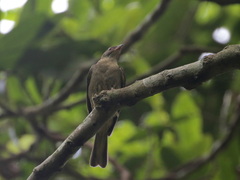
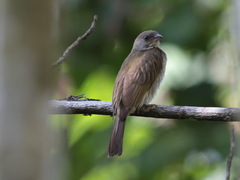
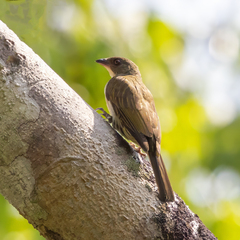
The Malaysian honeyguide (Indicator archipelagicus) is a bird in the family Indicatoridae, which are paleotropical near passerine birds related to the woodpeckers. The species is native to Southeast Asia. It is a medium-sized, up to 18 cm long, olive-brown honeyguide with greenish streaks, reddish iris, thick grey bill and greyish white below. The male has a yellow patch on the shoulder, while the female has none. The young resembles the female with streaked underparts.

The Malaysian honeyguide occurs throughout lowland broadleaved forests of western Thailand, Peninsular Malaysia, Borneo and the island of Sumatra. The call of the Malaysian honeyguide is a cat-like "meow", followed by a rattling sound. The diet consists mainly of insects, especially wild bees and wasps. It nests in tree hollows.

Due to ongoing habitat loss, local and sparse population, the Malaysian honeyguide is evaluated as Near Threatened on the IUCN Red List of Threatened Species. BirdLife Species Factsheet Image at ADW Wikipedia →

Global Distribution

Parks Where Found

# Park Country Daily sighting probability
1 Way Kambas National Park 🇮🇩 Indonesia
~10%
2 Taman Negara National Park 🇲🇾 Malaysia
<5%
3 Danum Valley Conservation Area 🇲🇾 Malaysia
<5%
4 Kaeng Krachan National Park 🇹🇭 Thailand
<5%

Before you go

What are the chances of seeing a Malaysian Honeyguide in Way Kambas National Park?

With luck

About 10% of wildlife watchers report a Malaysian Honeyguide sighting in Way Kambas National Park on a given day, based on 29 verified sightings from GBIF citizen-science data from 2019 to 2026. It is the 136th most-seen of the 205 birds we can rate there. Over three days the chance rises to about 30%, and over a week to about 60%, if each day is a fresh chance.

When is the best time to see a Malaysian Honeyguide in Way Kambas National Park?

October

In that month about 30% of wildlife watchers report a Malaysian Honeyguide in Way Kambas National Park on a given day, against under 5% in May and September, the lowest months. November to February have too few records to rate.

What time of day is best to see a Malaysian Honeyguide?

Between 9 am and noon

Across all the parks we cover, that three-hour window holds the most Malaysian Honeyguide sightings with a recorded time, and about 9 in 10 of them come between 6 am and 6 pm: it is a daytime animal.

Is Way Kambas National Park the best place to see a Malaysian Honeyguide?

Yes

Of the 4 parks where we can rate Malaysian Honeyguide sightings, Way Kambas National Park has the highest daily chance: about 10%. Next come Taman Negara National Park (Malaysia, under 5%) and Danum Valley Conservation Area (Malaysia, under 5%).

Which relatives of the Malaysian Honeyguide live in Way Kambas National Park?

Same order: Piciformes

The closest relatives of the Malaysian Honeyguide that you can see in Way Kambas National Park (order Piciformes, Woodpeckers and Allies) are Red-crowned Barbet (about 70%), Banded Woodpecker (about 50%) and Buff-necked Woodpecker (about 40%), with each one's daily chance of a sighting.

Where does the Malaysian Honeyguide sighting chance come from?

GBIF citizen-science records

It is estimated from how often the Malaysian Honeyguide is recorded against all the birds logged in Way Kambas National Park (29 verified sightings from 2019 to 2026), calibrated against known sighting rates. Figures are rounded to the nearest 10% because citizen-science data supports honest approximations, not decimals, and months with records from fewer than five people show "—". How it works.

← Back to Way Kambas National Park