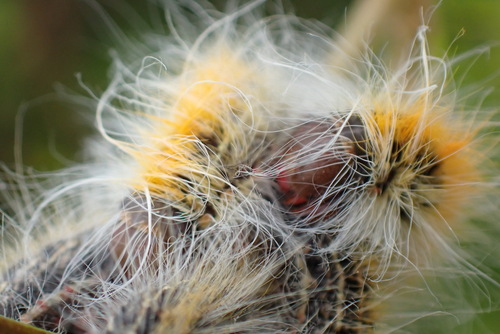
Pine Emperor

Pine Emperor

Nudaurelia cytherea

Daily sighting probability ~20% · Possible
at West Coast National Park

In 3 days ~40% in a week ~70%

9 Verified sightings at West Coast National Park From 2019 to 2026
109 In all 4 parks
November Best month
☀️ Diurnal When it's spotted

About the Pine Emperor

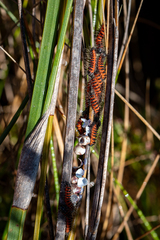
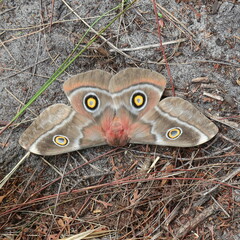
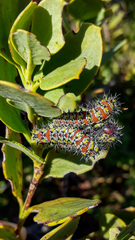
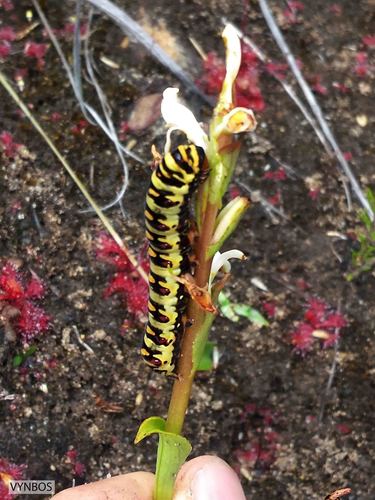
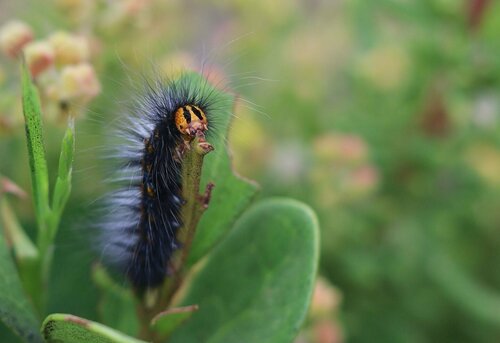
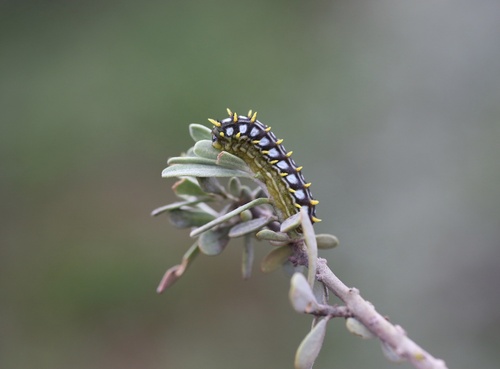
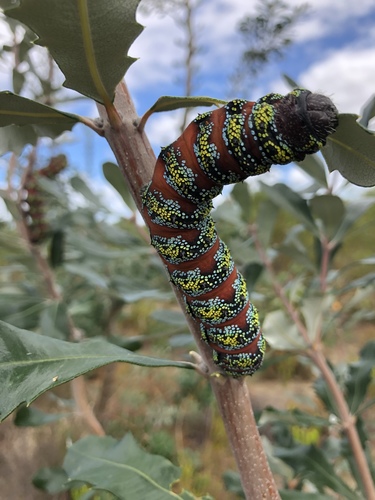
Nudaurelia cytherea, also called the pine tree emperor moth or Christmas caterpillar due to its festive colouration, is a southern African member of the family Saturniidae. The family has large edible caterpillars which are an important source of protein for the Bantu peoples of southern Africa. The genus Nudaurelia is closely related to Gonimbrasia and Imbrasia. The species was first described by Johan Christian Fabricius in 1775.

The larva has a wide-ranging taste in food plants, and readily added the needles of introduced pines to its diet, causing widespread defoliation in South African plantations in the 1930s, especially in the Lebanon and Franschhoek plantations of the Western Cape. The pines included Pinus canariensis, P. halepensis, P. radiata, P. longifolia, P. muricata and P. pinaster. Other exotic species included Acacia mollissima, Cupressus macrocarpa, Eucalyptus cladocalyx, E. diversicolor, E. globulus, E. ovata, E. paniculata, E. pilularis, Liriodendron tulipifera, apple, guava and quince. Its food plants before the introduction of exotic species had included Euclea species, Rapanea melanophloeos, Protea repens, Rhus angustifolia, Watsonia species and Myrica cordifolia - Pinus radiata and Rhus angustifolia being most sought after, with feeding migrations to other species being only incidental.

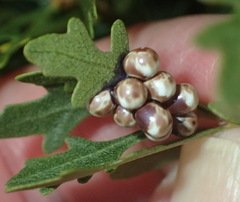
Eggs and caterpillars are sought out by a variety of hymenopteran parasitoids such as Hockeria crassa, Hockeria nudaureliae, Pediobius species, Anastatus species and Mesocomys pulchriceps, while the larvae are infected naturally by at least five distinct virus species, including Nudaurelia β virus, producing fairly regular epizootics. Insect viruses have long been valued as biological control agents, since they have few negative effects on ecosystems compared with chemical pesticides. Their most important quality is that they require no follow-up or management, while their host specificity is a great advantage over most chemical pesticides which are not. Other mammalian controlling factors are baboons, feral pigs and porcupines, all of which relish the larvae, pupae and moths. Pigs were introduced to Western Cape pine plantations by the Forestry Department in the 1930s, and proved to be a cheap and effective control measure, their acute sense of smell enabling them to easily detect pupae under the soil surface. Wikipedia →
Global Distribution

Parks Where Found

# Park Country Daily sighting probability
1 De Hoop Nature Reserve 🇿🇦 South Africa
~20%
2 West Coast National Park 🇿🇦 South Africa
~20%
3 Garden Route National Park 🇿🇦 South Africa
~10%
4 Table Mountain National Park 🇿🇦 South Africa
~10%

Cities Where Found

# City Country Daily sighting probability
1 Cape Town 🇿🇦 South Africa
~10%

Before you go

What are the chances of seeing a Pine Emperor in West Coast National Park?

Possible

About 20% of wildlife watchers report a Pine Emperor sighting in West Coast National Park on a given day, based on 9 verified sightings from GBIF citizen-science data from 2019 to 2026. It is the 17th most-seen of the 44 insects we can rate there. Over three days the chance rises to about 40%, and over a week to about 70%, if each day is a fresh chance.

When is the best time to see a Pine Emperor in West Coast National Park?

May, September and November

In those months about 30% of wildlife watchers report a Pine Emperor in West Coast National Park on a given day, against under 5% in January–April, June–August and October, the lowest months.

What time of day is best to see a Pine Emperor?

Between 10 am and 1 pm

Across all the parks we cover, that three-hour window holds the most Pine Emperor sightings with a recorded time, and about 9 in 10 of them come between 6 am and 6 pm: it is a daytime animal.

Is West Coast National Park the best place to see a Pine Emperor?

Among the best

Of the 4 parks where we can rate Pine Emperor sightings, West Coast National Park ranks 2nd at about 20%, level with the leaders once rounded. The best odds are in De Hoop Nature Reserve (South Africa, about 20%).

Which relatives of the Pine Emperor live in West Coast National Park?

Same order: Lepidoptera

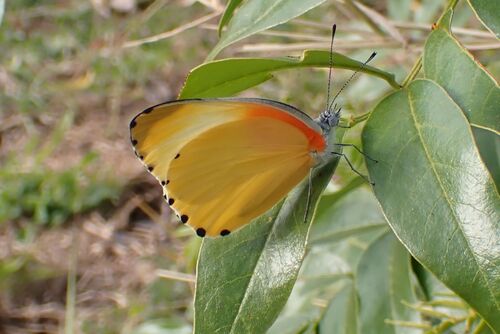
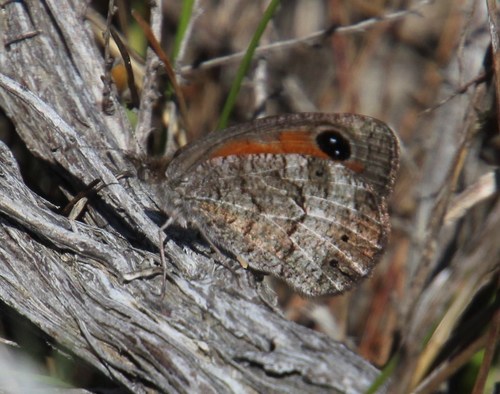
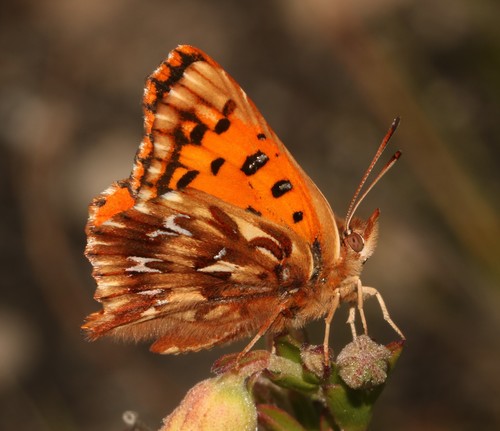
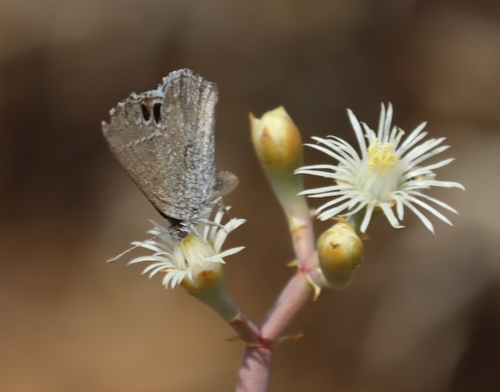
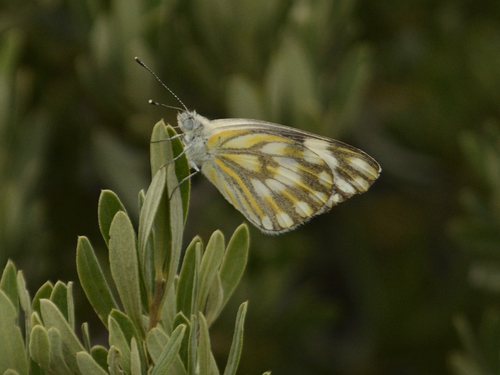
The closest relatives of the Pine Emperor that you can see in West Coast National Park (order Lepidoptera, Butterflies and Moths) are Cherry Spot (about 50%), Mountain White-Spot (about 40%) and Pan Opal (about 20%), with each one's daily chance of a sighting.

Where does the Pine Emperor sighting chance come from?

GBIF citizen-science records

It is estimated from how often the Pine Emperor is recorded against all the insects logged in West Coast National Park (9 verified sightings from 2019 to 2026), calibrated against known sighting rates. Figures are rounded to the nearest 10% because citizen-science data supports honest approximations, not decimals, and months with records from fewer than five people show "—". How it works.

← Back to West Coast National Park