
Fulvous Antshrike

Fulvous Antshrike

Frederickena fulva

Silhouette: Sheatherius · PhyloPic

Daily sighting probability <5% · Rare
at Yasuní National Park

In 3 days <5% in a week ~10%

38 Verified sightings at Yasuní National Park From 2019 to 2026
38 In 1 park
December Best month
☀️ Diurnal When it's spotted

About the Fulvous Antshrike

The fulvous antshrike (Frederickena fulva) is a species of bird in subfamily Thamnophilinae of family Thamnophilidae, the "typical antbirds". It is found in Colombia, Ecuador, and Peru. The fulvous antshrike's taxonomy is unresolved. The South American Classification Committee of the American Ornithological Society (SACC), the International Ornithological Committee, and the Clements taxonomy treat it as a full species. BirdLife International's Handbook of the Birds of the World (HBW) treats the taxon as a subspecies of the undulated antshrike (F. unduliger). The fulvous antshrike is monotypic.

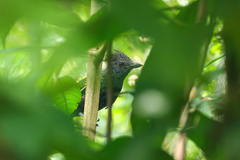
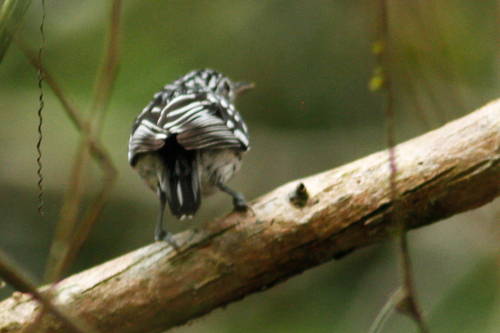
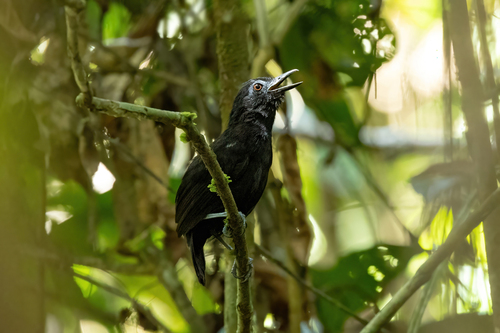
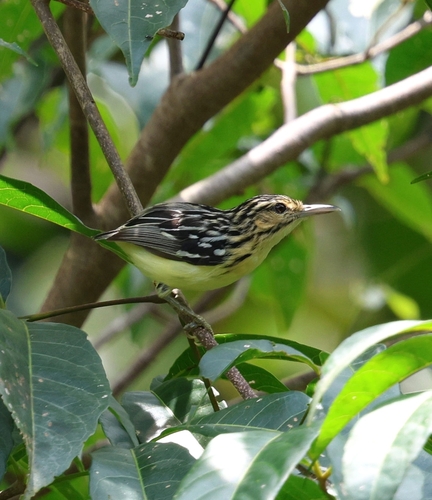
The fulvous antshrike is a large dark antbird, 22 to 25 cm (8.7 to 9.8 in) long and weighing 75 to 85 g (2.6 to 3.0 oz). The species exhibits significant sexual dimorphism, though both sexes have a crest, a brown to orange-yellow iris, a heavy black bill with a hook at the end like true shrikes, and black or dark gray legs and feet. Adult males are mostly black with irregular thin white bars everywhere but the throat. The bars on the face and crest are broken and appear as small spots. Adult females are mostly rich cinnamon with wavy black bars; their forehead... Wikipedia →

Sounds

Song0:21

Ecuador · 2026

© Daan van der Hoeven · XC1154895 · CC BY-NC-SA 4.0

Call0:16

Colombia · 2020

© Jerome Fischer · XC608230 · CC BY-NC-SA 4.0

Alarm call0:41

Colombia · 2017

© Jorge Muñoz · XC360956 · CC BY-NC-SA 4.0

Global Distribution

Parks Where Found

# Park Country Daily sighting probability
1 Yasuní National Park 🇪🇨 Ecuador
<5%

More parks will be added in future updates.

Before you go

What are the chances of seeing a Fulvous Antshrike in Yasuní National Park?

Rare

Under 5% of wildlife watchers report a Fulvous Antshrike sighting in Yasuní National Park on a given day, based on 38 verified sightings from GBIF citizen-science data from 2019 to 2026. It is the 412th most-seen of the 533 birds we can rate there. Over three days the chance rises to under 5%, and over a week to about 10%, if each day is a fresh chance.

When is the best time to see a Fulvous Antshrike in Yasuní National Park?

Any time of year

In every month with enough records, under 5% of wildlife watchers report a Fulvous Antshrike in Yasuní National Park on a given day, so our monthly data shows no clear season.

What time of day is best to see a Fulvous Antshrike?

Between midnight and 3 am

Across all the parks we cover, that three-hour window holds the most Fulvous Antshrike sightings with a recorded time, and about 7 in 10 of them come between 6 am and 6 pm: it is a daytime animal.

Where else can you see a Fulvous Antshrike?

Only Yasuní National Park, in our data

Yasuní National Park is the only park on Wallace's Line with enough records to rate Fulvous Antshrike sightings: under 5% of wildlife watchers there report one on a given day.

Where does the Fulvous Antshrike sighting chance come from?

GBIF citizen-science records

It is estimated from how often the Fulvous Antshrike is recorded against all the birds logged in Yasuní National Park (38 verified sightings from 2019 to 2026), calibrated against known sighting rates. Figures are rounded to the nearest 10% because citizen-science data supports honest approximations, not decimals, and months with records from fewer than five people show "—". How it works.

← Back to Yasuní National Park