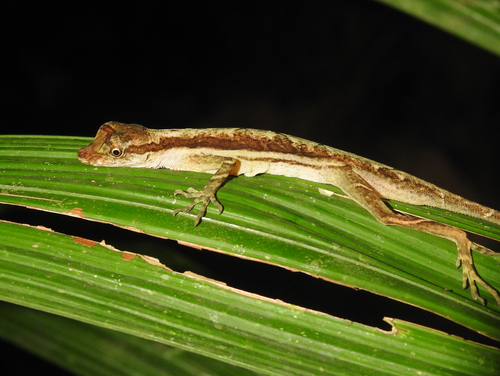
Northern Caiman Lizard

Northern Caiman Lizard

Dracaena guianensis

Silhouette: Andy Wilson · PhyloPic

LCLeast ConcernNTVUENCR
Daily sighting probability ~30% · Possible
at Yasuní National Park

In 3 days ~60% in a week ~90%

37 Verified sightings at Yasuní National Park From 2019 to 2026
37 In 1 park
April Best month
☀️ Diurnal When it's spotted

About the Northern Caiman Lizard

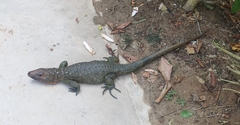
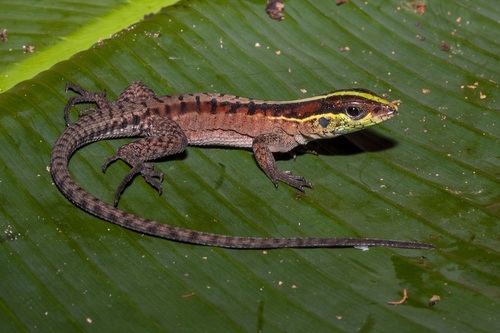
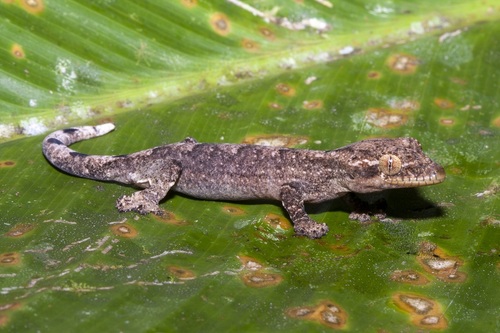
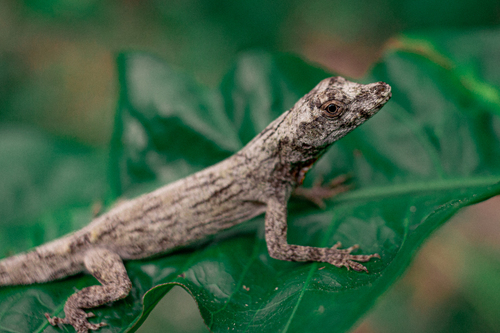
The northern caiman lizard (Dracaena guianensis) is a species of lizard found in northern South America. The northern caiman lizard is built similarly to its cousin the tegu, with a large heavy set body and short but powerful limbs. Its head is bulky and often a red or orange color. Their jaws are heavily muscular to help aid in eating its normal prey of snails, crawfish and fresh water clams. It also has a few adaptations that help it in its watery habitat. It has a long and flattened tail, similar to its namesake, the caiman. The long tail helps the northern caiman lizard to successfully swim and dive. A clear third eyelid is thought to act like a pair of goggles underwater.

The body of the northern caiman lizard is very similar to that of a crocodile. It is typically a bright green with slight dark green banding. There are horned raised scales along the dorsal of the back. This helps to provide some protection against predators.

These lizards can reach up to 4 ft (1.2 m) long and weigh up to 10 lb (4.5 kg). D. guianensis can be found in the south American countries of Brazil, Colombia, Ecuador, Peru, and the Guianas. It lives in swampy... Wikipedia →

Global Distribution

Parks Where Found

# Park Country Daily sighting probability
1 Yasuní National Park 🇪🇨 Ecuador
~30%

More parks will be added in future updates.

Zoos & Centres Where Found

# Zoo / Centre Country
1 Disney's Animal Kingdom 🇺🇸 United States In captivity
2 Busch Gardens Tampa 🇺🇸 United States In captivity
3 San Diego Zoo 🇺🇸 United States In captivity
4 Moscow Zoo 🇷🇺 Russia In captivity
5 Prague Zoo 🇨🇿 Czechia In captivity
6 National Zoological Park 🇺🇸 United States In captivity
7 Shedd Aquarium 🇺🇸 United States In captivity
8 Basel Zoo 🇨🇭 Switzerland In captivity
9 ZooParc de Beauval 🇫🇷 France In captivity
10 Leipzig Zoological Garden 🇩🇪 Germany In captivity
11 Copenhagen Zoo 🇩🇰 Denmark In captivity
12 California Academy of Sciences 🇺🇸 United States In captivity
13 Barcelona Zoo 🇪🇸 Spain In captivity
14 Zlín-Lešná Zoo 🇨🇿 Czechia In captivity
15 Paris Zoological Park 🇫🇷 France In captivity
16 Greensboro Science Center 🇺🇸 United States In captivity
17 Abilene Zoological Gardens 🇺🇸 United States In captivity
18 Aquarium du palais de la Porte Dorée 🇫🇷 France In captivity
19 Zoo Miami 🇺🇸 United States In captivity
20 Toronto Zoo 🇨🇦 Canada In captivity
21 Bronx Zoo 🇺🇸 United States In captivity
22 Brookfield Zoo 🇺🇸 United States In captivity
23 Parc zoologique de Montpellier 🇫🇷 France In captivity
24 Nashville Zoo at Grassmere 🇺🇸 United States In captivity
25 Safari Madrid 🇪🇸 Spain In captivity
26 Los Angeles Zoo 🇺🇸 United States In captivity
27 Jacksonville Zoo and Gardens 🇺🇸 United States In captivity
28 Wildlife World Zoo 🇺🇸 United States In captivity
29 Birmingham Zoo 🇺🇸 United States In captivity
30 Berlin Zoological Garden 🇩🇪 Germany In captivity
31 Caldwell Zoo 🇺🇸 United States In captivity
32 Paignton Zoo 🇬🇧 United Kingdom In captivity
33 San Francisco Zoo 🇺🇸 United States In captivity
34 Night Safari 🇸🇬 Singapore In captivity
35 Zoologischer Garten Leipzig 🇩🇪 Germany In captivity
36 Fort Worth Zoo 🇺🇸 United States In captivity
37 Zoo Knoxville 🇺🇸 United States In captivity
38 Singapore Zoo 🇸🇬 Singapore In captivity
39 Virginia Zoological Park 🇺🇸 United States In captivity
40 Houston Zoo 🇺🇸 United States In captivity
41 Gembira Loka Zoo 🇮🇩 Indonesia In captivity
42 Tierpark Hagenbeck 🇩🇪 Germany In captivity
43 Philadelphia Zoo 🇺🇸 United States In captivity
44 Fresno Chaffee Zoo 🇺🇸 United States In captivity
45 Schönbrunn Zoo 🇦🇹 Austria In captivity
46 Zoo Atlanta 🇺🇸 United States In captivity
47 London Zoo 🇬🇧 United Kingdom In captivity
48 Ueno Zoo 🇯🇵 Japan In captivity
49 Rosamond Gifford Zoo 🇺🇸 United States In captivity
50 Aquarama Barcelona 🇪🇸 Spain In captivity

Before you go

What are the chances of seeing a Northern Caiman Lizard in Yasuní National Park?

Possible

About 30% of wildlife watchers report a Northern Caiman Lizard sighting in Yasuní National Park on a given day, based on 37 verified sightings from GBIF citizen-science data from 2019 to 2026. It is the 14th most-seen of the 49 reptiles we can rate there. Over three days the chance rises to about 60%, and over a week to about 90%, if each day is a fresh chance.

When is the best time to see a Northern Caiman Lizard in Yasuní National Park?

March and April

In those months about 40% of wildlife watchers report a Northern Caiman Lizard in Yasuní National Park on a given day, against under 5% in November, the lowest month.

What time of day is best to see a Northern Caiman Lizard?

Between 2 and 5 pm

Across all the parks we cover, that three-hour window holds the most Northern Caiman Lizard sightings with a recorded time, and about 9 in 10 of them come between 6 am and 6 pm: it is a daytime animal.

Where else can you see a Northern Caiman Lizard?

Only Yasuní National Park, in our data

Yasuní National Park is the only park on Wallace's Line with enough records to rate Northern Caiman Lizard sightings: about 30% of wildlife watchers there report one on a given day.

Which relatives of the Northern Caiman Lizard live in Yasuní National Park?

Same family: Teiidae

The closest relatives of the Northern Caiman Lizard that you can see in Yasuní National Park (family Teiidae, Whiptails and Tegus) are Forest Whiptail (about 30%) and Cusco Tegu (about 10%), with each one's daily chance of a sighting.

Where does the Northern Caiman Lizard sighting chance come from?

GBIF citizen-science records

It is estimated from how often the Northern Caiman Lizard is recorded against all the reptiles logged in Yasuní National Park (37 verified sightings from 2019 to 2026), calibrated against known sighting rates. Figures are rounded to the nearest 10% because citizen-science data supports honest approximations, not decimals, and months with records from fewer than five people show "—". How it works.

← Back to Yasuní National Park