
Wagler's Sipo

Wagler's Sipo

Chironius scurrulus

Silhouette: SeismicShrimp · PhyloPic

Daily sighting probability ~20% · Possible
at Yasuní National Park

In 3 days ~40% in a week ~70%

14 Verified sightings at Yasuní National Park From 2019 to 2026
31 In all 2 parks
March Best month
☀️ Diurnal When it's spotted

About the Wagler's Sipo

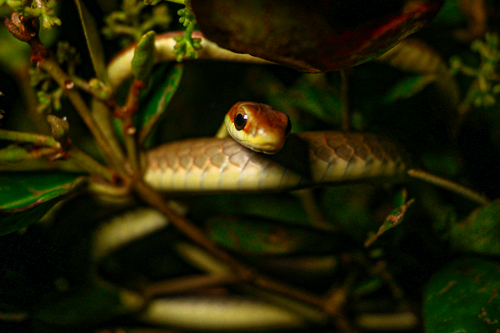
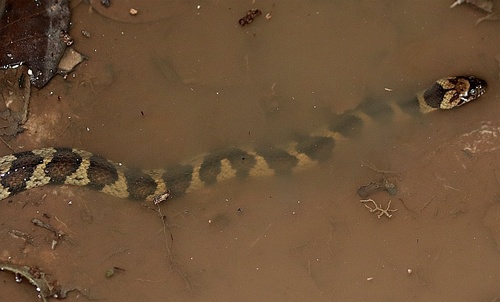
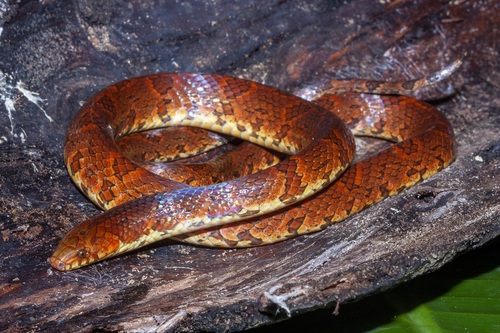
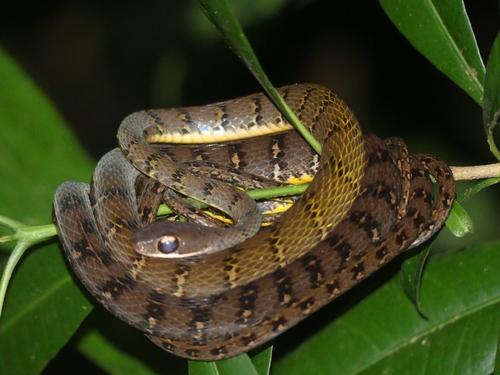
Chironius scurrulus, commonly known as the smooth machete savane, is a large slender colubrid snake. It is also known as Wagler's sipo. It is found in tropical rainforests of the Brazilian Amazon, Southeastern Colombia, northern Bolivia, Ecuador, east of Venezuela, Peru, Trinidad and Tobago, Guyana, Suriname, French Guiana.

The dorsal scales are in only 10 rows. It feeds on frogs and lizards. They are diurnal. They live in primary and secondary forest habitats, on the ground or small trees, or in shrubs and bushes. Boos, Hans E.A. (2001). The snakes of Trinidad and Tobago. Texas A&M University Press, College Station, TX. ISBN 1-58544-116-3.

Wagler, J.G. 1824. Serpentum Brasiliensium species novae, ou histoire naturelle des espèces nouvelles de serpens. In: J.B. Spix. Animalia nova sive species novae. pp. 1–75. Wikipedia →

Global Distribution

Parks Where Found

# Park Country Daily sighting probability
1 Cuyabeno Wildlife Reserve 🇪🇨 Ecuador
~30%
2 Yasuní National Park 🇪🇨 Ecuador
~20%

Before you go

What are the chances of seeing a Wagler's Sipo in Yasuní National Park?

Possible

About 20% of wildlife watchers report a Wagler's Sipo sighting in Yasuní National Park on a given day, based on 14 verified sightings from GBIF citizen-science data from 2019 to 2026. It is the 26th most-seen of the 49 reptiles we can rate there. Over three days the chance rises to about 40%, and over a week to about 70%, if each day is a fresh chance.

When is the best time to see a Wagler's Sipo in Yasuní National Park?

March

In that month about 30% of wildlife watchers report a Wagler's Sipo in Yasuní National Park on a given day, against under 5% in April–May, July, September and November–December, the lowest months.

What time of day is best to see a Wagler's Sipo?

Between noon and 3 pm

Across all the parks we cover, that three-hour window holds the most Wagler's Sipo sightings with a recorded time, and about 7 in 10 of them come between 6 am and 6 pm: it is a daytime animal.

Is Yasuní National Park the best place to see a Wagler's Sipo?

2nd of 2

Of the 2 parks where we can rate Wagler's Sipo sightings, Yasuní National Park ranks 2nd at about 20%. The best odds are in Cuyabeno Wildlife Reserve (Ecuador, about 30%).

Which relatives of the Wagler's Sipo live in Yasuní National Park?

Same genus: Chironius

The closest relatives of the Wagler's Sipo that you can see in Yasuní National Park (genus Chironius, Sipos) are South American Sipo (about 10%) and Central Sipo (about 10%), with each one's daily chance of a sighting.

Where does the Wagler's Sipo sighting chance come from?

GBIF citizen-science records

It is estimated from how often the Wagler's Sipo is recorded against all the reptiles logged in Yasuní National Park (14 verified sightings from 2019 to 2026), calibrated against known sighting rates. Figures are rounded to the nearest 10% because citizen-science data supports honest approximations, not decimals, and months with records from fewer than five people show "—". How it works.

← Back to Yasuní National Park