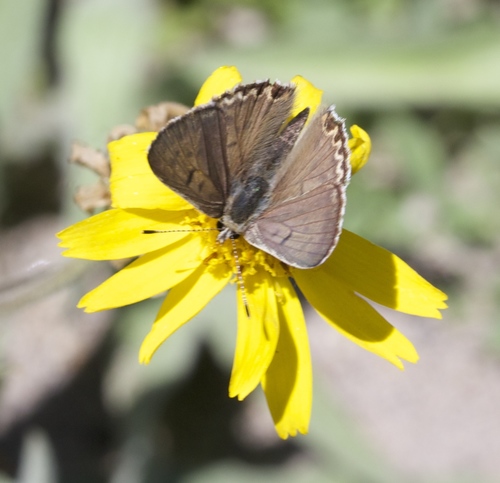
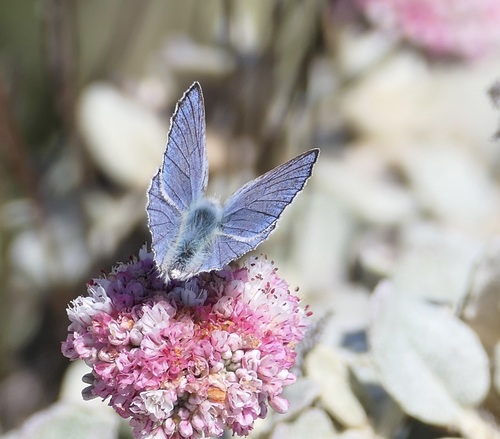
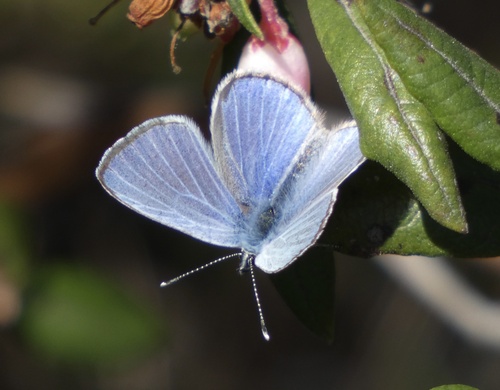
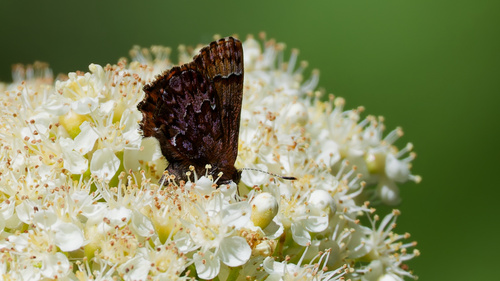
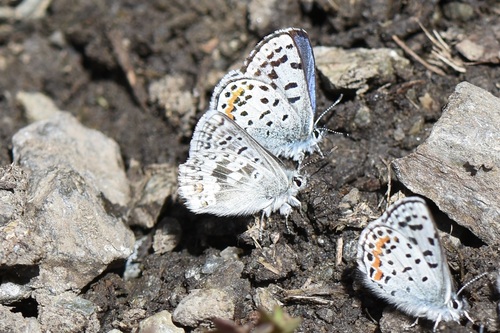
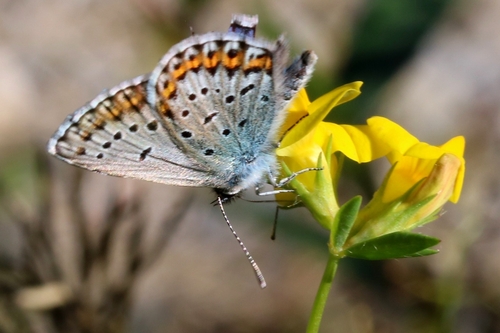
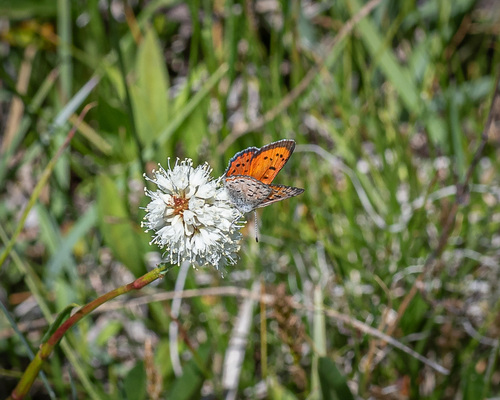
Mitoura spinetorum

Mitoura spinetorum

Mitoura spinetorum

Daily sighting probability ~10% · With luck
at Yellowstone National Park

In 3 days ~30% in a week ~50%

32 Verified sightings at Yellowstone National Park From 2019 to 2026
91 In all 5 parks
July Best month
☀️ Diurnal When it's spotted

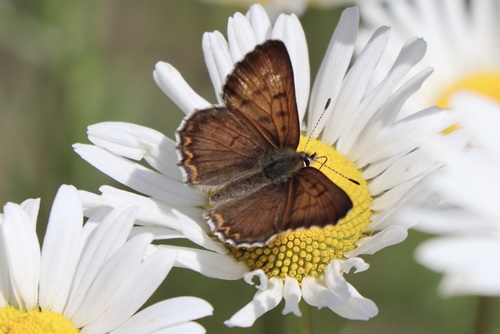
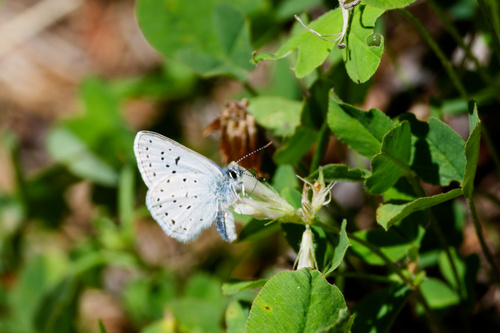
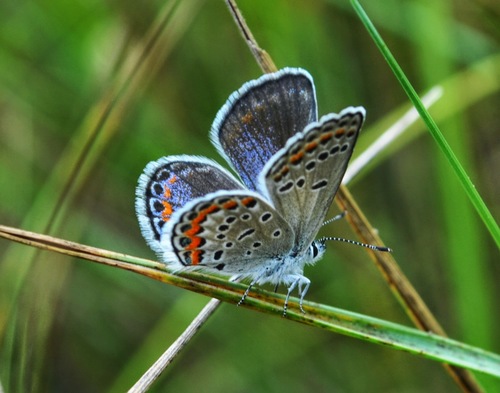
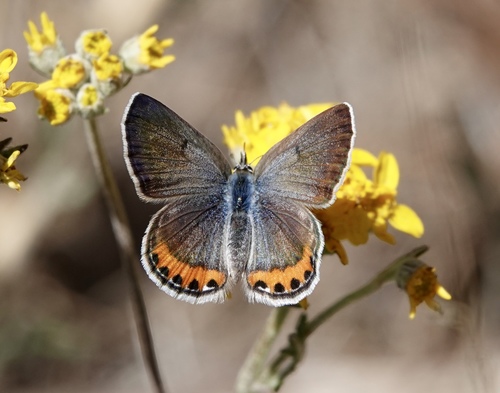
About the Mitoura spinetorum

Callophrys spinetorum, the thicket hairstreak, is a butterfly of the family Lycaenidae. It was described by William Chapman Hewitson in 1867. It is found in North America from British Columbia through the Rocky Mountains to New Mexico and Mexico and through California to Baja California. The habitat consists of pinyon-juniper forests, mixed woodlands, and coniferous forests.

The wingspan is 25–32 mm. Adults are on wing from May to August in one generation per year. They feed on flower nectar. The larvae are specialists, feeding on the shoots, flowers, and fruit of dwarf mistletoes in the genus Arceuthobium. In particular, larvae have been documented feeding on A. campylopodum, A. occidentale, A. abietinum, A. blumeri, A. cyanocarpum, A. laricis, A. vaginatum subsp. cryptopodum, A. divaricatum, and A. globosum. The larvae resemble their host plants, both because of their segmented bodies and because they take on the color of their food, an example of mimicry. Wikipedia →

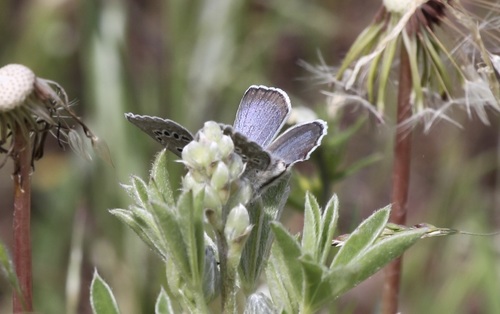
Global Distribution

Parks Where Found

# Park Country Daily sighting probability
1 Yellowstone National Park 🇺🇸 United States
~10%
2 Grand Teton National Park 🇺🇸 United States
~10%
3 Grand Canyon National Park 🇺🇸 United States
~10%
4 Rocky Mountain National Park 🇺🇸 United States
~10%
5 Banff National Park 🇨🇦 Canada
~10%

Before you go

What are the chances of seeing a Mitoura spinetorum in Yellowstone National Park?

With luck

About 10% of wildlife watchers report a Mitoura spinetorum sighting in Yellowstone National Park on a given day, based on 32 verified sightings from GBIF citizen-science data from 2019 to 2026. It is the 33rd most-seen of the 160 insects we can rate there. Over three days the chance rises to about 30%, and over a week to about 50%, if each day is a fresh chance.

When is the best time to see a Mitoura spinetorum in Yellowstone National Park?

July

In that month about 20% of wildlife watchers report a Mitoura spinetorum in Yellowstone National Park on a given day, against under 5% in August to May, the lowest months. That is one of Yellowstone National Park's driest months, with about 30 mm of rain against 70 mm in February.

What time of day is best to see a Mitoura spinetorum?

Between 10 am and 1 pm

Across all the parks we cover, that three-hour window holds the most Mitoura spinetorum sightings with a recorded time, and nearly all of them come between 6 am and 6 pm: it is a daytime animal.

Is Yellowstone National Park the best place to see a Mitoura spinetorum?

Yes

Of the 5 parks where we can rate Mitoura spinetorum sightings, Yellowstone National Park has the highest daily chance: about 10%. Next come Grand Teton National Park (United States, about 10%) and Grand Canyon National Park (United States, about 10%).

Which relatives of the Mitoura spinetorum live in Yellowstone National Park?

Same family: Lycaenidae

The closest relatives of the Mitoura spinetorum that you can see in Yellowstone National Park (family Lycaenidae, Gossamer-winged Butterflies) are Boisduval's Blue (about 10%), Edith's Copper (about 10%) and Blue Copper (about 10%), with each one's daily chance of a sighting.

Where does the Mitoura spinetorum sighting chance come from?

GBIF citizen-science records

It is estimated from how often the Mitoura spinetorum is recorded against all the insects logged in Yellowstone National Park (32 verified sightings from 2019 to 2026), calibrated against known sighting rates. Figures are rounded to the nearest 10% because citizen-science data supports honest approximations, not decimals, and months with records from fewer than five people show "—". How it works.

← Back to Yellowstone National Park