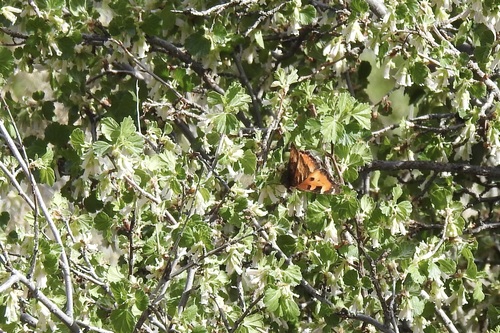
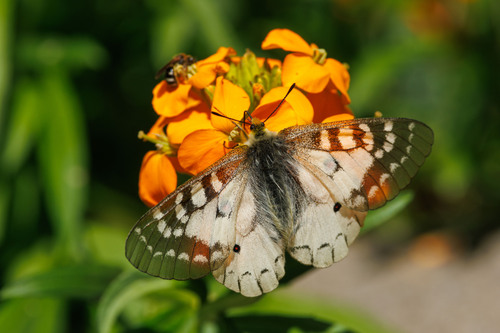
Wild Forget-Me-Not Moth

Wild Forget-Me-Not Moth

Gnophaela latipennis

Daily sighting probability ~10% · With luck
at Yosemite National Park

In 3 days ~20% in a week ~40%

14 Verified sightings at Yosemite National Park From 2019 to 2026
14 In 1 park
July Best month
☀️ Diurnal When it's spotted

About the Wild Forget-Me-Not Moth

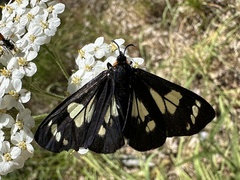
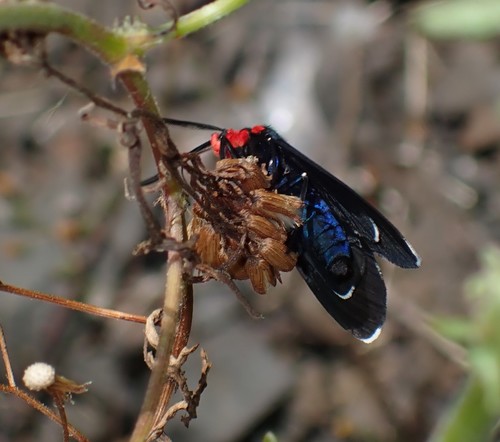
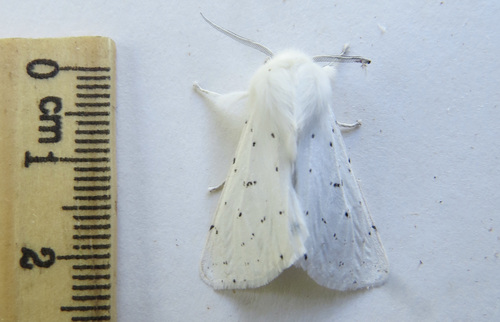
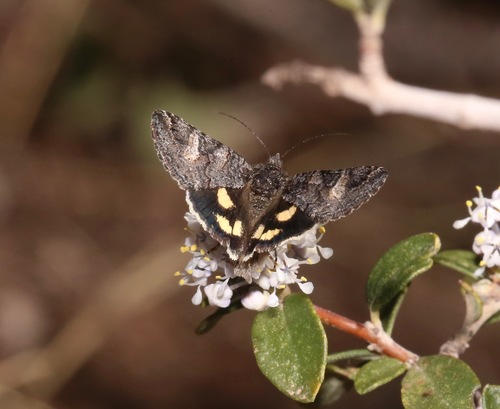
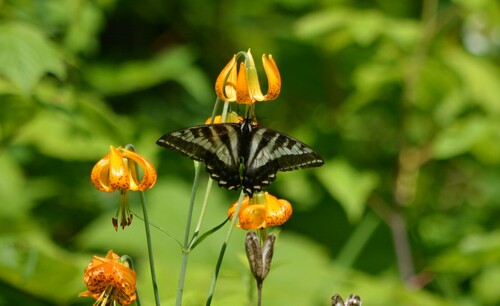
Gnophaela latipennis, the wild forget-me-not moth, is a moth of the family Erebidae. It was described by Jean Baptiste Boisduval in 1852. It is found in the western North America in Oregon and California. The habitat consists of open mixed hardwood-conifer forests, oak woodlands and open riparian areas near creeks, as well as in open ponderosa pine forests and mountain meadows.

The length of the forewings is 26 mm (1.0 in). Adults are on wing from late May to early August. This moth is described in "Lepidoptera of the Pacific Northwest" as, "Wings black with white markings in a distinctive pattern. Each forewing with a single, small, basal, white spot; the medial and distal clusters consist of four white spots. Each hindwing with one medial cluster of three white spots, and one distal cluster of two white spots."

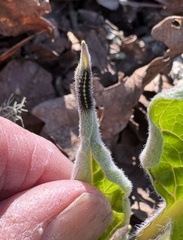
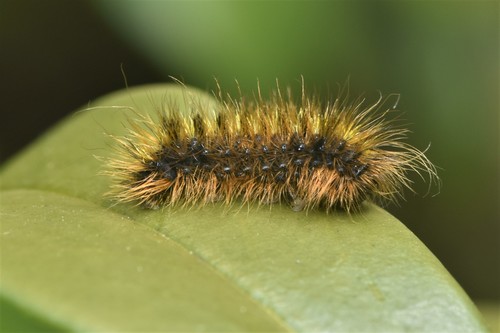
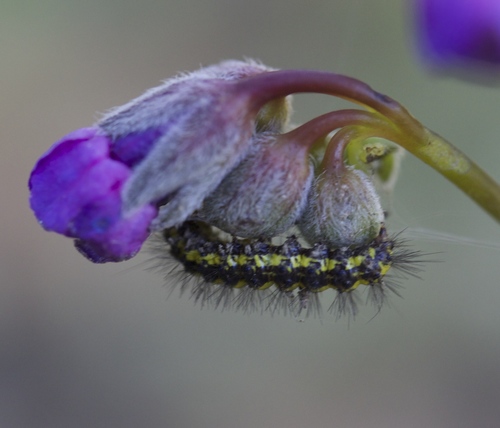
Miller describes the caterpillar as "Yellow with dorsal, lateral, and ventral black patches; clusters of white hairs originate from black bases with blue spots. Head red-brown." G. latipennis overwinters as second instar larva. Host Plants are Cynoglossum grande, Cynoglossum occidentale, Hackelia californica, Mertensia and Myosotis species. Wikipedia →
Global Distribution

Parks Where Found

# Park Country Daily sighting probability
1 Yosemite National Park 🇺🇸 United States
~10%

More parks will be added in future updates.

Before you go

What are the chances of seeing a Wild Forget-Me-Not Moth in Yosemite National Park?

With luck

About 10% of wildlife watchers report a Wild Forget-Me-Not Moth sighting in Yosemite National Park on a given day, based on 14 verified sightings from GBIF citizen-science data from 2019 to 2026. It is the 98th most-seen of the 227 insects we can rate there. Over three days the chance rises to about 20%, and over a week to about 40%, if each day is a fresh chance.

When is the best time to see a Wild Forget-Me-Not Moth in Yosemite National Park?

May to July

In those months about 10% of wildlife watchers report a Wild Forget-Me-Not Moth in Yosemite National Park on a given day, against under 5% in August to April, the lowest months. Those are among Yosemite National Park's driest months, with about 35 mm of rain a month against 220 mm in January.

What time of day is best to see a Wild Forget-Me-Not Moth?

Between 11 am and 2 pm

Across all the parks we cover, that three-hour window holds the most Wild Forget-Me-Not Moth sightings with a recorded time, and nearly all of them come between 6 am and 6 pm: it is a daytime animal.

Where else can you see a Wild Forget-Me-Not Moth?

Only Yosemite National Park, in our data

Yosemite National Park is the only park on Wallace's Line with enough records to rate Wild Forget-Me-Not Moth sightings: about 10% of wildlife watchers there report one on a given day.

Which relatives of the Wild Forget-Me-Not Moth live in Yosemite National Park?

Same family: Erebidae

The closest relatives of the Wild Forget-Me-Not Moth that you can see in Yosemite National Park (family Erebidae, Underwing, Tiger, Tussock, and Allied Moths) are Silver-Spotted Tiger Moth (about 20%), Isabella Tiger Moth (about 10%) and Douglas-Fir Tussock Moth (about 10%), with each one's daily chance of a sighting.

Where does the Wild Forget-Me-Not Moth sighting chance come from?

GBIF citizen-science records

It is estimated from how often the Wild Forget-Me-Not Moth is recorded against all the insects logged in Yosemite National Park (14 verified sightings from 2019 to 2026), calibrated against known sighting rates. Figures are rounded to the nearest 10% because citizen-science data supports honest approximations, not decimals, and months with records from fewer than five people show "—". How it works.

← Back to Yosemite National Park