About the Douglas-Fir Tussock Moth
Orgyia pseudotsugata, the Douglas-fir tussock moth, is a moth of the subfamily Lymantriinae first described by James Halliday McDunnough in 1921. It is found in western North America. Its population periodically irrupts in cyclical outbreaks. The caterpillars feed on the needles of Douglas fir, true fir, and spruce in summer, and moths are on the wing from July or August to November.
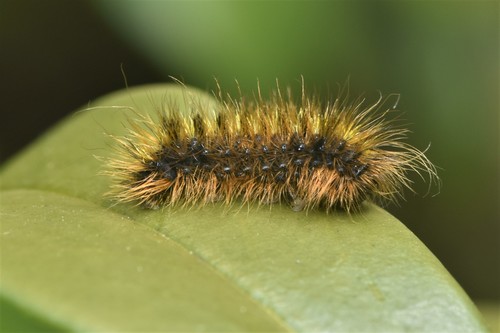
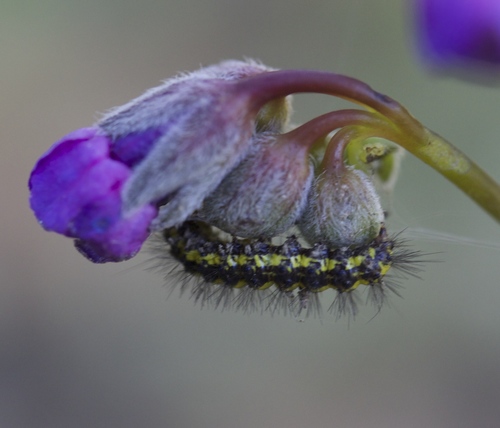
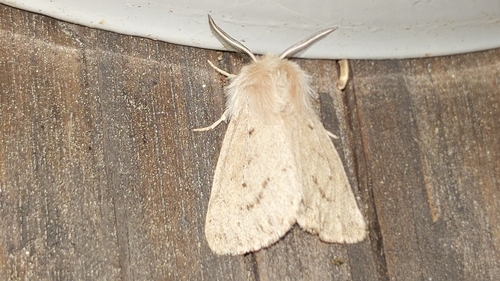
Adult males are grayish brown moths with mottled light and dark markings. The males' wingspread is 25–34 mm (0.98–1.34 in). When the wings are spread open, the brown hindwings can be seen. Individuals in the northern part of its range are darker and southern populations are lighter. Antennae are plumose (feathery). Females are flightless with only rudimentary wings. Larvae (caterpillars) are 20–26 mm (0.79–1.02 in) and colorful with red spots, white spines, conspicuous red-tipped white tufts or "tussocks", and dense bunches of long, black hairs projecting to the front and behind.
The Douglas-fir tussock moth is native to forests of western North America and outbreaks have been identified in British Columbia, Idaho, Washington, Oregon, Nevada, California, Arizona... Wikipedia →