Utah Prairie Dog

Utah Prairie Dog

Cynomys parvidens

Silhouette: Steven Traver · PhyloPic

LCNTVUENEndangeredCR Endemic
Daily sighting probability ~10% · With luck
at Zion National Park

In 3 days ~30% in a week ~60%

22 Verified sightings at Zion National Park From 2019 to 2026
22 In 1 park
June Best month
☀️ Diurnal When it's spotted

About the Utah Prairie Dog

The Utah prairie dog (Cynomys parvidens) is the smallest species of prairie dog and is endemic to the south-central steppes of the American state of Utah. The species is listed in the IUCN Red List of Threatened Species with a status of Endangered. Because of this, it is a protected species; the prairie dog faces various threats - the most dangerous being habitat loss and diseases.

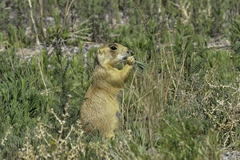
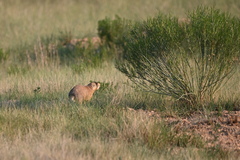
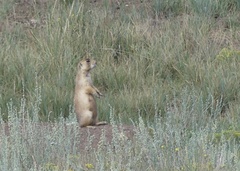
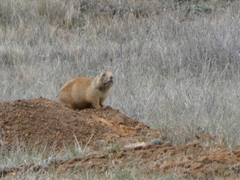
The fur of Utah prairie dogs is multicolored, which consists of black, brown, and dark brown at the tip. Their faces have dark brown cheeks and whitish tone around their chins and mouth. Utah prairie dogs also have distinctly clay colored proximal tail parts and dorsum, as well as dark eyebrows. In terms of taxonomy, there are two subgenera of prairie dogs: "black-tailed" prairie dogs and "white-tailed" prairie dogs. Utah prairie dogs are a member of the latter of the two groups and the subgenus Leucrossuromys. Utah prairie dogs may have been part of the interbreeding species of white-tailed prairie dogs but their differences are a result of what is known as allopatric speciation – separation of a species by physiographic and ecological barriers.

The total... Wikipedia →

Global Distribution

Parks Where Found

# Park Country Daily sighting probability
1 Zion National Park 🇺🇸 United States
~10%

More parks will be added in future updates.

Before you go

What are the chances of seeing an Utah Prairie Dog in Zion National Park?

With luck

About 10% of wildlife watchers report an Utah Prairie Dog sighting in Zion National Park on a given day, based on 22 verified sightings from GBIF citizen-science data from 2019 to 2026. It is the 8th most-seen of the 19 mammals we can rate there. Over three days the chance rises to about 30%, and over a week to about 60%, if each day is a fresh chance.

When is the best time to see an Utah Prairie Dog in Zion National Park?

March, June and August

In those months about 20% of wildlife watchers report an Utah Prairie Dog in Zion National Park on a given day, against under 5% in October and December–February, the lowest months.

What time of day is best to see an Utah Prairie Dog?

Between 11 am and 2 pm

Across all the parks we cover, that three-hour window holds the most Utah Prairie Dog sightings with a recorded time, and about 8 in 10 of them come between 6 am and 6 pm: it is a daytime animal.

Where else can you see an Utah Prairie Dog?

Only Zion National Park, in our data

Zion National Park is the only park on Wallace's Line with enough records to rate Utah Prairie Dog sightings: about 10% of wildlife watchers there report one on a given day.

Which relatives of the Utah Prairie Dog live in Zion National Park?

Same family: Sciuridae

The closest relatives of the Utah Prairie Dog that you can see in Zion National Park (family Sciuridae, Squirrels) are Rock Squirrel (about 90%), Uinta Chipmunk (about 70%) and White-tailed Antelope Squirrel (about 10%), with each one's daily chance of a sighting.

Where does the Utah Prairie Dog sighting chance come from?

GBIF citizen-science records

It is estimated from how often the Utah Prairie Dog is recorded against all the mammals logged in Zion National Park (22 verified sightings from 2019 to 2026), calibrated against known sighting rates. Figures are rounded to the nearest 10% because citizen-science data supports honest approximations, not decimals, and months with records from fewer than five people show "—". How it works.

← Back to Zion National Park