
Large Sand Scarab

Large Sand Scarab

Pericoptus truncatus

Endemic
Daily sighting probability ~10% · With luck
at Abel Tasman National Park

In 3 days ~20% in a week ~50%

7 Verified sightings at Abel Tasman National Park From 2019 to 2026
7 In 1 park
December Best month
☀️ Diurnal When it's spotted

About the Large Sand Scarab

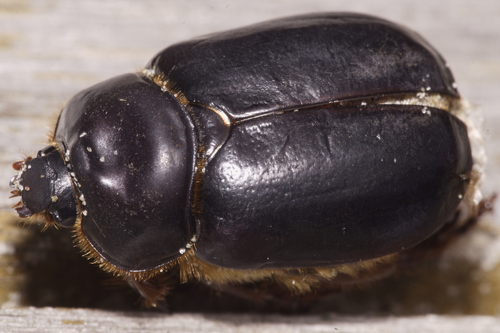
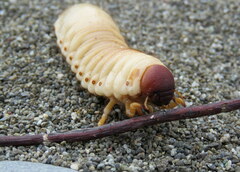
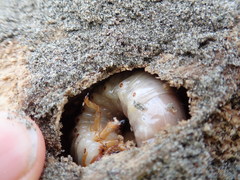
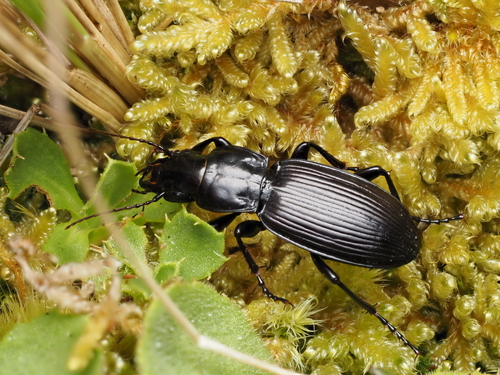
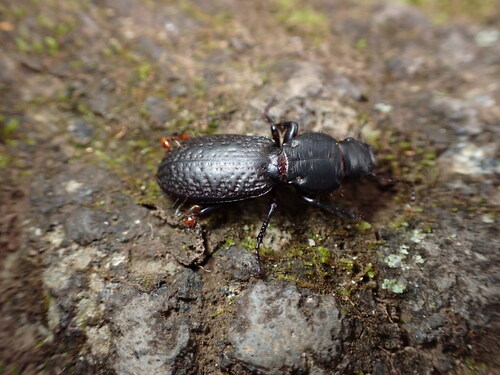
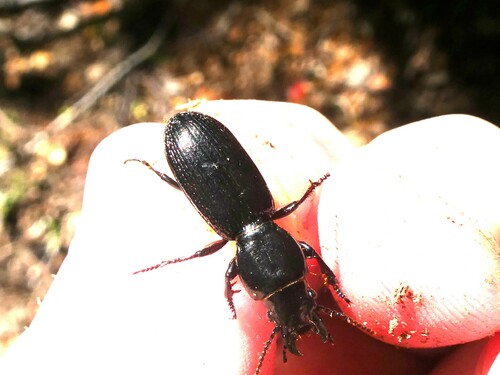
Pericoptus truncatus is a large sand scarab beetle. It is native to New Zealand and is found on beaches throughout New Zealand. Its Māori name is ngungutawa. The adult spends the daylight hours buried in the sand, emerging at night to fly noisily around in search of mates and food. It leaves obvious trails in the sand when walking around. The female lays eggs deep in the sand and the large white grubs can often be found under driftwood, though they feed on roots of dune plants.

Thomas Broun described the species as follows: Brownish-black, moderately shining, legs and antennae ferruginous, the upper surface and the pygidium are nude, the lower is castaneous, varying in hue, the sternum is densely covered with long yellowish hairs, and the sides of the abdomen with shorter ones. The head is small, flattened in front of the eyes, and this flat portion usually bears a shallow rugose sculpture, the hind portion being almost smooth. The prothorax is much broader than long, with obtusely rounded angles, its apex sinuated behind each eye, and its base widely bisinuated and slightly lobed in the middle, the sides are rounded and narrowed towards the front; the frontal tubercle... Wikipedia →

Global Distribution

Parks Where Found

# Park Country Daily sighting probability
1 Abel Tasman National Park 🇳🇿 New Zealand
~10%

More parks will be added in future updates.

Before you go

What are the chances of seeing a Large Sand Scarab in Abel Tasman National Park?

With luck

About 10% of wildlife watchers report a Large Sand Scarab sighting in Abel Tasman National Park on a given day, based on 7 verified sightings from GBIF citizen-science data from 2019 to 2026. It is the 51st most-seen of the 64 insects we can rate there. Over three days the chance rises to about 20%, and over a week to about 50%, if each day is a fresh chance.

When is the best time to see a Large Sand Scarab in Abel Tasman National Park?

December

In that month about 20% of wildlife watchers report a Large Sand Scarab in Abel Tasman National Park on a given day, against under 5% in March to November, the lowest months.

What time of day is best to see a Large Sand Scarab?

Between 3 and 6 pm

Across all the parks we cover, that three-hour window holds the most Large Sand Scarab sightings with a recorded time, and nearly all of them come between 6 am and 6 pm: it is a daytime animal.

Where else can you see a Large Sand Scarab?

Only Abel Tasman National Park, in our data

Abel Tasman National Park is the only park on Wallace's Line with enough records to rate Large Sand Scarab sightings: about 10% of wildlife watchers there report one on a given day.

Which relatives of the Large Sand Scarab live in Abel Tasman National Park?

Same family: Scarabaeidae

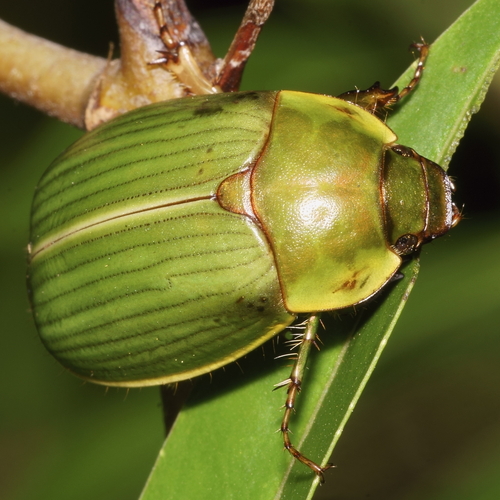
The closest relatives of the Large Sand Scarab that you can see in Abel Tasman National Park (family Scarabaeidae, Scarabs) are Tanguru Chafer (about 20%) and Manuka Beetle (about 10%), with each one's daily chance of a sighting.

Where does the Large Sand Scarab sighting chance come from?

GBIF citizen-science records

It is estimated from how often the Large Sand Scarab is recorded against all the insects logged in Abel Tasman National Park (7 verified sightings from 2019 to 2026), calibrated against known sighting rates. Figures are rounded to the nearest 10% because citizen-science data supports honest approximations, not decimals, and months with records from fewer than five people show "—". How it works.

← Back to Abel Tasman National Park