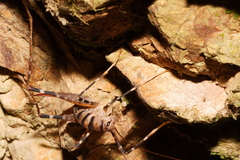
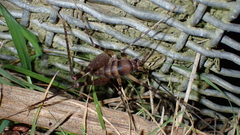
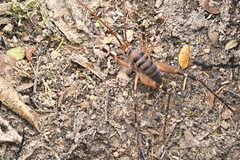
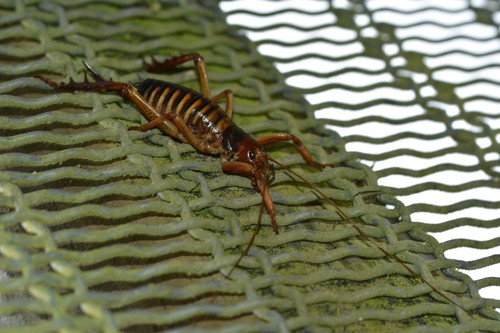
Pachyrhamma edwardsii
Daily sighting probability ~10% · With luck
at Abel Tasman National Park

In 3 days ~30% in a week ~60%

10 Verified sightings at Abel Tasman National Park From 2019 to 2026
10 In 1 park
April Best month
☀️ Diurnal When it's spotted

About the Pachyrhamma edwardsii

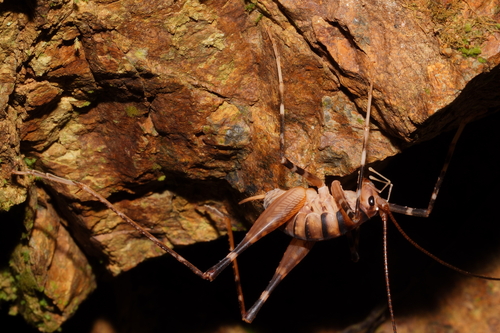
Pachyrhamma edwardsii is a species of wētā, in the family Rhaphidophoridae (cave crickets, cave wētā, or camel crickets), endemic to New Zealand. This species is found in caves, or large cavities (cave-like structures) where there is high humidity and little plant or animal life.

Pachyrhamma edwardsii is widespread in central New Zealand from Waikato, North Island to Nelson, South Island. It is a common occupant of anthropogenic rock tunnels and limestone caves and is found in forests and stony stream beds. It also inhabits offshore Islands of Marlborough sounds, and Mana and Kapiti Islands near Wellington. This species can be found at night in forests, and near cave entrances. They belong to a moisture-loving group of insects, and prefer cool temperatures, and high humidity.

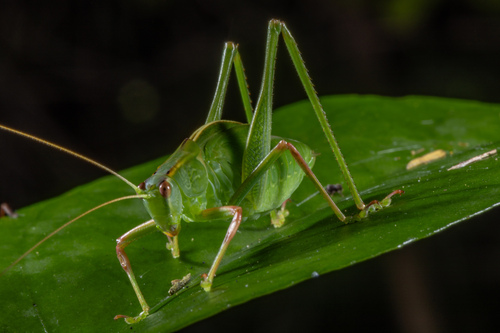
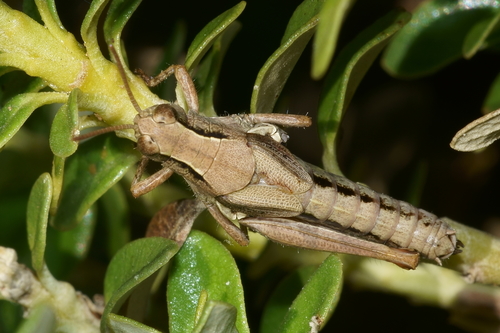
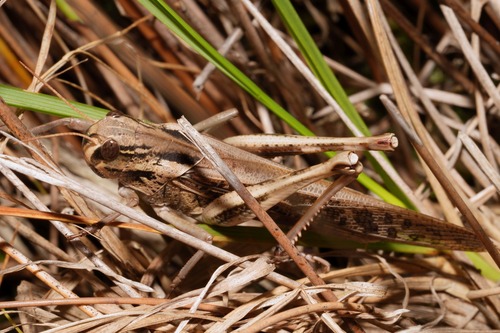
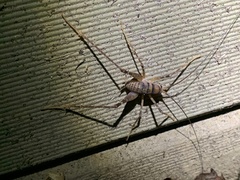
Small bodies up to about 41mm (Average 35mm) length. Very long hind legs (leg: body ratio = 3.17:1), antennae (4.5-5 x body length), and ovipositor (7-8 x body length). Head is vertical and mandibles are small. Sexual dimorphic antennae where males possess longer and stouter antennae than females. Body sparsely clothed with golden setae. Adults are brown with dark... Wikipedia →
Global Distribution

Parks Where Found

# Park Country Daily sighting probability
1 Abel Tasman National Park 🇳🇿 New Zealand
~10%

More parks will be added in future updates.

Before you go

What are the chances of seeing a Pachyrhamma edwardsii in Abel Tasman National Park?

With luck

About 10% of wildlife watchers report a Pachyrhamma edwardsii sighting in Abel Tasman National Park on a given day, based on 10 verified sightings from GBIF citizen-science data from 2019 to 2026. It is the 22nd most-seen of the 64 insects we can rate there. Over three days the chance rises to about 30%, and over a week to about 60%, if each day is a fresh chance.

When is the best time to see a Pachyrhamma edwardsii in Abel Tasman National Park?

April

In that month about 30% of wildlife watchers report a Pachyrhamma edwardsii in Abel Tasman National Park on a given day, against under 5% in March, May, July–September and November, the lowest months.

What time of day is best to see a Pachyrhamma edwardsii?

Between 11 am and 2 pm

Across all the parks we cover, that three-hour window holds the most Pachyrhamma edwardsii sightings with a recorded time, and about 8 in 10 of them come between 6 am and 6 pm: it is a daytime animal.

Where else can you see a Pachyrhamma edwardsii?

Only Abel Tasman National Park, in our data

Abel Tasman National Park is the only park on Wallace's Line with enough records to rate Pachyrhamma edwardsii sightings: about 10% of wildlife watchers there report one on a given day.

Where does the Pachyrhamma edwardsii sighting chance come from?

GBIF citizen-science records

It is estimated from how often the Pachyrhamma edwardsii is recorded against all the insects logged in Abel Tasman National Park (10 verified sightings from 2019 to 2026), calibrated against known sighting rates. Figures are rounded to the nearest 10% because citizen-science data supports honest approximations, not decimals, and months with records from fewer than five people show "—". How it works.

← Back to Abel Tasman National Park