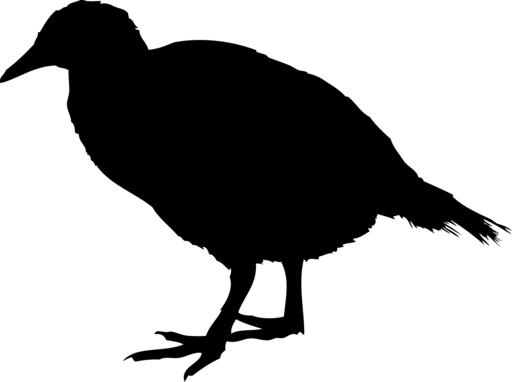
Weka

Weka

Gallirallus australis

Silhouette: T. Michael Keesey (vectorization) and HuttyMcphoo (photography) · PhyloPic

LCNTVUVulnerableENCR Endemic
Daily sighting probability ~80% · Very likely
at Abel Tasman National Park

In 3 days >90%

1,312 Verified sightings at Abel Tasman National Park From 2019 to 2026
3,216 In all 4 parks
April Best month
☀️ Diurnal When it's spotted

About the Weka

The weka, also known as the Māori hen or woodhen (Gallirallus australis) is a flightless bird species of the rail family. It is endemic to New Zealand. Some authorities consider it as the only extant member of the genus Gallirallus. Four subspecies are recognized but only two (northern/southern) are supported by genetic evidence.

The weka are sturdy brown birds about the size of a chicken. As omnivores, they feed mainly on invertebrates and fruit. Weka usually lay eggs between August and January; both sexes help to incubate. Weka are large rails. They are predominantly rich brown mottled with black and grey; the brown shade varies from pale to dark depending on subspecies. The male is the larger sex at 50–60 cm (20–24 in) in length and 532–1,605 g (1.173–3.538 lb) in weight. Females measure 46–50 cm (18–20 in) in length and weigh 350–1,035 g (0.772–2.282 lb). The reduced wingspan ranges from 50 to 60 cm (20 to 24 in).

The relatively large, reddish-brown beak is about 5 cm (2.0 in) long, stout and tapered, and used as a weapon. The pointed tail is near-constantly being flicked, a sign of unease characteristic of the rail family. Weka have sturdy legs and reduced wings... Wikipedia →

Sounds

Call1:17

New Zealand · 2026

© craig wilson · XC1182466 · CC BY 4.0

Duet0:21

New Zealand · 2024

© David Boyle · XC973080 · CC BY-NC-SA 4.0

Song0:33

New Zealand · 2016

© Dan Lane · XC345371 · CC BY-NC-SA 4.0

Global Distribution

Parks Where Found

# Park Country Daily sighting probability
1 Abel Tasman National Park 🇳🇿 New Zealand
~80%
2 Rakiura National Park 🇳🇿 New Zealand
~30%
3 Fiordland National Park 🇳🇿 New Zealand
~30%
4 Arthur's Pass National Park 🇳🇿 New Zealand
~10%

Zoos & Centres Where Found

# Zoo / Centre Country
1 Hamilton Zoo 🇳🇿 New Zealand In captivity
2 Willowbank Wildlife Reserve 🇳🇿 New Zealand In captivity
3 Kiwi Park 🇳🇿 New Zealand In captivity
4 Ōtorohanga Kiwi House 🇳🇿 New Zealand In captivity

Before you go

What are the chances of seeing a Weka in Abel Tasman National Park?

Very likely

About 80% of wildlife watchers report a Weka sighting in Abel Tasman National Park on a given day, based on 1,312 verified sightings from GBIF citizen-science data from 2019 to 2026. It is the most-seen of the 69 birds we can rate there. Over three days the chance rises to over 90%, if each day is a fresh chance.

When is the best time to see a Weka in Abel Tasman National Park?

March–April and July

In those months about 90% of wildlife watchers report a Weka in Abel Tasman National Park on a given day, against about 60% in June, the lowest month.

What time of day is best to see a Weka?

Between 10 am and 1 pm

Across all the parks we cover, that three-hour window holds the most Weka sightings with a recorded time, and about 9 in 10 of them come between 6 am and 6 pm: it is a daytime animal.

Is Abel Tasman National Park the best place to see a Weka?

Yes

Of the 4 parks where we can rate Weka sightings, Abel Tasman National Park has the highest daily chance: about 80%. Next come Rakiura National Park (New Zealand, about 30%) and Fiordland National Park (New Zealand, about 30%).

Where does the Weka sighting chance come from?

GBIF citizen-science records

It is estimated from how often the Weka is recorded against all the birds logged in Abel Tasman National Park (1,312 verified sightings from 2019 to 2026), calibrated against known sighting rates. Figures are rounded to the nearest 10% because citizen-science data supports honest approximations, not decimals, and months with records from fewer than five people show "—". How it works.

← Back to Abel Tasman National Park