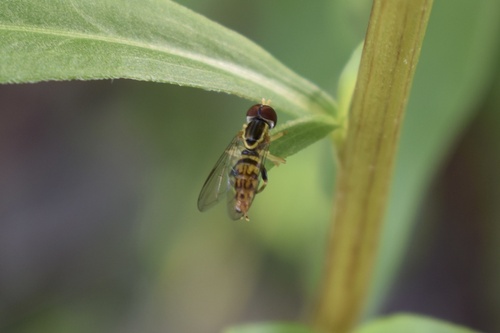

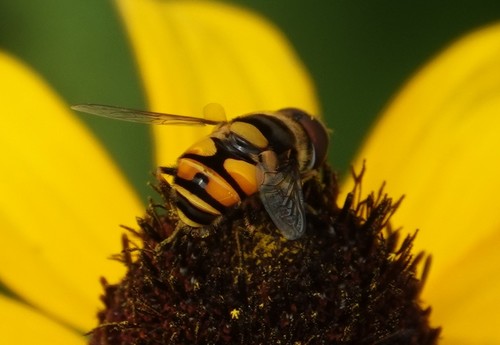
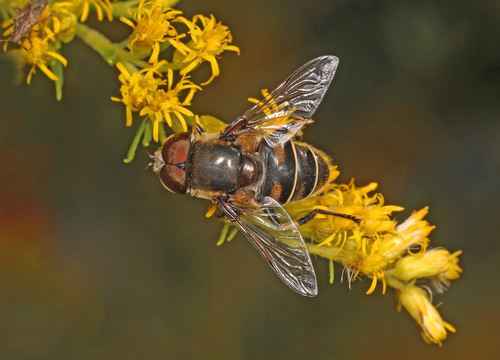
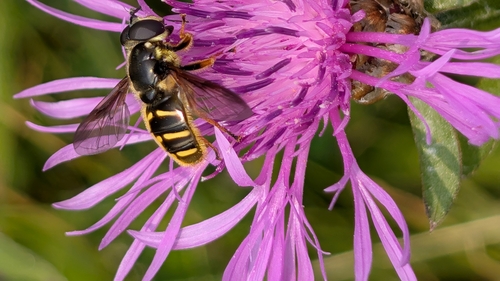
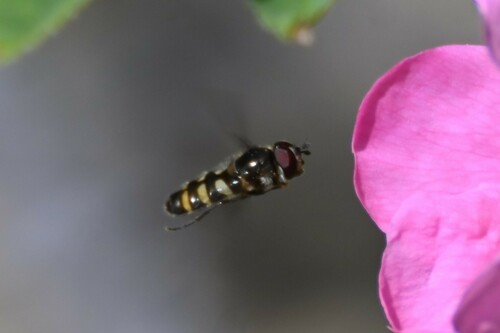
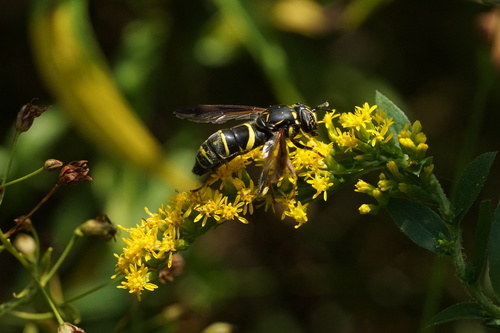
Common European Greenbottle Fly

Common European Greenbottle Fly

Lucilia sericata

Daily sighting probability ~10% · With luck
at Acadia National Park

In 3 days ~20% in a week ~30%

10 Verified sightings at Acadia National Park From 2019 to 2026
10 In 1 park
August Best month
☀️ Diurnal When it's spotted

About the Common European Greenbottle Fly

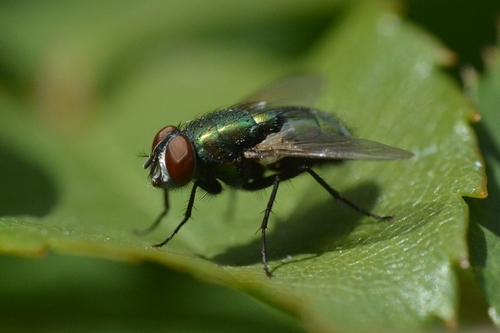
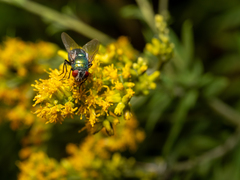
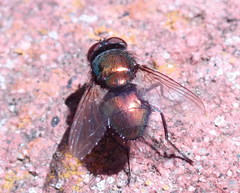
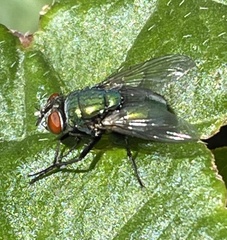
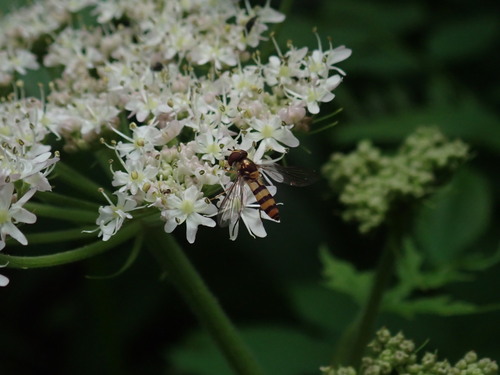
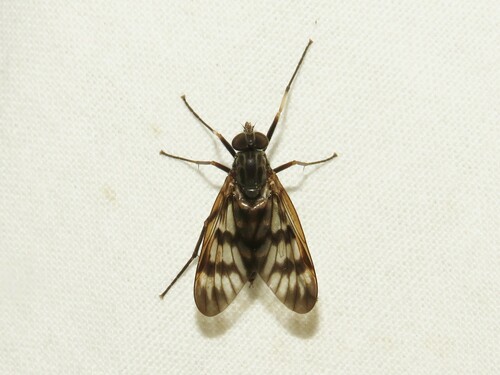
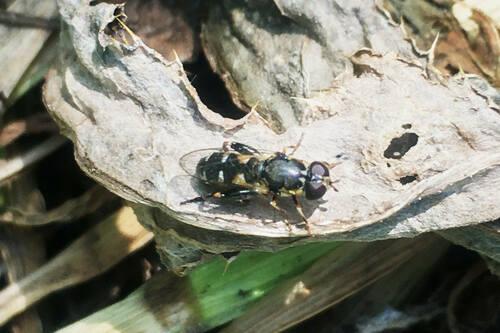
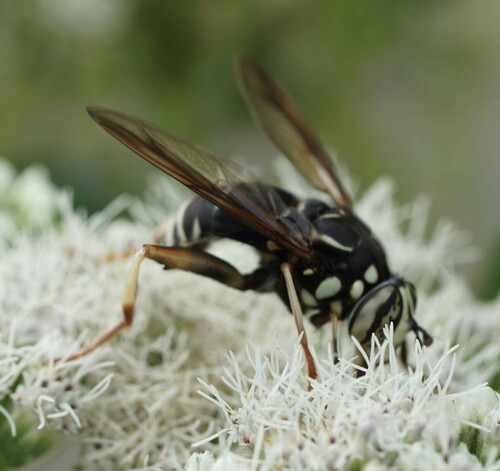
The common green bottle fly or common European green bottle fly (Lucilia sericata) is a blowfly found in most areas of the world and is the most well-known of the numerous green bottle fly species. Its body is 10–14 mm (0.39–0.55 in) in length – slightly larger than a house fly – and has brilliant, metallic, blue-green or golden coloration with black markings. It has short, sparse, black bristles (setae) and three cross-grooves on the thorax. The wings are clear with light brown veins, and the legs and antennae are black. The larvae of the fly may be used for maggot therapy, are commonly used in forensic entomology, and can be the cause of myiasis in livestock and pets. The common green bottle fly emerges in the spring for mating.

The defining characteristic of L. sericata and the one most used when identifying the adult fly is the presence of three bristles on the dorsal mesothorax, located on the middle of the back of the fly. L. sericata is almost identical to its conspecific, L. cuprina, and identification between them requires microscopic examination of two main distinguishing characteristics. L. sericata is blue-black, as opposed to L. cuprina, which has a metallic... Wikipedia →

Global Distribution

Parks Where Found

# Park Country Daily sighting probability
1 Acadia National Park 🇺🇸 United States
~10%

More parks will be added in future updates.

Cities Where Found

# City Country Daily sighting probability
1 Guiyang 🇨🇳 China
~30%
2 Santiago 🇨🇱 Chile
~20%
3 Jerusalem 🇮🇱 Israel
~10%
4 Montreal 🇨🇦 Canada
~10%
5 Ciudad Juárez 🇲🇽 México
~10%
6 Zhuhai [Macau] 🇨🇳 China
~10%
7 Calgary 🇨🇦 Canada
~10%
8 Toronto 🇨🇦 Canada
~10%
9 Vancouver 🇨🇦 Canada
~10%
10 Tel Aviv 🇮🇱 Israel
~10%

Before you go

What are the chances of seeing a Common European Greenbottle Fly in Acadia National Park?

With luck

About 10% of wildlife watchers report a Common European Greenbottle Fly sighting in Acadia National Park on a given day, based on 10 verified sightings from GBIF citizen-science data from 2019 to 2026. It is the 245th most-seen of the 405 insects we can rate there. Over three days the chance rises to about 20%, and over a week to about 30%, if each day is a fresh chance.

When is the best time to see a Common European Greenbottle Fly in Acadia National Park?

July to September

In those months about 10% of wildlife watchers report a Common European Greenbottle Fly in Acadia National Park on a given day, against under 5% in October to June, the lowest months.

What time of day is best to see a Common European Greenbottle Fly?

Between 11 am and 2 pm

Across all the parks we cover, that three-hour window holds the most Common European Greenbottle Fly sightings with a recorded time, and nearly all of them come between 6 am and 6 pm: it is a daytime animal.

Where else can you see a Common European Greenbottle Fly?

Only Acadia National Park, in our data

Acadia National Park is the only park on Wallace's Line with enough records to rate Common European Greenbottle Fly sightings: about 10% of wildlife watchers there report one on a given day.

Which relatives of the Common European Greenbottle Fly live in Acadia National Park?

Same order: Diptera

The closest relatives of the Common European Greenbottle Fly that you can see in Acadia National Park (order Diptera, Flies) are Margined Calligrapher (about 20%), Eastern Calligrapher (about 20%) and Common Drone Fly (about 20%), with each one's daily chance of a sighting.

Where does the Common European Greenbottle Fly sighting chance come from?

GBIF citizen-science records

It is estimated from how often the Common European Greenbottle Fly is recorded against all the insects logged in Acadia National Park (10 verified sightings from 2019 to 2026), calibrated against known sighting rates. Figures are rounded to the nearest 10% because citizen-science data supports honest approximations, not decimals, and months with records from fewer than five people show "—". How it works.

← Back to Acadia National Park