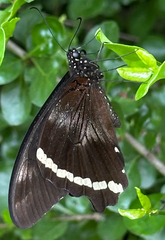
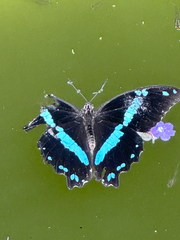
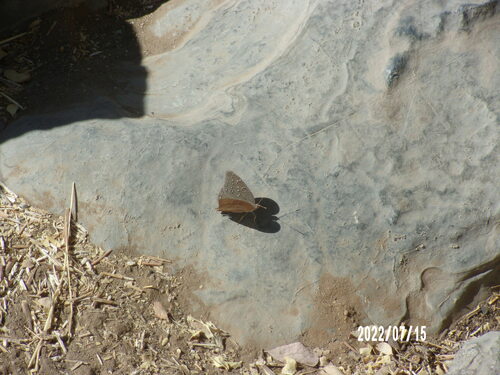
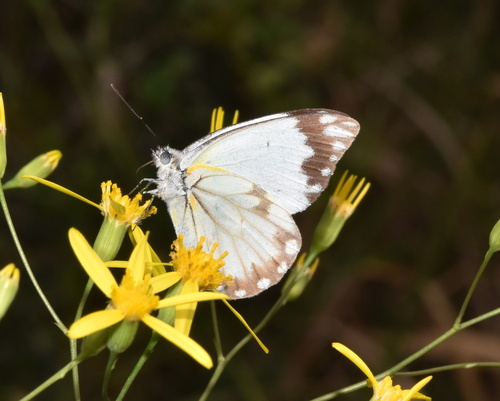
Narrow Green-Banded Swallowtail

Narrow Green-Banded Swallowtail

Papilio nireus

Daily sighting probability ~20% · Possible
at Akagera National Park

In 3 days ~60% in a week ~90%

5 Verified sightings at Akagera National Park From 2019 to 2026
235 In all 8 parks
February Best month
☀️ Diurnal When it's spotted

About the Narrow Green-Banded Swallowtail

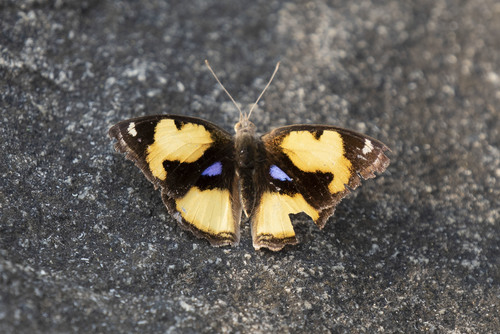
Papilio nireus, the green-banded swallowtail, narrow-banded blue swallowtail, or African blue-banded swallowtail, is a butterfly of the family Papilionidae. It is found in Sub-Saharan Africa. The wingspan is 75–90 millimetres (3.0–3.5 in) in males and 85–95 mm (3.3–3.7 in) in females.

Forewing above at most with two blue submarginal spots in cellules 7 and 8; rarely in the female with several yellow ones; the blue (male) or greenish (female) median band is 2–7 mm broad at the hindmargin of the forewing and 4–12 mm in the middle of the hindwing, and is only a little widened posteriorly; the spot in cellule 2 of the hindwing does not completely cover the base of the cellule and the narrow spot in cellule lc does not reach the cell; forewing beneath almost always entirely without submarginal spots. [Nominate] Median band of the forewing above well developed, the spots of cellules 2—4 obliquely cut off distally; the discal spot in cellule 2 of the hindwing is very long and produced farther towards the anal angle than the spot in cellule 1 c. Sierra Leone to Angola and Uganda. — lyaeus Dbl. The median band narrower, but complete; the spot in cellule 2 of the hindwing is... Wikipedia →

Global Distribution

Parks Where Found

# Park Country Daily sighting probability
1 Lake Mburo National Park 🇺🇬 Uganda
~30%
2 Akagera National Park 🇷🇼 Rwanda
~20%
3 Nairobi National Park 🇰🇪 Kenya
~20%
4 iSimangaliso Wetland Park 🇿🇦 South Africa
~20%
5 Kibale National Park 🇺🇬 Uganda
~20%
6 Garden Route National Park 🇿🇦 South Africa
~20%
7 Bwindi Impenetrable National Park 🇺🇬 Uganda
~10%
8 Addo Elephant National Park 🇿🇦 South Africa
~10%

Cities Where Found

# City Country Daily sighting probability
1 Nairobi 🇰🇪 Kenya
~20%
2 Lusaka 🇿🇲 Zambia
~20%
3 Kampala 🇺🇬 Uganda
~10%
4 Durban 🇿🇦 South Africa
~10%
5 Pretoria 🇿🇦 South Africa
~10%
6 Johannesburg 🇿🇦 South Africa
~10%

Before you go

What are the chances of seeing a Narrow Green-Banded Swallowtail in Akagera National Park?

Possible

About 20% of wildlife watchers report a Narrow Green-Banded Swallowtail sighting in Akagera National Park on a given day, based on 5 verified sightings from GBIF citizen-science data from 2019 to 2026. It is the 6th most-seen of the 9 insects we can rate there. Over three days the chance rises to about 60%, and over a week to about 90%, if each day is a fresh chance.

When is the best time to see a Narrow Green-Banded Swallowtail in Akagera National Park?

January–February and July

In those months about 40% of wildlife watchers report a Narrow Green-Banded Swallowtail in Akagera National Park on a given day, against under 5% in May, August and November–December, the lowest months. Those are among Akagera National Park's driest months, with about 30 mm of rain a month against 110 mm in November.

What time of day is best to see a Narrow Green-Banded Swallowtail?

Between 10 am and 1 pm

Across all the parks we cover, that three-hour window holds the most Narrow Green-Banded Swallowtail sightings with a recorded time, and about 9 in 10 of them come between 6 am and 6 pm: it is a daytime animal.

Is Akagera National Park the best place to see a Narrow Green-Banded Swallowtail?

2nd of 8

Of the 8 parks where we can rate Narrow Green-Banded Swallowtail sightings, Akagera National Park ranks 2nd at about 20%. The best odds are in Lake Mburo National Park (Uganda, about 30%).

Where does the Narrow Green-Banded Swallowtail sighting chance come from?

GBIF citizen-science records

It is estimated from how often the Narrow Green-Banded Swallowtail is recorded against all the insects logged in Akagera National Park (5 verified sightings from 2019 to 2026), calibrated against known sighting rates. Figures are rounded to the nearest 10% because citizen-science data supports honest approximations, not decimals, and months with records from fewer than five people show "—". How it works.
← Back to Akagera National Park