Double-banded Courser

Double-banded Courser

Rhinoptilus africanus

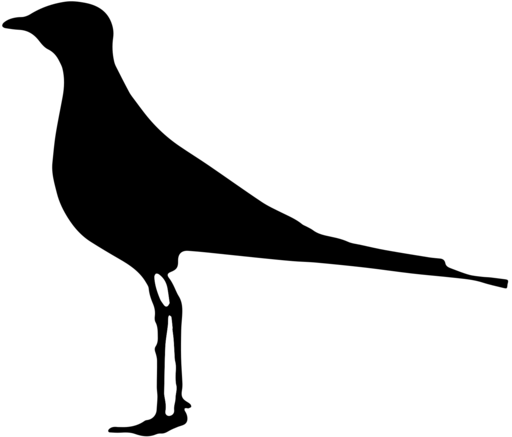
Silhouette: Cristian Gutierrez-Ibanez · PhyloPic

Daily sighting probability ~40% · Likely
at Amboseli National Park

In 3 days ~80% in a week >90%

494 Verified sightings at Amboseli National Park From 2019 to 2026
2,400 In all 9 parks
December Best month
☀️ Diurnal When it's spotted

About the Double-banded Courser

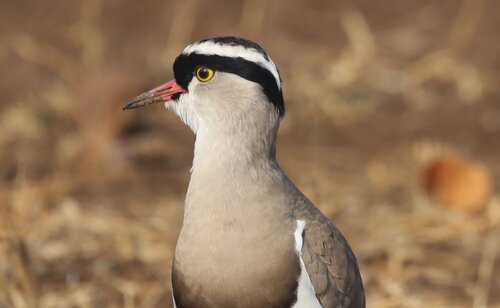
The double-banded courser (Smutsornis africanus), also known as the two-banded courser, is a species of bird in the family Glareolidae. It was formerly placed in the genus Rhinoptilus but is now the only species placed in the genus Smutsornis.

The double-banded courser was formally described in 1807 as Cursorius africanus by the Dutch zoologist Coenraad Jacob Temminck. The specimen had been collected by François Levaillant in Namaqualand on the west coast of southern Africa. This species was formerly placed in the genus Rhinoptilus. A 2022 molecular genetic study by David Cerný and Rossy Natale found that the double-banded courser diverged genetically from the other species in Rhinoptilus. The species was therefore moved to the resurrected genus Smutsornis that had been introduced in 1922 by South African zoologist Austin Roberts. The genus name combines the name of the South African politician Jan Smuts with the Ancient Greek ορνις/ornis, ορνιθος/ornithos meaning "bird".

Eight subspecies are recognised: S. a... Wikipedia →

Sounds

Call0:32

South Africa · 2021

© Tony Archer · XC625033 · CC BY-NC-SA 4.0

Alarm call0:17

Tanzania · 2018

© Bernard BOUSQUET · XC437666 · CC BY-NC-SA 4.0

Call0:34

Tanzania · 2019

© Peter Boesman · XC510386 · CC BY-NC-ND 4.0

Global Distribution

Parks Where Found

# Park Country Daily sighting probability
1 Amboseli National Park 🇰🇪 Kenya
~40%
2 Etosha National Park 🇳🇦 Namibia
~30%
3 Tarangire National Park 🇹🇿 Tanzania
~20%
4 Serengeti National Park 🇹🇿 Tanzania
~20%
5 Ngorongoro Conservation Area 🇹🇿 Tanzania
~10%
6 Lake Manyara National Park 🇹🇿 Tanzania
<5%
7 Tsavo West National Park 🇰🇪 Kenya
<5%
8 Masai Mara National Reserve 🇰🇪 Kenya
<5%
9 Chobe National Park 🇧🇼 Botswana
<5%

Zoos & Centres Where Found

# Zoo / Centre Country
1 Tierpark Hagenbeck 🇩🇪 Germany In captivity

Before you go

What are the chances of seeing a Double-banded Courser in Amboseli National Park?

Likely

About 40% of wildlife watchers report a Double-banded Courser sighting in Amboseli National Park on a given day, based on 494 verified sightings from GBIF citizen-science data from 2019 to 2026. It is the 32nd most-seen of the 362 birds we can rate there. Over three days the chance rises to about 80%, and over a week to over 90%, if each day is a fresh chance.

When is the best time to see a Double-banded Courser in Amboseli National Park?

December

In that month about 60% of wildlife watchers report a Double-banded Courser in Amboseli National Park on a given day, against about 30% in September, the lowest month. That is one of Amboseli National Park's wettest months, with about 130 mm of rain against 10 mm in July.

What time of day is best to see a Double-banded Courser?

Between 2 and 5 pm

Across all the parks we cover, that three-hour window holds the most Double-banded Courser sightings with a recorded time, and about 9 in 10 of them come between 6 am and 6 pm: it is a daytime animal.

Is Amboseli National Park the best place to see a Double-banded Courser?

Yes

Of the 9 parks where we can rate Double-banded Courser sightings, Amboseli National Park has the highest daily chance: about 40%. Next come Etosha National Park (Namibia, about 30%) and Tarangire National Park (Tanzania, about 20%). All parks ranked.

Where does the Double-banded Courser sighting chance come from?

GBIF citizen-science records

It is estimated from how often the Double-banded Courser is recorded against all the birds logged in Amboseli National Park (494 verified sightings from 2019 to 2026), calibrated against known sighting rates. Figures are rounded to the nearest 10% because citizen-science data supports honest approximations, not decimals, and months with records from fewer than five people show "—". How it works.

← Back to Amboseli National Park