Coquerel's Coua

Coquerel's Coua

Coua coquereli

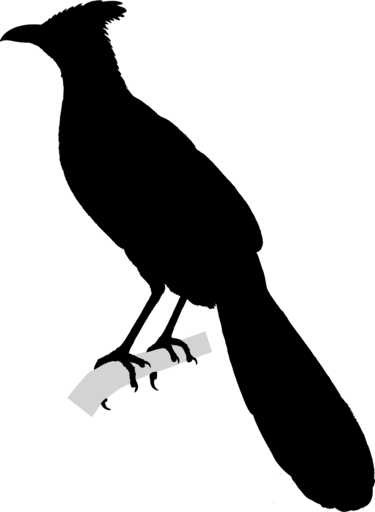
Silhouette: Nicolas Huet le Jeune and Jean-Gabriel Prêtre (vectorized by T. Michael Keesey) · PhyloPic

LCLeast ConcernNTVUENCR Endemic
Daily sighting probability ~50% · Likely
at Ankarafantsika National Park

In 3 days ~90% in a week >90%

258 Verified sightings at Ankarafantsika National Park From 2019 to 2026
258 In 1 park
November Best month
☀️ Diurnal When it's spotted

About the Coquerel's Coua

Coquerel's coua (Coua coquereli) is a species of cuckoo in the family Cuculidae. It is endemic to Madagascar. Its habitat is subtropical or tropical dry forests. It was named in 1867 by the French naturalist Alfred Grandidier in honor of the French navy surgeon and naturalist Charles Coquerel.

Coquerel's coua is approximately 40 cm (16 in) in length and has a large blue patch of bare skin around the eye, a characteristic of the Coua genus that is similar to African turacos. The plumage is silky, the crown is black, the upper parts and tail are light brown or greyish-brown, and the lower breast and belly is suffused with red. The iris is red and the beak and legs are slaty grey. As a member of the cuckoo family, it has a reversible third toe and resembles the coucal in its method of scrambling through tangled bushes and lianas while searching for food. Observations indicate that it can climb about 10 m (30 ft) above the ground.

Coquerel's coua is endemic to Madagascar where it lives in the dry deciduous forest and gallery forest in the west of the island. It shares this habitat with the giant coua (Coua gigas). In this area, the wet season... Wikipedia →

Sounds

Song0:09

Madagascar · 2018

© Maarten Hotting · XC590227 · CC BY-NC-SA 4.0

Call0:29

Madagascar · 2017

© Ross Gallardy · XC419019 · CC BY-NC-SA 4.0

Call0:25

Madagascar · 2015

© Bernard BOUSQUET · XC295343 · CC BY-NC-SA 4.0

Global Distribution

Parks Where Found

# Park Country Daily sighting probability
1 Ankarafantsika National Park 🇲🇬 Madagascar
~50%

More parks will be added in future updates.

Before you go

What are the chances of seeing a Coquerel's Coua in Ankarafantsika National Park?

Likely

About 50% of wildlife watchers report a Coquerel's Coua sighting in Ankarafantsika National Park on a given day, based on 258 verified sightings from GBIF citizen-science data from 2019 to 2026. It is the 20th most-seen of the 83 birds we can rate there. Over three days the chance rises to about 90%, and over a week to over 90%, if each day is a fresh chance.

When is the best time to see a Coquerel's Coua in Ankarafantsika National Park?

November

In that month about 70% of wildlife watchers report a Coquerel's Coua in Ankarafantsika National Park on a given day, against about 30% in June and September, the lowest months. January–March and May have too few records to rate.

What time of day is best to see a Coquerel's Coua?

Between 7 and 10 am

Across all the parks we cover, that three-hour window holds the most Coquerel's Coua sightings with a recorded time, and about 7 in 10 of them come between 6 am and 6 pm: it is a daytime animal.

Where else can you see a Coquerel's Coua?

Only Ankarafantsika National Park, in our data

Ankarafantsika National Park is the only park on Wallace's Line with enough records to rate Coquerel's Coua sightings: about 50% of wildlife watchers there report one on a given day.

Which relatives of the Coquerel's Coua live in Ankarafantsika National Park?

Same genus: Coua

The closest relatives of the Coquerel's Coua that you can see in Ankarafantsika National Park (genus Coua, Couas) are Crested Coua (about 70%) and Red-capped Coua (about 60%), with each one's daily chance of a sighting.

Where does the Coquerel's Coua sighting chance come from?

GBIF citizen-science records

It is estimated from how often the Coquerel's Coua is recorded against all the birds logged in Ankarafantsika National Park (258 verified sightings from 2019 to 2026), calibrated against known sighting rates. Figures are rounded to the nearest 10% because citizen-science data supports honest approximations, not decimals, and months with records from fewer than five people show "—". How it works.

← Back to Ankarafantsika National Park