South American Palm Weevil

South American Palm Weevil

Rhynchophorus palmarum

Daily sighting probability ~10% · With luck
at Arenal Volcano National Park

In 3 days ~20% in a week ~30%

8 Verified sightings at Arenal Volcano National Park From 2019 to 2026
16 In all 2 parks
October Best month
☀️ Diurnal When it's spotted

About the South American Palm Weevil

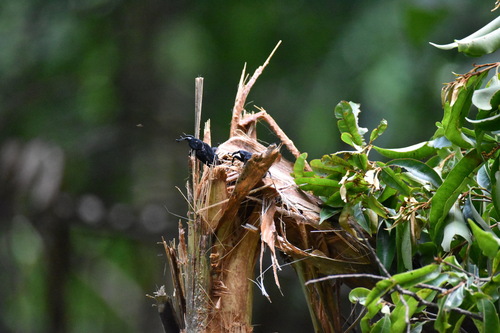
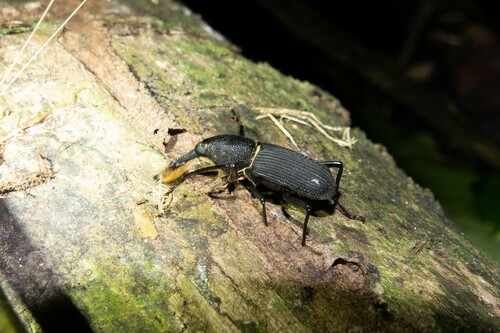
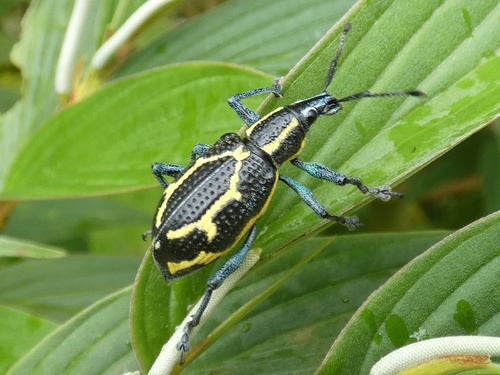
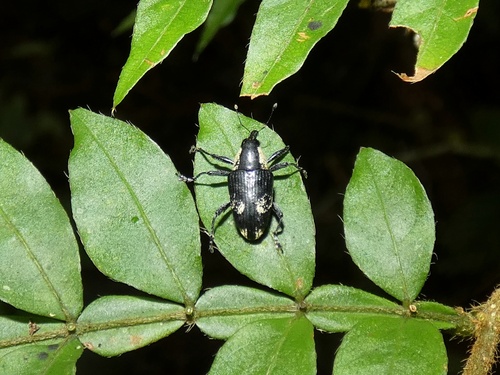
The South American palm weevil, Rhynchophorus palmarum, is a species of snout beetle. The adults are relatively large black beetles of approximately one and a half inch in length, and the larvae may grow to two inches in length.

These insects are attracted to the release of volatile compounds produced by injured palm trees. The larvae burrow through the hearts of palms, and their feeding can potentially kill an infested palm or serve as an avenue for secondary infections of bacterial disease. It is considered an important pest of cultivated coconut, date and oil palms, attacking thirty-five different species in twelve different families. It has also been documented as an occasional pest of sugar cane. This insect serves as vector for the Bursaphelenchus cocophilus nematode — the cause of red ring disease in coconuts, oilpalm, and dates. R. palmarum carries the disease in the form of dauer larvae, a survival form. By the time one observes symptoms, the palm is usually already dead. Weevils are infected while feeding as adults or larvae, but only female weevils carry a large internal infestation around their oviducts and are capable of transmitting the nematode... Wikipedia →

Global Distribution

Parks Where Found

# Park Country Daily sighting probability
1 Yasuní National Park 🇪🇨 Ecuador
~10%
2 Arenal Volcano National Park 🇨🇷 Costa Rica
~10%

Cities Where Found

# City Country Daily sighting probability
1 Manaus 🇧🇷 Brazil
~10%
2 Puebla 🇲🇽 México
~10%
3 San Salvador 🇸🇻 El Salvador
~10%
4 San Diego 🇺🇸 United States
~10%
5 San José 🇨🇷 Costa Rica
<5%
6 São Paulo 🇧🇷 Brazil
<5%

Before you go

What are the chances of seeing a South American Palm Weevil in Arenal Volcano National Park?

With luck

About 10% of wildlife watchers report a South American Palm Weevil sighting in Arenal Volcano National Park on a given day, based on 8 verified sightings from GBIF citizen-science data from 2019 to 2026. It is the 178th most-seen of the 302 insects we can rate there. Over three days the chance rises to about 20%, and over a week to about 30%, if each day is a fresh chance.

When is the best time to see a South American Palm Weevil in Arenal Volcano National Park?

October

In that month about 20% of wildlife watchers report a South American Palm Weevil in Arenal Volcano National Park on a given day, against under 5% in January–February, June, August–September and November, the lowest months.

What time of day is best to see a South American Palm Weevil?

Between 3 and 6 pm

Across all the parks we cover, that three-hour window holds the most South American Palm Weevil sightings with a recorded time, and about 9 in 10 of them come between 6 am and 6 pm: it is a daytime animal.

Is Arenal Volcano National Park the best place to see a South American Palm Weevil?

Among the best

Of the 2 parks where we can rate South American Palm Weevil sightings, Arenal Volcano National Park ranks 2nd at about 10%, level with the leaders once rounded. The best odds are in Yasuní National Park (Ecuador, about 10%).

Which relatives of the South American Palm Weevil live in Arenal Volcano National Park?

Same family: Dryophthoridae

The closest relatives of the South American Palm Weevil that you can see in Arenal Volcano National Park (family Dryophthoridae) are Bearded Weevil (about 10%) and Cactophagus sanguinolentus (about 10%), with each one's daily chance of a sighting.

Where does the South American Palm Weevil sighting chance come from?

GBIF citizen-science records

It is estimated from how often the South American Palm Weevil is recorded against all the insects logged in Arenal Volcano National Park (8 verified sightings from 2019 to 2026), calibrated against known sighting rates. Figures are rounded to the nearest 10% because citizen-science data supports honest approximations, not decimals, and months with records from fewer than five people show "—". How it works.

← Back to Arenal Volcano National Park