Swainson's Sparrow

Swainson's Sparrow

Passer swainsonii

Silhouette: Andrew Butko (modified) · PhyloPic

LCLeast ConcernNTVUENCR
Daily sighting probability ~30% · Possible
at Awash National Park

In 3 days ~70% in a week ~90%

41 Verified sightings at Awash National Park From 2019 to 2026
76 In all 2 parks
April Best month
☀️ Diurnal When it's spotted

About the Swainson's Sparrow

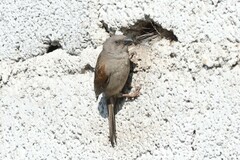
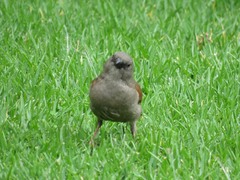
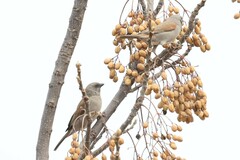
The Swainson's sparrow (Passer swainsonii) is a species of bird in the sparrow family Passeridae. Sometimes considered a subspecies of the grey-headed sparrow, it occurs in northeastern Africa, largely in the Ethiopian Highlands. This sparrow was named after the English naturalist and illustrator William Swainson.

The Swainson's sparrow reaches a body length of 16 centimetres (6.3 in). There is no conspicuous sexual dimorphism. It is often considered a race of grey-headed sparrow, but it tends to be darker, especially on the head and shoulders. There is a white bar on the shoulder, but this is not always visible. Similarly, the pale chestnut tail and rump is not always visible.

It occurs in the highlands of Ethiopia and Somalia, and in some of Sudan, South Sudan, Eritrea, Djibouti, and Kenya. Apart from the far west, it is common throughout its range. Some populations show seasonal migrations. The habitats of the Swainson's sparrow are mountainous areas, marshes, open forest areas, savannas and shrubby grasslands. However, most often it occurs in human settlements and their surroundings. In Eritrea, it lives mostly on the open plateau... Wikipedia →

Sounds

Call0:54

Ethiopia · 2015

© Peter Boesman · XC300534 · CC BY-NC-ND 4.0

Call0:35

Ethiopia · 2026

© Bram Piot · XC1104940 · CC BY-NC-SA 4.0

Call0:34

Ethiopia · 2019

© Oscar Campbell · XC473957 · CC BY-NC-SA 4.0

Global Distribution

Parks Where Found

# Park Country Daily sighting probability
1 Awash National Park 🇪🇹 Ethiopia
~30%
2 Bale Mountains National Park 🇪🇹 Ethiopia
~20%

Cities Where Found

# City Country Daily sighting probability
1 Addis Ababa 🇪🇹 Ethiopia
~70%

Before you go

What are the chances of seeing a Swainson's Sparrow in Awash National Park?

Possible

About 30% of wildlife watchers report a Swainson's Sparrow sighting in Awash National Park on a given day, based on 41 verified sightings from GBIF citizen-science data from 2019 to 2026. It is the 51st most-seen of the 217 birds we can rate there. Over three days the chance rises to about 70%, and over a week to about 90%, if each day is a fresh chance.

When is the best time to see a Swainson's Sparrow in Awash National Park?

April

In that month about 60% of wildlife watchers report a Swainson's Sparrow in Awash National Park on a given day, against about 20% in June, August and December–January, the lowest months. That is one of Awash National Park's wettest months, with about 75 mm of rain against 10 mm in January. February–March, May and September have too few records to rate.

What time of day is best to see a Swainson's Sparrow?

Between noon and 3 pm

Across all the parks we cover, that three-hour window holds the most Swainson's Sparrow sightings with a recorded time, and about 8 in 10 of them come between 6 am and 6 pm: it is a daytime animal.

Is Awash National Park the best place to see a Swainson's Sparrow?

Yes

Of the 2 parks where we can rate Swainson's Sparrow sightings, Awash National Park has the highest daily chance: about 30%. Next come Bale Mountains National Park (Ethiopia, about 20%).

Which relatives of the Swainson's Sparrow live in Awash National Park?

Same family: Passeridae

The closest relatives of the Swainson's Sparrow that you can see in Awash National Park (family Passeridae, Old World Sparrows) are White-browed Sparrow-Weaver (about 40%) and Yellow-spotted Petronia (about 20%), with each one's daily chance of a sighting.

Where does the Swainson's Sparrow sighting chance come from?

GBIF citizen-science records

It is estimated from how often the Swainson's Sparrow is recorded against all the birds logged in Awash National Park (41 verified sightings from 2019 to 2026), calibrated against known sighting rates. Figures are rounded to the nearest 10% because citizen-science data supports honest approximations, not decimals, and months with records from fewer than five people show "—". How it works.

← Back to Awash National Park