Monserrat Chuckwalla

Monserrat Chuckwalla

Sauromalus slevini

Silhouette: SeismicShrimp · PhyloPic

LCNTNear ThreatenedVUENCR Endemic
Daily sighting probability ~30% · Possible
at Bahía de Loreto National Park

In 3 days ~60% in a week ~90%

35 Verified sightings at Bahía de Loreto National Park From 2019 to 2026
35 In 1 park
September Best month
☀️ Diurnal When it's spotted

About the Monserrat Chuckwalla

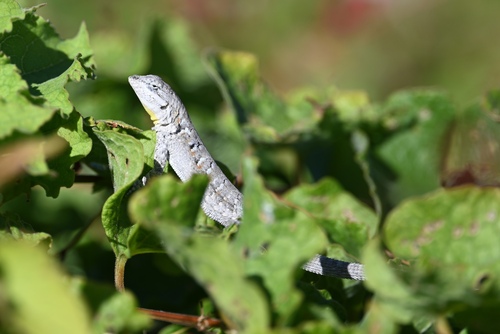
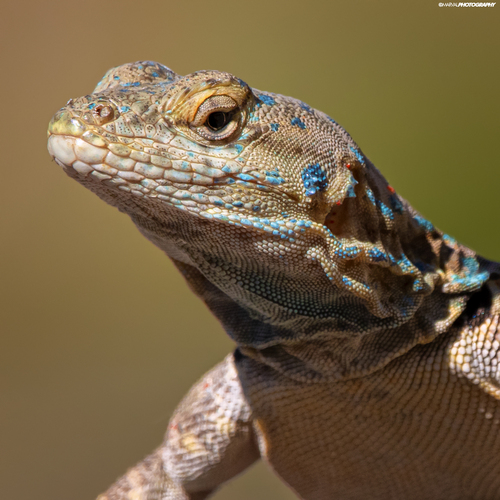
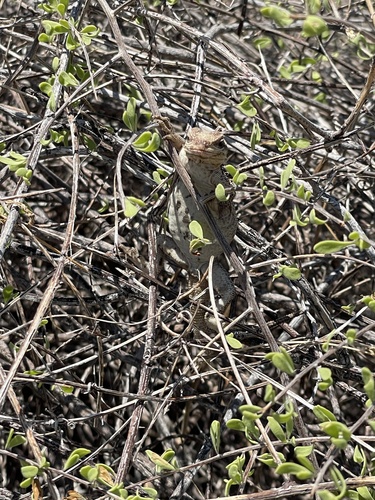
Sauromalus slevini, also known as the Monserrat chuckwalla or Slevin's chuckwalla, is a species of chuckwalla belonging to the family Iguanidae. S. slevini is native to three small islands in the Sea of Cortés. The generic name, Sauromalus, is said to be a combination of two ancient Greek words: sauros meaning "lizard" and omalus meaning "flat". The proper ancient Greek word for "flat" is however homalos (ὁμαλός) or homalēs (ὁμαλής).

Its specific name, slevini, is a Latinized form of the surname of American zoologist Joseph Richard Slevin (1881–1957), who was Curator of Herpetology at the California Academy of Sciences from 1928 to 1957. The species was first described by American herpetologist John Van Denburgh in 1922.

The common name, "chuckwalla", derives from the Shoshone word tcaxxwal or Cahuilla caxwal, transcribed by Spaniards as chacahuala. S. slevini is found on three islands in the Sea of Cortés: Isla del Carmen, Isla Coronados, and Isla Monserrate. It can be found at altitudes from sea level to 489 m (1,604 ft). Due to its restricted range S. slevinii is a CITES protected animal. Wikipedia →

Global Distribution

Parks Where Found

# Park Country Daily sighting probability
1 Bahía de Loreto National Park 🇲🇽 Mexico
~30%

More parks will be added in future updates.

Before you go

What are the chances of seeing a Monserrat Chuckwalla in Bahía de Loreto National Park?

Possible

About 30% of wildlife watchers report a Monserrat Chuckwalla sighting in Bahía de Loreto National Park on a given day, based on 35 verified sightings from GBIF citizen-science data from 2019 to 2026. It is the 4th most-seen of the 20 reptiles we can rate there. Over three days the chance rises to about 60%, and over a week to about 90%, if each day is a fresh chance.

When is the best time to see a Monserrat Chuckwalla in Bahía de Loreto National Park?

September

In that month about 60% of wildlife watchers report a Monserrat Chuckwalla in Bahía de Loreto National Park on a given day, against under 5% in November and December, the lowest months. That is one of Bahía de Loreto National Park's wettest months, with about 80 mm of rain against almost none in April.

What time of day is best to see a Monserrat Chuckwalla?

Between 10 am and 1 pm

Across all the parks we cover, that three-hour window holds the most Monserrat Chuckwalla sightings with a recorded time, and about 9 in 10 of them come between 6 am and 6 pm: it is a daytime animal.

Where else can you see a Monserrat Chuckwalla?

Only Bahía de Loreto National Park, in our data

Bahía de Loreto National Park is the only park on Wallace's Line with enough records to rate Monserrat Chuckwalla sightings: about 30% of wildlife watchers there report one on a given day.

Where does the Monserrat Chuckwalla sighting chance come from?

GBIF citizen-science records

It is estimated from how often the Monserrat Chuckwalla is recorded against all the reptiles logged in Bahía de Loreto National Park (35 verified sightings from 2019 to 2026), calibrated against known sighting rates. Figures are rounded to the nearest 10% because citizen-science data supports honest approximations, not decimals, and months with records from fewer than five people show "—". How it works.

← Back to Bahía de Loreto National Park