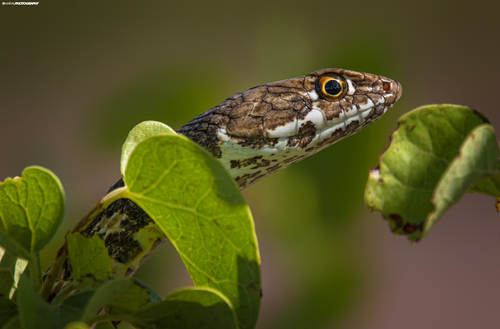
Race-runner

Race-runner

Aspidoscelis hyperythrus

Silhouette: Jose Carlos Arenas-Monroy · PhyloPic

LCLeast ConcernNTVUENCR
Daily sighting probability ~20% · Possible
at Bahía de Loreto National Park

In 3 days ~50% in a week ~80%

27 Verified sightings at Bahía de Loreto National Park From 2019 to 2026
45 In all 3 parks
December Best month
☀️ Diurnal When it's spotted

About the Race-runner

The orange-throated whiptail (Aspidoscelis hyperythrus) is a species of lizard in the family Teiidae. The species was previously placed in the genus Cnemidophorus. Three subspecies are recognized as being valid, including the nominotypical subspecies.

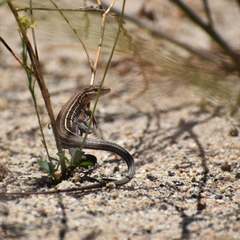
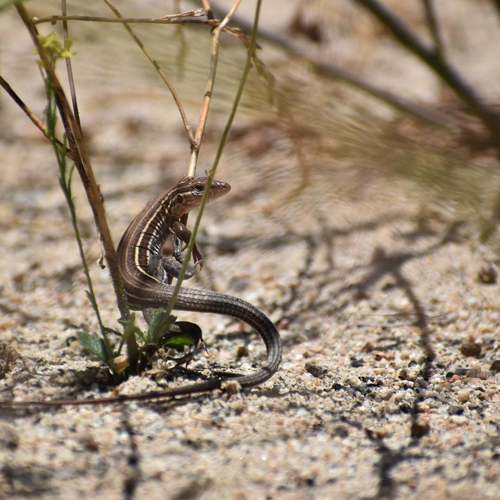
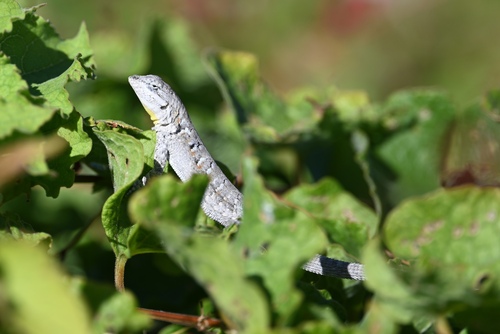
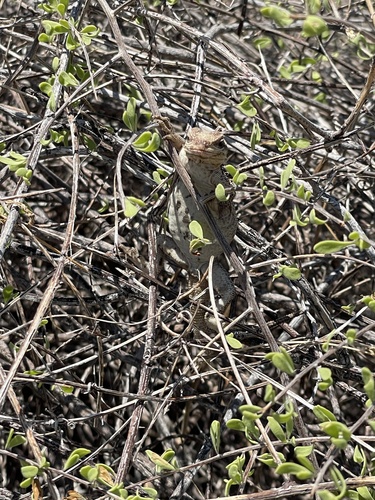
A. hyperythrus is native to southern California in the United States, and to the states of Baja California and Baja California Sur in Mexico. A. hyperythrus has five or six light-colored stripes down a black, brown, or grey dorsal side. The middle stripe may be forked at both ends. The species is whitish-yellow or cream on the venter, and has an orange throat (females and juveniles may lack this character). Its head is yellow-brown to olive-colored, and its tongue is forked and flicked continually. It has a snout-to-vent length of 5–7.2 centimetres (2.0–2.8 in).

Juveniles of this species have cobalt blue legs and tails. The entire ventral surface of males, including the tail, may be orange, although gravid females may also have some orange especially lining the lower jaw. The colors are most distinct in the breeding season. Males have larger femoral pores than females.

The orange... Wikipedia →

Global Distribution

Parks Where Found

# Park Country Daily sighting probability
1 Cabo Pulmo National Park 🇲🇽 Mexico
~30%
2 Bahía de Loreto National Park 🇲🇽 Mexico
~20%
3 El Vizcaíno Biosphere Reserve 🇲🇽 Mexico
~20%

Cities Where Found

# City Country Daily sighting probability
1 San Diego 🇺🇸 United States
~10%
2 Los Angeles 🇺🇸 United States
<5%

Before you go

What are the chances of seeing a Race-runner in Bahía de Loreto National Park?

Possible

About 20% of wildlife watchers report a Race-runner sighting in Bahía de Loreto National Park on a given day, based on 27 verified sightings from GBIF citizen-science data from 2019 to 2026. It is the 8th most-seen of the 20 reptiles we can rate there. Over three days the chance rises to about 50%, and over a week to about 80%, if each day is a fresh chance.

When is the best time to see a Race-runner in Bahía de Loreto National Park?

March, September and December

In those months about 30% of wildlife watchers report a Race-runner in Bahía de Loreto National Park on a given day, against under 5% in July–August and November, the lowest months. Those are among Bahía de Loreto National Park's wettest months, with about 30 mm of rain a month against almost none in April.

What time of day is best to see a Race-runner?

Between 10 am and 1 pm

Across all the parks we cover, that three-hour window holds the most Race-runner sightings with a recorded time, and nearly all of them come between 6 am and 6 pm: it is a daytime animal.

Is Bahía de Loreto National Park the best place to see a Race-runner?

2nd of 3

Of the 3 parks where we can rate Race-runner sightings, Bahía de Loreto National Park ranks 2nd at about 20%. The best odds are in Cabo Pulmo National Park (Mexico, about 30%).

Which relatives of the Race-runner live in Bahía de Loreto National Park?

Same genus: Aspidoscelis

The closest relatives of the Race-runner that you can see in Bahía de Loreto National Park (genus Aspidoscelis, Northern Whiptails) are Carmen Island Whiptail (about 10%), Western Whiptail (about 10%) and Isla Monserrate Whiptail (about 10%), with each one's daily chance of a sighting.

Where does the Race-runner sighting chance come from?

GBIF citizen-science records

It is estimated from how often the Race-runner is recorded against all the reptiles logged in Bahía de Loreto National Park (27 verified sightings from 2019 to 2026), calibrated against known sighting rates. Figures are rounded to the nearest 10% because citizen-science data supports honest approximations, not decimals, and months with records from fewer than five people show "—". How it works.

← Back to Bahía de Loreto National Park