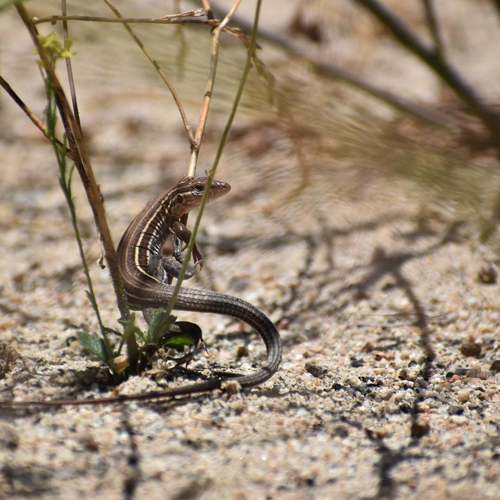
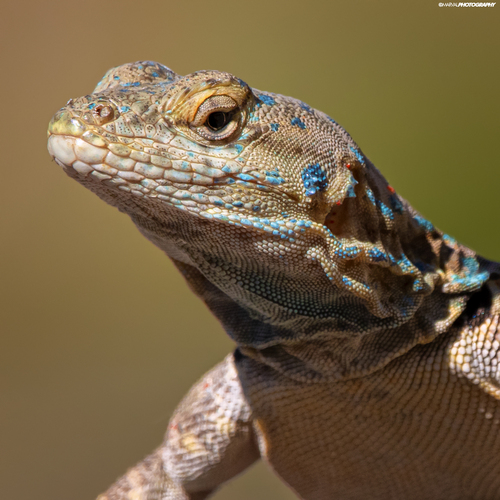
Desert Iguana

Desert Iguana

Dipsosaurus dorsalis

Silhouette: SeismicShrimp · PhyloPic

LCLeast ConcernNTVUENCR
Daily sighting probability ~20% · Possible
at Bahía de Loreto National Park

In 3 days ~50% in a week ~80%

22 Verified sightings at Bahía de Loreto National Park From 2019 to 2026
745 In all 6 parks
July Best month
☀️ Diurnal When it's spotted

About the Desert Iguana

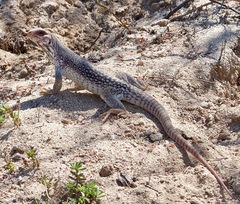
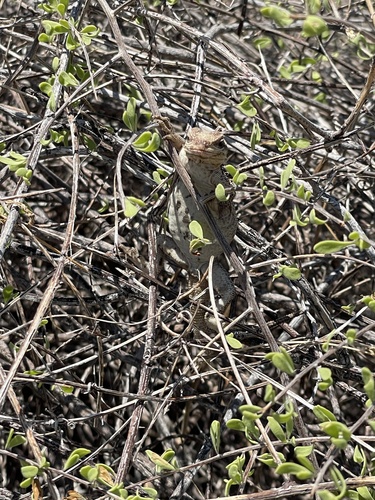
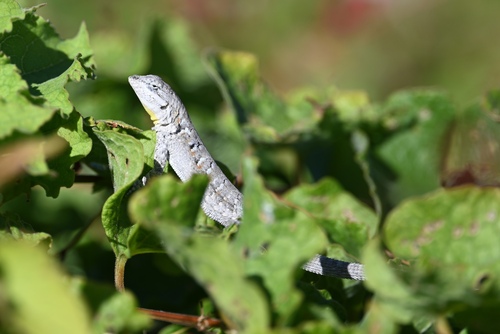
The desert iguana (Dipsosaurus dorsalis) is an iguana species found in the Sonoran and Mojave Deserts of the Southwestern United States and northwestern Mexico, as well as on several Gulf of California islands. The species was first described in the Proceedings of the Academy of Natural Sciences of Philadelphia, by Spencer Fullerton Baird and Charles Frédéric Girard, in 1852 as Crotaphytus dorsalis. It was reclassified two years later as Dipsosaurus dorsalis by Edward Hallowell. The generic name comes from a combination of two Greek words meaning "thirsty lizard": "Dipsa" (δίψα) for "thirsty", and "sauros" (σαῦρος) for "lizard". The specific name, "dorsalis", comes from the Latin word dorsum meaning "spike", in reference to a row of enlarged spiked scales on the middle of the lizard's back which form a crest that extends almost to the tip of its vent. Dipsosaurus contains two species, D. dorsalis, and D. catalinensis. Genetic evidence supports Dipsosaurus being the sister lineage to all other members of Iguanidae, diverging during the late Eocene, about 38 million years ago.

There are two peninsular and one continental subspecies of the desert iguana. Wikipedia →

Global Distribution

Parks Where Found

# Park Country Daily sighting probability
1 Death Valley National Park 🇺🇸 United States
~60%
2 Joshua Tree National Park 🇺🇸 United States
~50%
3 Saguaro National Park 🇺🇸 United States
~20%
4 Bahía de Loreto National Park 🇲🇽 Mexico
~20%
5 Cabo Pulmo National Park 🇲🇽 Mexico
~20%
6 El Vizcaíno Biosphere Reserve 🇲🇽 Mexico
~20%

Cities Where Found

# City Country Daily sighting probability
1 Mesa 🇺🇸 United States
~10%
2 Phoenix 🇺🇸 United States
~10%

Zoos & Centres Where Found

# Zoo / Centre Country
1 Moscow Zoo 🇷🇺 Russia In captivity
2 Omaha’s Henry Doorly Zoo and Aquarium 🇺🇸 United States In captivity
3 Cheyenne Mountain Zoo 🇺🇸 United States In captivity
4 Phoenix Zoo 🇺🇸 United States In captivity
5 Toledo Zoo 🇺🇸 United States In captivity
6 Arizona-Sonora Desert Museum 🇺🇸 United States In captivity
7 Philadelphia Zoo 🇺🇸 United States In captivity
8 Hogle Zoo 🇺🇸 United States In captivity
9 Lehigh Valley Zoo 🇺🇸 United States In captivity
10 Drayton Manor Theme Park 🇬🇧 United Kingdom In captivity
11 Vivarium Darmstadt 🇩🇪 Germany In captivity
12 Orange County Zoo 🇺🇸 United States In captivity
13 Monterey Bay Aquarium 🇺🇸 United States In captivity
14 Lindsay Wildlife Experience 🇺🇸 United States In captivity

Before you go

What are the chances of seeing a Desert Iguana in Bahía de Loreto National Park?

Possible

About 20% of wildlife watchers report a Desert Iguana sighting in Bahía de Loreto National Park on a given day, based on 22 verified sightings from GBIF citizen-science data from 2019 to 2026. It is the 7th most-seen of the 20 reptiles we can rate there. Over three days the chance rises to about 50%, and over a week to about 80%, if each day is a fresh chance.

When is the best time to see a Desert Iguana in Bahía de Loreto National Park?

July and September

In those months about 40% of wildlife watchers report a Desert Iguana in Bahía de Loreto National Park on a given day, against under 5% in October to March, the lowest months. Those are among Bahía de Loreto National Park's wettest months, with about 40 mm of rain a month against almost none in April.

What time of day is best to see a Desert Iguana?

Between 9 am and noon

Across all the parks we cover, that three-hour window holds the most Desert Iguana sightings with a recorded time, and nearly all of them come between 6 am and 6 pm: it is a daytime animal.

Which relatives of the Desert Iguana live in Bahía de Loreto National Park?

Same family: Iguanidae

The closest relatives of the Desert Iguana that you can see in Bahía de Loreto National Park (family Iguanidae, Iguanas and Chuckwallas) are Monserrat Chuckwalla (about 30%) and Common Chuckwalla (about 10%), with each one's daily chance of a sighting.

Where does the Desert Iguana sighting chance come from?

GBIF citizen-science records

It is estimated from how often the Desert Iguana is recorded against all the reptiles logged in Bahía de Loreto National Park (22 verified sightings from 2019 to 2026), calibrated against known sighting rates. Figures are rounded to the nearest 10% because citizen-science data supports honest approximations, not decimals, and months with records from fewer than five people show "—". How it works.

← Back to Bahía de Loreto National Park