Ethiopian Wolf

Ethiopian Wolf

Canis simensis

Silhouette: Margot Michaud · PhyloPic

LCNTVUENEndangeredCR Endemic
Daily sighting probability ~90% · Very likely
at Bale Mountains National Park

In 3 days >90%

60 Verified sightings at Bale Mountains National Park From 2019 to 2026
60 In 1 park
July Best month
☀️ Diurnal When it's spotted

About the Ethiopian Wolf

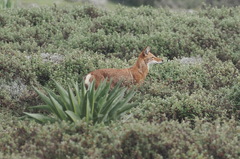
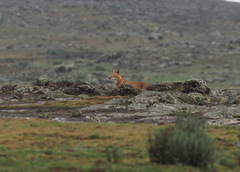
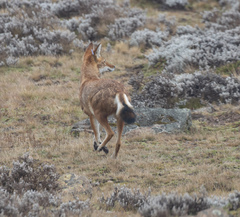
The Ethiopian wolf (Canis simensis), also called the red jackal, the Simien jackal or Simien fox, is a canine native to the Ethiopian Highlands, including the Simien Mountains. In southeastern Ethiopia, it is also known as the horse jackal. It is similar to the coyote in size and build, and is distinguished by its long and narrow skull, and its red and white fur. Unlike most large canids, which are widespread, generalist feeders, the Ethiopian wolf is a highly specialised feeder of Afroalpine rodents with very specific habitat requirements. It is one of the world's rarest canids, and Africa's most endangered carnivore.

The species's current range is limited to seven isolated mountain ranges at altitudes of 3,000–4,500 m, with the overall adult population estimated at 360–440 individuals in 2011, more than half of them in the Bale Mountains.

The Ethiopian wolf is listed as endangered by the IUCN, on account of its small numbers and fragmented range. Threats include increasing pressure from expanding human populations, resulting in habitat degradation through overgrazing, and disease transference and interbreeding from free-ranging dogs. Its conservation is headed by Oxford University's Ethiopian Wolf Conservation Programme, which seeks to protect the wolves through vaccination and community outreach programs. Wikipedia →

Global Distribution

Parks Where Found

# Park Country Daily sighting probability
1 Bale Mountains National Park 🇪🇹 Ethiopia
~90%

More parks will be added in future updates.

Closest Relatives at Bale Mountains National Park

No species of the same family or order lives in Bale Mountains National Park, so these are its closest relatives here: other mammals.

Before you go

What are the chances of seeing an Ethiopian Wolf in Bale Mountains National Park?

Very likely

About 90% of wildlife watchers report an Ethiopian Wolf sighting in Bale Mountains National Park on a given day, based on 60 verified sightings from GBIF citizen-science data from 2019 to 2026. It is the most-seen of the 14 mammals we can rate there. Over three days the chance rises to over 90%, if each day is a fresh chance.

When is the best time to see an Ethiopian Wolf in Bale Mountains National Park?

March–April, June–July and November–January

In those months about 90% of wildlife watchers report an Ethiopian Wolf in Bale Mountains National Park on a given day, against about 70% in October, the lowest month. August and September have too few records to rate.

What time of day is best to see an Ethiopian Wolf?

Between 8 and 11 am

Across all the parks we cover, that three-hour window holds the most Ethiopian Wolf sightings with a recorded time, and about 8 in 10 of them come between 6 am and 6 pm: it is a daytime animal.

Where else can you see an Ethiopian Wolf?

Only Bale Mountains National Park, in our data

Bale Mountains National Park is the only park on Wallace's Line with enough records to rate Ethiopian Wolf sightings: about 90% of wildlife watchers there report one on a given day.

Where does the Ethiopian Wolf sighting chance come from?

GBIF citizen-science records

It is estimated from how often the Ethiopian Wolf is recorded against all the mammals logged in Bale Mountains National Park (60 verified sightings from 2019 to 2026), calibrated against known sighting rates. Figures are rounded to the nearest 10% because citizen-science data supports honest approximations, not decimals, and months with records from fewer than five people show "—". How it works.

← Back to Bale Mountains National Park