
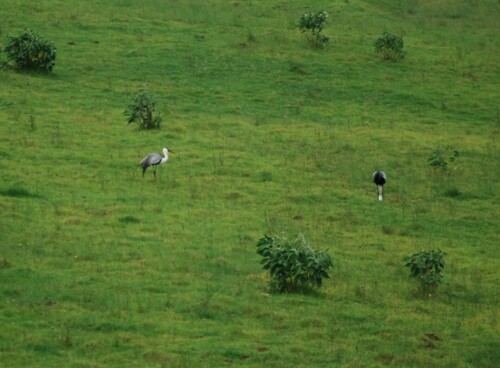
Rouget's Rail

Rouget's Rail

Rougetius rougetii

Silhouette: Sheatherius · PhyloPic

LCNTNear ThreatenedVUENCR
Daily sighting probability ~80% · Very likely
at Bale Mountains National Park

In 3 days >90%

199 Verified sightings at Bale Mountains National Park From 2019 to 2026
199 In 1 park
November Best month
☀️ Diurnal When it's spotted

About the Rouget's Rail

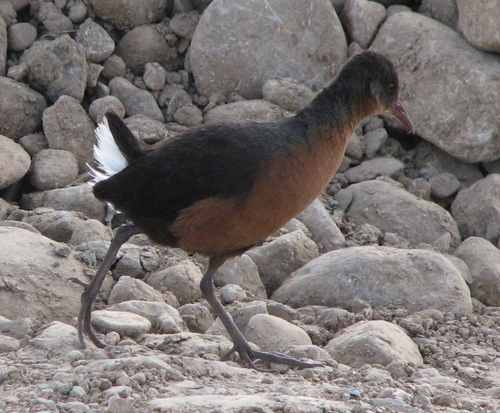
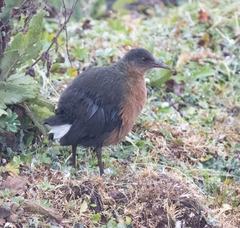
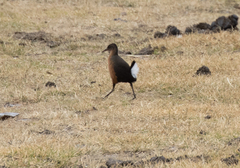
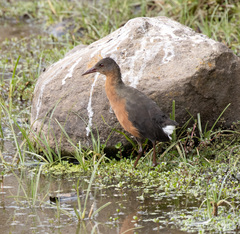
Rouget's rail (Rougetius rougetii) is a species of bird in the family Rallidae. It is the only member of the genus Rougetius. It is found in Eritrea and Ethiopia. Rouget's rail is about 30 cm (12 in) long. In coloration, it has olive brown back, and cinnamon-rufous underside. Sexes are alike. One female and male weighed 170 g (6.0 oz) and 220 g (7.8 oz), respectively.

It inhabits the Ethiopian and Eritrean highlands at 2,000–4,100 m (6,600–13,500 ft) where it frequents moorland, grassland, and marshy areas. The diet of Rouget's rail consists of seeds, aquatic insects (namely water beetles), crustaceans, and small snails.

It lays 4–5 eggs, which are incubated by the female and probably the male. Both parents raise the chicks, which remain with its parents until fully grown. Wikipedia →

Sounds

Song0:24

Ethiopia · 2015

© Hans Matheve · XC306734 · CC BY-NC-ND 4.0

Call0:31

Ethiopia · 2015

© Andrew Spencer · XC294196 · CC BY-NC-ND 4.0

Song0:09

Ethiopia · 2015

© Peter Boesman · XC300673 · CC BY-NC-ND 4.0

Global Distribution

Parks Where Found

# Park Country Daily sighting probability
1 Bale Mountains National Park 🇪🇹 Ethiopia
~80%

More parks will be added in future updates.

Cities Where Found

# City Country Daily sighting probability
1 Addis Ababa 🇪🇹 Ethiopia
~20%

Before you go

What are the chances of seeing a Rouget's Rail in Bale Mountains National Park?

Very likely

About 80% of wildlife watchers report a Rouget's Rail sighting in Bale Mountains National Park on a given day, based on 199 verified sightings from GBIF citizen-science data from 2019 to 2026. It is the 5th most-seen of the 117 birds we can rate there. Over three days the chance rises to over 90%, if each day is a fresh chance.

When is the best time to see a Rouget's Rail in Bale Mountains National Park?

November

In that month over 90% of wildlife watchers report a Rouget's Rail in Bale Mountains National Park on a given day, against about 60% in February and April–May, the lowest months. March and September have too few records to rate.

What time of day is best to see a Rouget's Rail?

Between 1 and 4 pm

Across all the parks we cover, that three-hour window holds the most Rouget's Rail sightings with a recorded time, and about 8 in 10 of them come between 6 am and 6 pm: it is a daytime animal.

Where else can you see a Rouget's Rail?

Only Bale Mountains National Park, in our data

Bale Mountains National Park is the only park on Wallace's Line with enough records to rate Rouget's Rail sightings: about 80% of wildlife watchers there report one on a given day.

Which relatives of the Rouget's Rail live in Bale Mountains National Park?

Same family: Rallidae

The closest relatives of the Rouget's Rail that you can see in Bale Mountains National Park (family Rallidae, Rails, Gallinules, and Coots) are Red-knobbed Coot (about 30%) and Common Moorhen (about 10%), with each one's daily chance of a sighting.

Where does the Rouget's Rail sighting chance come from?

GBIF citizen-science records

It is estimated from how often the Rouget's Rail is recorded against all the birds logged in Bale Mountains National Park (199 verified sightings from 2019 to 2026), calibrated against known sighting rates. Figures are rounded to the nearest 10% because citizen-science data supports honest approximations, not decimals, and months with records from fewer than five people show "—". How it works.

← Back to Bale Mountains National Park