Island Collared Dove

Island Collared Dove

Streptopelia bitorquata

Silhouette: Andy Wilson · PhyloPic

LCLeast ConcernNTVUENCR
Daily sighting probability ~30% · Possible
at Bali Barat National Park

In 3 days ~70% in a week ~90%

330 Verified sightings at Bali Barat National Park From 2019 to 2026
433 In all 2 parks
January Best month
🌅 Crepuscular When it's spotted

About the Island Collared Dove

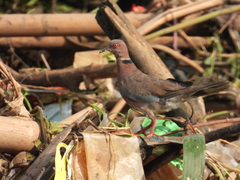
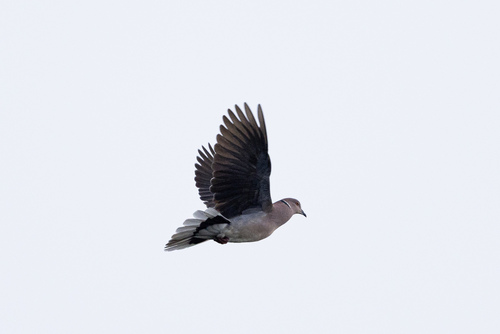
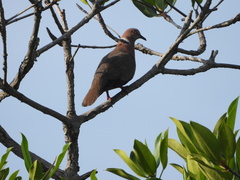
The Sunda collared dove (Streptopelia bitorquata), sometimes referred to as the island collared dove, Javanese turtle dove, Javanese collared dove, or Indonesian collared dove, is a species of bird in the family Columbidae. Sometimes confused with the Eurasian collared dove (Streptopelia decaocto) which is very similar in appearance, the Sunda collared dove is a small to medium-sized bird, native to the tropical and subtropical islands of Indonesia.

This species distribution occurs from Java and Bali, through to Komodo, Lombok, Sumbawa, Timor and Flores, Solor and, the Lesser Sunda Islands, Indonesia. Its natural habitats are subtropical or tropical moist lowland forest and subtropical or tropical mangrove forest.

The Sunda collared dove is a small to medium-sized bird which has a light, rosy hue around the neck and chest area, fading into the underside of the bird which consists of a light caramel color, into a shade of cream at the base (start) of the tail. The start of the wings have a light grey tone, protruding to a steely grey hue near the end of the wing, all the way to the tip of the tail. The tail feathers under the bird are 'eggshell' white... Wikipedia →
Global Distribution

Parks Where Found

# Park Country Daily sighting probability
1 Komodo National Park 🇮🇩 Indonesia
~40%
2 Bali Barat National Park 🇮🇩 Indonesia
~30%

Cities Where Found

# City Country Daily sighting probability
1 Jakarta 🇮🇩 Indonesia
~20%
2 Denpasar 🇮🇩 Indonesia
~10%
3 Manila 🇵🇭 Philippines
<5%

Before you go

What are the chances of seeing an Island Collared Dove in Bali Barat National Park?

Possible

About 30% of wildlife watchers report an Island Collared Dove sighting in Bali Barat National Park on a given day, based on 330 verified sightings from GBIF citizen-science data from 2019 to 2026. It is the 41st most-seen of the 173 birds we can rate there. Over three days the chance rises to about 70%, and over a week to about 90%, if each day is a fresh chance.

When is the best time to see an Island Collared Dove in Bali Barat National Park?

November to January

In those months about 40% of wildlife watchers report an Island Collared Dove in Bali Barat National Park on a given day, against about 20% in March, June and September, the lowest months. Those are among Bali Barat National Park's wettest months, with about 200 mm of rain a month against 20 mm in August.

What time of day is best to see an Island Collared Dove?

Between 8 and 11 am

Across all the parks we cover, that three-hour window holds the most Island Collared Dove sightings with a recorded time, and about half of them come between 6 am and 6 pm: it is most active around dawn and dusk.

Is Bali Barat National Park the best place to see an Island Collared Dove?

2nd of 2

Of the 2 parks where we can rate Island Collared Dove sightings, Bali Barat National Park ranks 2nd at about 30%. The best odds are in Komodo National Park (Indonesia, about 40%).

Which relatives of the Island Collared Dove live in Bali Barat National Park?

Same family: Columbidae

The closest relatives of the Island Collared Dove that you can see in Bali Barat National Park (family Columbidae, Pigeons and Doves) are Zebra Dove (about 80%), Pearl-necked Dove (about 70%) and Orange-breasted Green-Pigeon (about 30%), with each one's daily chance of a sighting.

Where does the Island Collared Dove sighting chance come from?

GBIF citizen-science records

It is estimated from how often the Island Collared Dove is recorded against all the birds logged in Bali Barat National Park (330 verified sightings from 2019 to 2026), calibrated against known sighting rates. Figures are rounded to the nearest 10% because citizen-science data supports honest approximations, not decimals, and months with records from fewer than five people show "—". How it works.

← Back to Bali Barat National Park