Indian Giant Squirrel

Indian Giant Squirrel

Ratufa indica

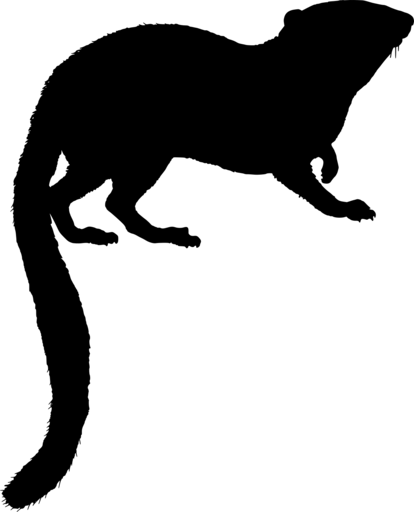
Silhouette: Joseph Smit · PhyloPic

LCLeast ConcernNTVUENCR Endemic
Daily sighting probability ~30% · Possible
at Bandipur National Park

In 3 days ~70% in a week ~90%

11 Verified sightings at Bandipur National Park From 2019 to 2026
167 In all 5 parks
April Best month
🌅 Crepuscular When it's spotted

About the Indian Giant Squirrel

The Indian giant squirrel or Malabar giant squirrel (Ratufa indica) is a large multi-coloured tree squirrel species endemic to forests and woodlands in India. It is a diurnal, arboreal, and mainly herbivorous squirrel. This species is endemic to India, with sections of its distribution in the Western Ghats, Eastern Ghats and Satpura Range as far north as Madhya Pradesh (approximately 22° N). It is found at altitudes of 180–2,300 m (590–7,550 ft) in tropical deciduous, semi-deciduous (where often utilizing denser riparian growth), and moist evergreen forests and woodlands. In general, its distribution is fragmented because it is intolerant of habitat degradation. The Indian giant squirrel generally nests in taller trees with a mean height of 11 m (36 ft) (±3 m (10 ft) SD) in order to avoid predators.

The Indian giant squirrel is one of the largest squirrels, with a head–and–body length of 25–50 cm (10–20 in), a tail that is about the same or somewhat longer, and a weight of 1.5–2 kg (3–4 lb), although rarely up to 3 kg (7 lb). Average for both sexes is about 36 cm (1 ft 2 in) in head–and–body length, 45 cm (1 ft 6 in) in tail length and... Wikipedia →

Sounds

Recording0:22

India · 2022

© Seema Merchant · iNaturalist · CC BY 4.0

Recording1:39

India · 2025

© Aditya Satish · iNaturalist · CC BY-NC 4.0

Recording0:47

India · 2021

© Aravind_PS · iNaturalist · CC BY-NC 4.0

Global Distribution

Parks Where Found

# Park Country Daily sighting probability
1 Periyar National Park 🇮🇳 India
~70%
2 Mudumalai National Park 🇮🇳 India
~60%
3 Nagarhole National Park 🇮🇳 India
~60%
4 Satpura National Park 🇮🇳 India
~60%
5 Bandipur National Park 🇮🇳 India
~30%

Cities Where Found

# City Country Daily sighting probability
1 Thrissur 🇮🇳 India
~30%

Zoos & Centres Where Found

# Zoo / Centre Country
1 Nehru Zoological Park 🇮🇳 India In captivity
2 Rajiv Gandhi Zoological Park 🇮🇳 India In captivity

Before you go

What are the chances of seeing an Indian Giant Squirrel in Bandipur National Park?

Possible

About 30% of wildlife watchers report an Indian Giant Squirrel sighting in Bandipur National Park on a given day, based on 11 verified sightings from GBIF citizen-science data from 2019 to 2026. It is the 10th most-seen of the 15 mammals we can rate there. Over three days the chance rises to about 70%, and over a week to about 90%, if each day is a fresh chance.

When is the best time to see an Indian Giant Squirrel in Bandipur National Park?

April and July

In those months about 50% of wildlife watchers report an Indian Giant Squirrel in Bandipur National Park on a given day, against under 5% in January, May–June and November, the lowest months.

What time of day is best to see an Indian Giant Squirrel?

Between 4 and 7 am

Across all the parks we cover, that three-hour window holds the most Indian Giant Squirrel sightings with a recorded time, and about 6 in 10 of them come between 6 am and 6 pm: it is most active around dawn and dusk.

Where does the Indian Giant Squirrel sighting chance come from?

GBIF citizen-science records

It is estimated from how often the Indian Giant Squirrel is recorded against all the mammals logged in Bandipur National Park (11 verified sightings from 2019 to 2026), calibrated against known sighting rates. Figures are rounded to the nearest 10% because citizen-science data supports honest approximations, not decimals, and months with records from fewer than five people show "—". How it works.

← Back to Bandipur National Park