Blue Ground Beetle

Blue Ground Beetle

Carabus intricatus

Daily sighting probability ~20% · Possible
at Bavarian Forest National Park

In 3 days ~40% in a week ~70%

68 Verified sightings at Bavarian Forest National Park From 2019 to 2026
96 In all 4 parks
April Best month
☀️🌙 Day & Night When it's spotted

About the Blue Ground Beetle

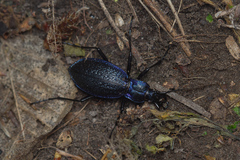
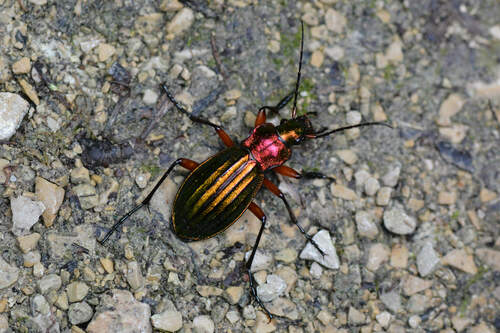
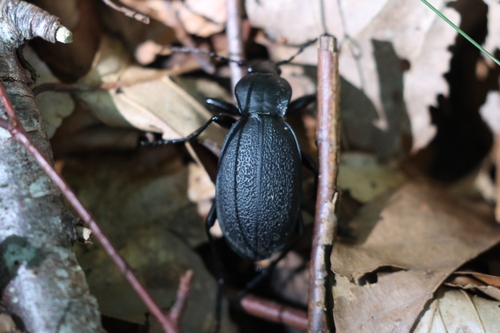
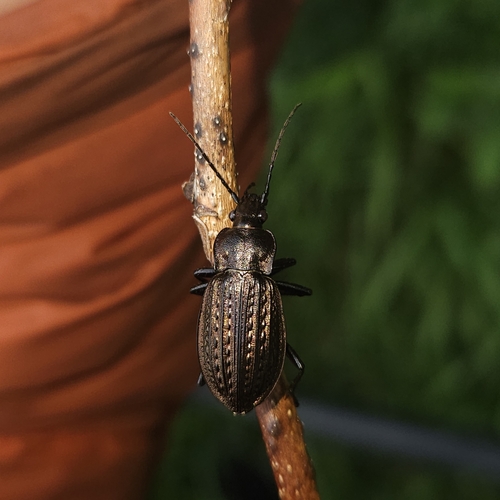
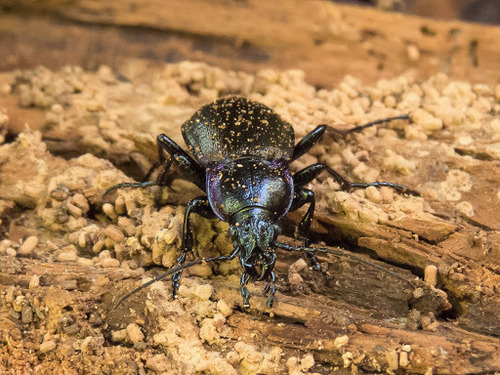
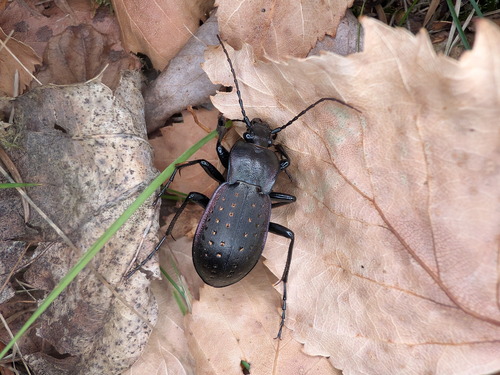
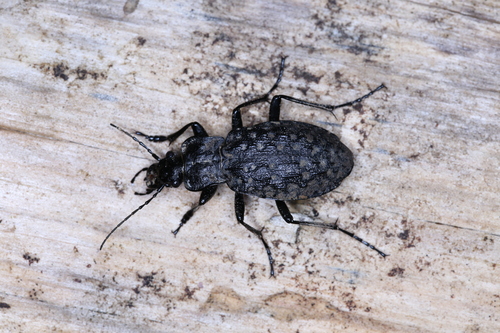
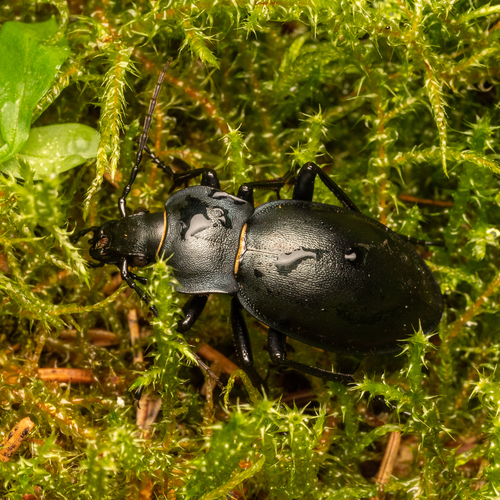
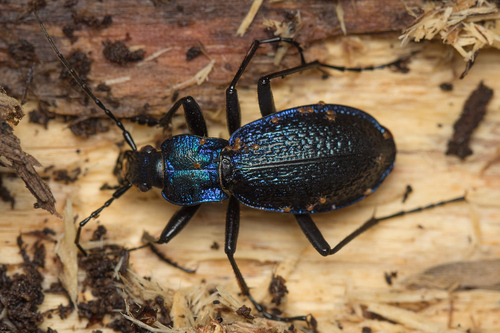
Carabus intricatus, the blue ground beetle, is a species of ground beetle found in Europe. It is a large beetle (24–35 millimetres or 0.9–1.4 inches in length), with a metallic purple or blue and roughly surfaced elytra; the second pair of wings (which are used by beetles for flying) under the elytra are reduced. In Britain it was only recorded three times in the twenty years up to 1993 and was considered extinct there. But in 1994 it was found in a couple of places near Dartmoor.

Carabus intricatus are nocturnal carnivores that are mainly active in the spring and early summer. Tests have shown they prefer slugs from the genus Limax, especially Limax marginatus. They were also found to have a taste for liver, dog food, and crabsticks.

In the wild, the adults are found under bark on dead wood, and under rocks. It does not require ground vegetation, and likes damp, rotten, moss-covered wood. The beetles seem to be active throughout the year and a fully-grown larva has been found in summer. This specimen also ate slugs prior to pupating, and emerged as an adult some three weeks later. It is thought that it may take two years to complete its life cycle. The adults are very long-lived. Wikipedia →
Global Distribution

Parks Where Found

# Park Country Daily sighting probability
1 Białowieża National Park 🇵🇱 Poland
~20%
2 Bavarian Forest National Park 🇩🇪 Germany
~20%
3 Vanoise National Park 🇫🇷 France
~10%
4 Cévennes National Park 🇫🇷 France
<5%

Cities Where Found

# City Country Daily sighting probability
1 Prague 🇨🇿 Czechia
~10%
2 Vienna 🇦🇹 Austria
~10%

Before you go

What are the chances of seeing a Blue Ground Beetle in Bavarian Forest National Park?

Possible

About 20% of wildlife watchers report a Blue Ground Beetle sighting in Bavarian Forest National Park on a given day, based on 68 verified sightings from GBIF citizen-science data from 2019 to 2026. It is the 41st most-seen of the 1115 insects we can rate there. Over three days the chance rises to about 40%, and over a week to about 70%, if each day is a fresh chance.

When is the best time to see a Blue Ground Beetle in Bavarian Forest National Park?

April and May

In those months about 30% of wildlife watchers report a Blue Ground Beetle in Bavarian Forest National Park on a given day, against about 10% in March, July–August and October–November, the lowest months.

What time of day is best to see a Blue Ground Beetle?

Between 11 am and 2 pm

Across all the parks we cover, that three-hour window holds the most Blue Ground Beetle sightings with a recorded time, and about 7 in 10 of them come between 6 am and 6 pm: it is seen both by day and at night.

Is Bavarian Forest National Park the best place to see a Blue Ground Beetle?

Among the best

Of the 4 parks where we can rate Blue Ground Beetle sightings, Bavarian Forest National Park ranks 2nd at about 20%, level with the leaders once rounded. The best odds are in Białowieża National Park (Poland, about 20%).

Which relatives of the Blue Ground Beetle live in Bavarian Forest National Park?

Same genus: Carabus

The closest relatives of the Blue Ground Beetle that you can see in Bavarian Forest National Park (genus Carabus, Worm and Slug Hunters) are Carabus auronitens (about 20%), Violet Ground Beetle (about 10%) and Leather Beetle (about 10%), with each one's daily chance of a sighting.

Where does the Blue Ground Beetle sighting chance come from?

GBIF citizen-science records

It is estimated from how often the Blue Ground Beetle is recorded against all the insects logged in Bavarian Forest National Park (68 verified sightings from 2019 to 2026), calibrated against known sighting rates. Figures are rounded to the nearest 10% because citizen-science data supports honest approximations, not decimals, and months with records from fewer than five people show "—". How it works.

← Back to Bavarian Forest National Park