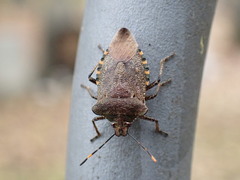
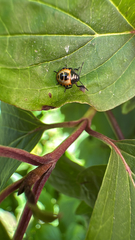
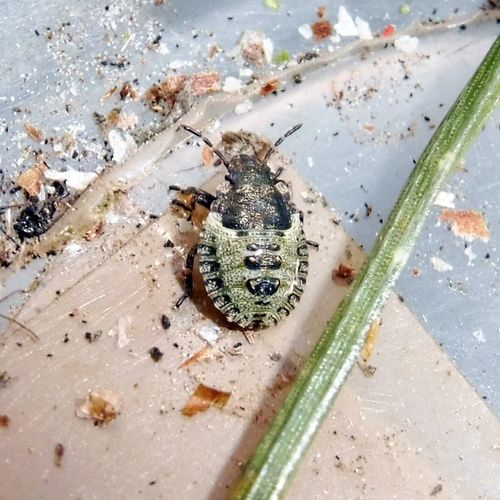
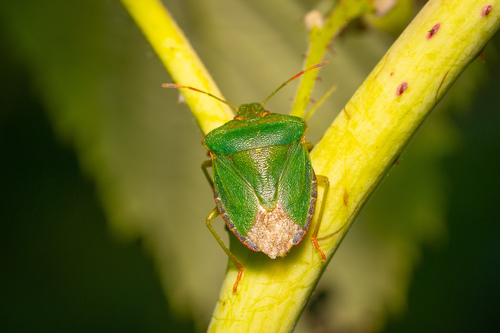
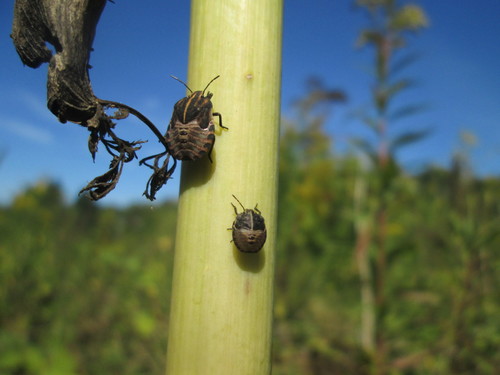
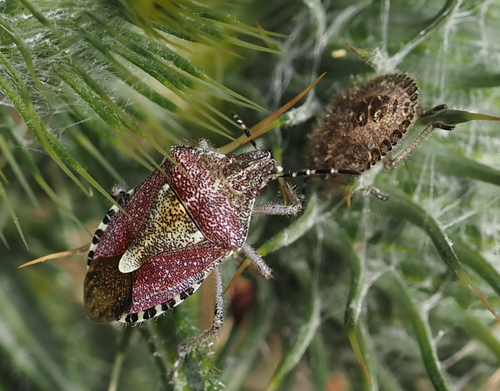
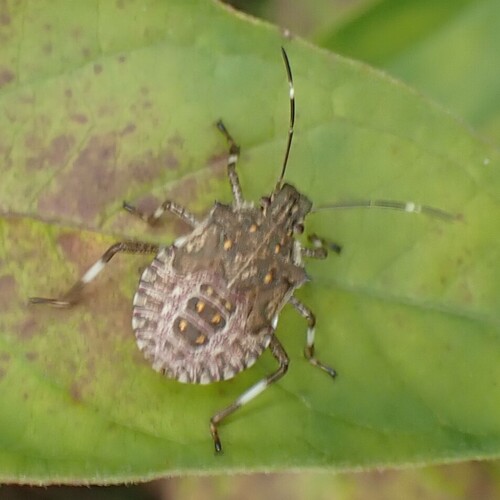
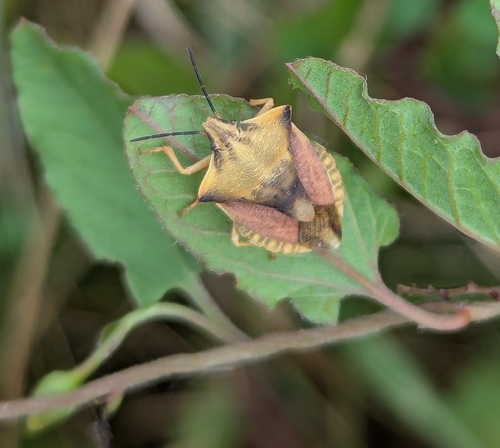
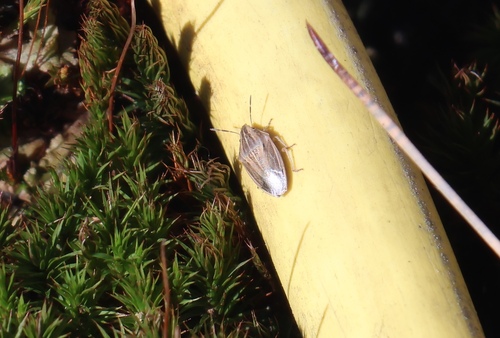
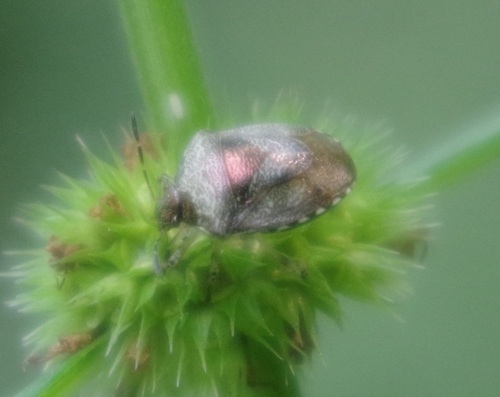
Bronze Shield Bug

Bronze Shield Bug

Troilus luridus

Daily sighting probability <5% · Rare
at Bavarian Forest National Park

In 3 days ~10% in a week ~30%

5 Verified sightings at Bavarian Forest National Park From 2019 to 2026
18 In all 3 parks
September Best month
☀️ Diurnal When it's spotted

About the Bronze Shield Bug

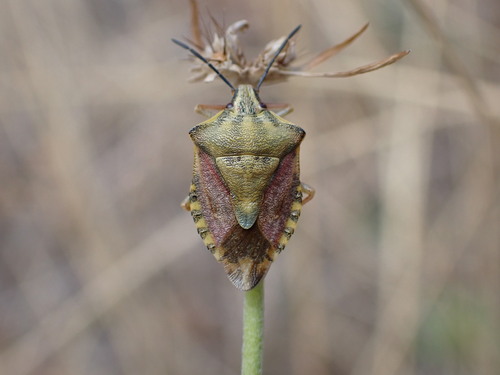
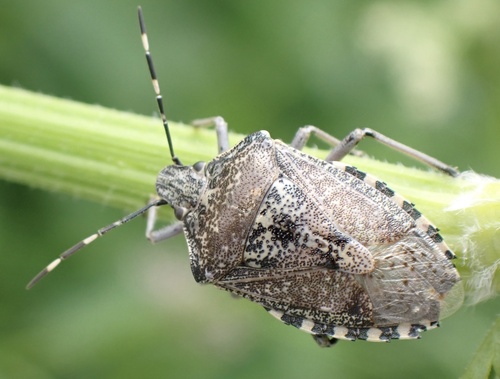
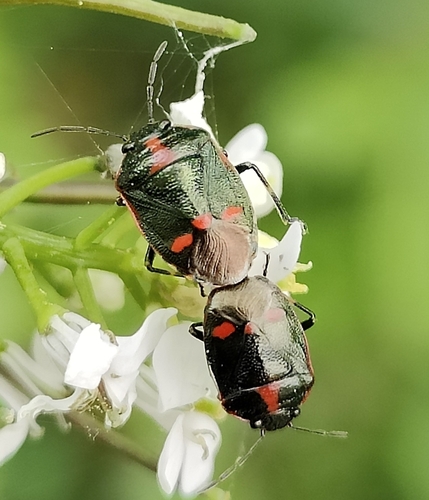
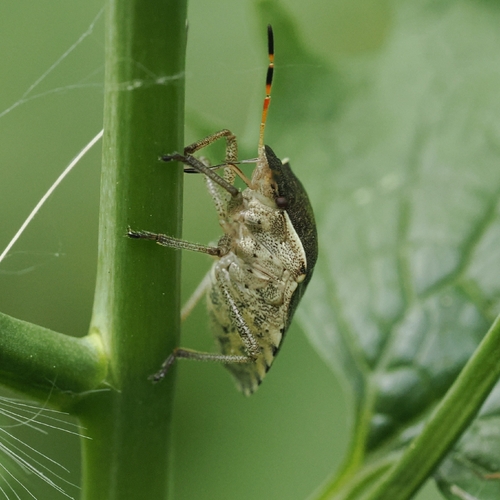
Troilus luridus, also known as the bronze shieldbug, is a species of shield bug found in Europe. It was first described by the Danish zoologist Johan Christian Fabricius in 1775. Shieldbugs are generally phytophagous (i.e., feeding on plant sap) and some, including Troilus luridus, are also carnivorous and will eat the larvae of beetles, lepidoptera and sawflies.

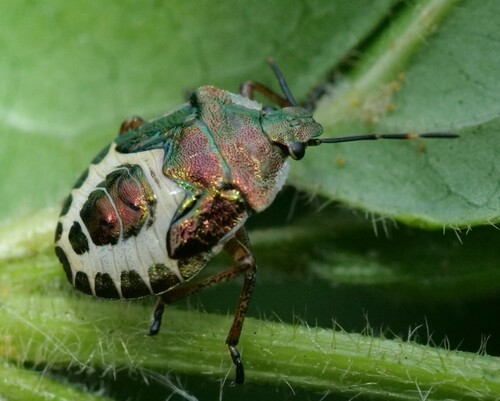
Troilus luridus is a large predatory bronze-brown shieldbug in the family Pentatomidae. It measures about 10 to 12 mm in length and has a distinctive, orange band on the penultimate antennal segment. The legs are brown and the scutellum lacks an orange tip. Live prey is essential to development and adults walk slowly about in search of their prey; usually larvae, but sometimes the adults of beetles, butterflies and moths. They hold the prey at the tip of its rostrum using their mandibular and maxillary stylets which spread out within the prey cutting away at tissues.

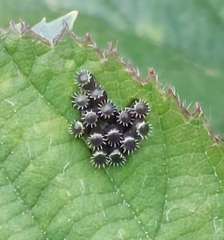
The bugs overwinter as adults and, depending on temperature, emerge in April. Eggs are laid in May and June and are laid in batches, initially around 21, with the number reducing with each batch, until they are only laid in ones and twos. At... Wikipedia →
Global Distribution

Parks Where Found

# Park Country Daily sighting probability
1 Snowdonia National Park 🇬🇧 United Kingdom
~10%
2 Bavarian Forest National Park 🇩🇪 Germany
<5%
3 Pyrénées National Park 🇫🇷 France
<5%

Cities Where Found

# City Country Daily sighting probability
1 Helsinki 🇫🇮 Finland
<5%
2 Birmingham 🇬🇧 United Kingdom
<5%
3 London 🇬🇧 United Kingdom
<5%
4 Moscow 🇷🇺 Russia
<5%

Before you go

What are the chances of seeing a Bronze Shield Bug in Bavarian Forest National Park?

Rare

Under 5% of wildlife watchers report a Bronze Shield Bug sighting in Bavarian Forest National Park on a given day, based on 5 verified sightings from GBIF citizen-science data from 2019 to 2026. It is the 964th most-seen of the 1115 insects we can rate there. Over three days the chance rises to about 10%, and over a week to about 30%, if each day is a fresh chance.

When is the best time to see a Bronze Shield Bug in Bavarian Forest National Park?

May and August–September

In those months about 10% of wildlife watchers report a Bronze Shield Bug in Bavarian Forest National Park on a given day, against under 5% in June–July and October–April, the lowest months.

What time of day is best to see a Bronze Shield Bug?

Between 2 and 5 pm

Across all the parks we cover, that three-hour window holds the most Bronze Shield Bug sightings with a recorded time, and about 9 in 10 of them come between 6 am and 6 pm: it is a daytime animal.

Is Bavarian Forest National Park the best place to see a Bronze Shield Bug?

2nd of 3

Of the 3 parks where we can rate Bronze Shield Bug sightings, Bavarian Forest National Park ranks 2nd at under 5%. The best odds are in Snowdonia National Park (United Kingdom, about 10%).

Which relatives of the Bronze Shield Bug live in Bavarian Forest National Park?

Same family: Pentatomidae

The closest relatives of the Bronze Shield Bug that you can see in Bavarian Forest National Park (family Pentatomidae, Stink Bugs) are Forest Bug (about 20%), Green Shield Bug (about 20%) and European Striped Shield Bug (about 20%), with each one's daily chance of a sighting.

Where does the Bronze Shield Bug sighting chance come from?

GBIF citizen-science records

It is estimated from how often the Bronze Shield Bug is recorded against all the insects logged in Bavarian Forest National Park (5 verified sightings from 2019 to 2026), calibrated against known sighting rates. Figures are rounded to the nearest 10% because citizen-science data supports honest approximations, not decimals, and months with records from fewer than five people show "—". How it works.

← Back to Bavarian Forest National Park