Hazel Grouse

Hazel Grouse

Tetrastes bonasia

Silhouette: Sheatherius · PhyloPic

LCLeast ConcernNTVUENCR
Daily sighting probability <5% · Rare
at Bavarian Forest National Park

In 3 days ~10% in a week ~20%

37 Verified sightings at Bavarian Forest National Park From 2019 to 2026
125 In all 3 parks
October Best month
☀️ Diurnal When it's spotted

About the Hazel Grouse

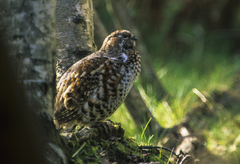
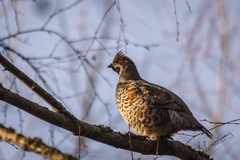
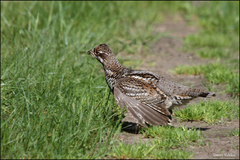
The hazel grouse (Tetrastes bonasia), sometimes called the hazel hen, is one of the smaller members of the grouse tribe of birds. It is a sedentary species, breeding across the Palearctic as far east as Hokkaido, and as far west as central Europe, in dense, damp, mixed coniferous woodland, preferably with some spruce. The bird is sometimes referred to as "rabchick" (from рябчик) by early 20th century English speaking travellers to Russia.

The hazel grouse was formally described in 1758 by the Swedish naturalist Carl Linnaeus in the tenth edition of his Systema Naturae under the binomial name Tetrao bonasia. Although Linnaeus specified the type locality as Europe, this is restricted to Sweden. The hazel grouse is now placed with the Chinese grouse in the genus Tetrastes that was introduced in 1840 by Alexander von Keyserling and Johann Heinrich Blasius. The specific epithet bonasia is Modern Latin for the hazel grouse, from the Italian name for the species.

Eleven subspecies are recognised: Wikipedia →

Sounds

Song0:05

Switzerland · 2026

© peter wittemann · XC1139429 · CC BY-NC-ND 4.0

Wing flutter0:25

Sweden · 2025

© Lars Edenius · XC972575 · CC BY-NC-SA 4.0

Alarm call0:39

Poland · 2020

© Romuald Mikusek · XC687909 · CC BY-NC-SA 4.0

Global Distribution

Parks Where Found

# Park Country Daily sighting probability
1 Białowieża National Park 🇵🇱 Poland
~10%
2 Bavarian Forest National Park 🇩🇪 Germany
<5%
3 Tatra National Park 🇸🇰 Slovakia
<5%

Cities Where Found

# City Country Daily sighting probability
1 Novosibirsk 🇷🇺 Russia
~10%

Zoos & Centres Where Found

# Zoo / Centre Country
1 Lusen National Park Centre 🇩🇪 Germany In captivity

Before you go

What are the chances of seeing a Hazel Grouse in Bavarian Forest National Park?

Rare

Under 5% of wildlife watchers report a Hazel Grouse sighting in Bavarian Forest National Park on a given day, based on 37 verified sightings from GBIF citizen-science data from 2019 to 2026. It is the 113th most-seen of the 170 birds we can rate there. Over three days the chance rises to about 10%, and over a week to about 20%, if each day is a fresh chance.

When is the best time to see a Hazel Grouse in Bavarian Forest National Park?

March–April and October

In those months about 10% of wildlife watchers report a Hazel Grouse in Bavarian Forest National Park on a given day, against under 5% in May–September and November–February, the lowest months.

What time of day is best to see a Hazel Grouse?

Between 10 am and 1 pm

Across all the parks we cover, that three-hour window holds the most Hazel Grouse sightings with a recorded time, and about 8 in 10 of them come between 6 am and 6 pm: it is a daytime animal.

Is Bavarian Forest National Park the best place to see a Hazel Grouse?

2nd of 3

Of the 3 parks where we can rate Hazel Grouse sightings, Bavarian Forest National Park ranks 2nd at under 5%. The best odds are in Białowieża National Park (Poland, about 10%).

Which relatives of the Hazel Grouse live in Bavarian Forest National Park?

Same family: Phasianidae

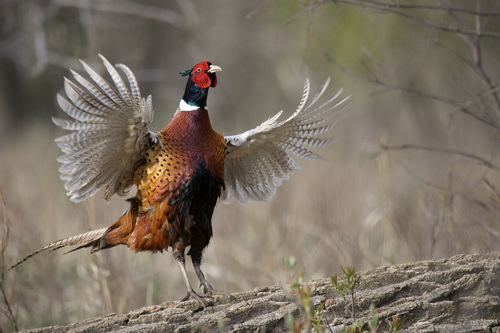
The closest relatives of the Hazel Grouse that you can see in Bavarian Forest National Park (family Phasianidae, Pheasants, Grouse, and Allies) are Ring-necked Pheasant (about 20%) and Western Capercaillie (about 10%), with each one's daily chance of a sighting.

Where does the Hazel Grouse sighting chance come from?

GBIF citizen-science records

It is estimated from how often the Hazel Grouse is recorded against all the birds logged in Bavarian Forest National Park (37 verified sightings from 2019 to 2026), calibrated against known sighting rates. Figures are rounded to the nearest 10% because citizen-science data supports honest approximations, not decimals, and months with records from fewer than five people show "—". How it works.

← Back to Bavarian Forest National Park