Larch Lady Beetle

Larch Lady Beetle

Aphidecta obliterata

Daily sighting probability ~10% · With luck
at Bavarian Forest National Park

In 3 days ~10% in a week ~30%

7 Verified sightings at Bavarian Forest National Park From 2019 to 2026
43 In all 4 parks
May Best month
☀️ Diurnal When it's spotted

About the Larch Lady Beetle

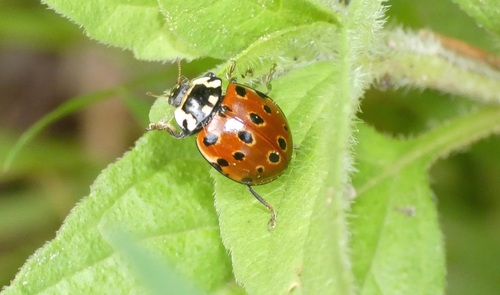
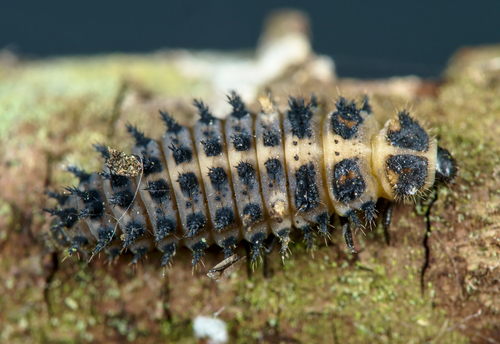
Aphidecta obliterata, commonly known as the larch ladybird, or larch ladybug, is a species of Coccinellidae, a flying beetle. This species is present in Europe, European Russia, the Caucasus, Belarus, Ukraine, Transcaucasia, Asia Minor, North America (Virginia and South Carolina), and Newfoundland.

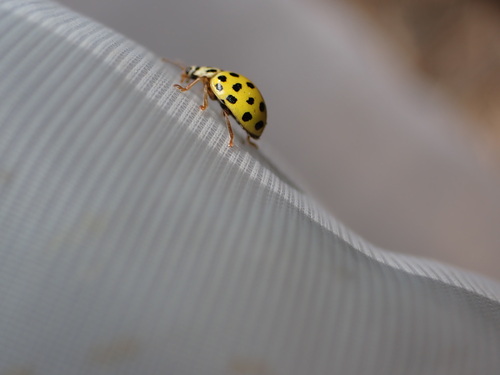
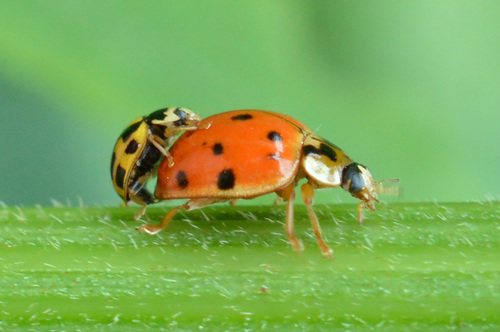
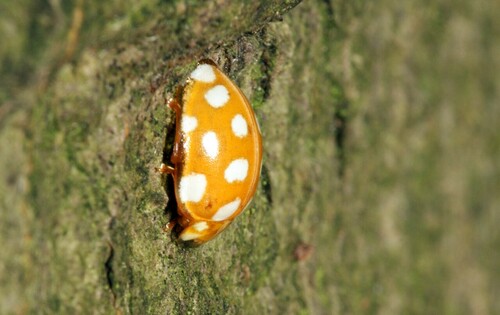
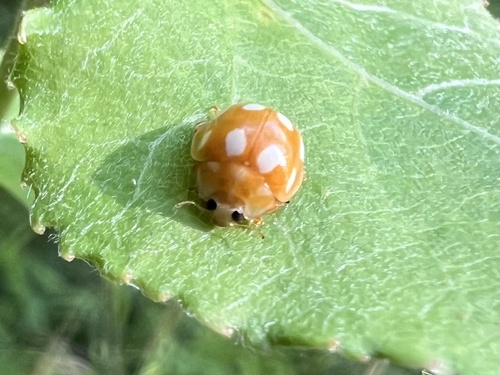
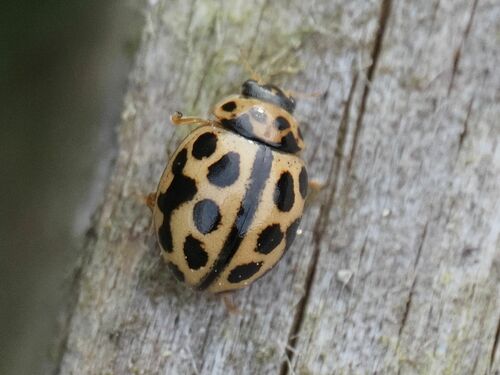
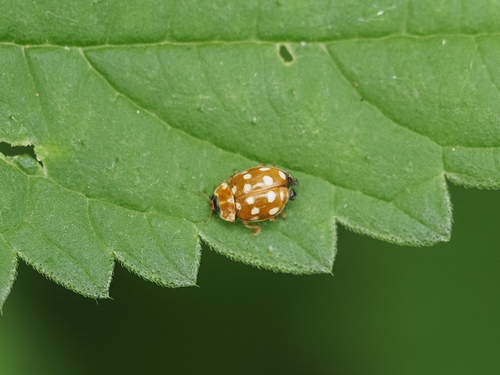
Aphidecta obliterata can reach approximately a size of 3.5–5 millimetres (0.14–0.20 in). These tiny beetles have an elongate oval body, with strongly convex elytra, smooth, shiny and densely, finely punctured. Head shows a black arch-shaped marking. Antennae are club-shaped, with 9-11 segments.

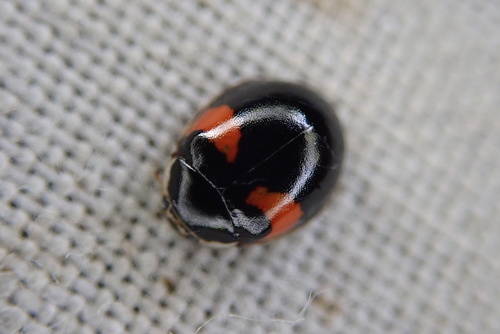
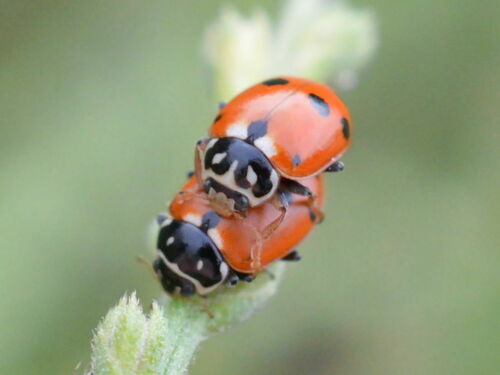
The larch ladybirds are beetles with a great variability in color and markings, with several varietas. For example, Aphidecta obliterata v. fenestrata has entirely black elytra, while usually they range from tan to brown, often with a pink tinge. They have a dark suture and usually a dark oblique line posteriorly. The pronotum is beige, with four dark brown lines forming a M mark. While other species of ladybugs have prominent spots, this insect has smaller, less distinct spots, or small blotches, if any.

Aphidecta obliterata inhabits high bogs and... Wikipedia →

Global Distribution

Parks Where Found

# Park Country Daily sighting probability
1 Vanoise National Park 🇫🇷 France
~10%
2 Cairngorms National Park 🇬🇧 United Kingdom
~10%
3 Snowdonia National Park 🇬🇧 United Kingdom
~10%
4 Bavarian Forest National Park 🇩🇪 Germany
~10%

Cities Where Found

# City Country Daily sighting probability
1 Berlin 🇩🇪 Germany
~10%
2 Birmingham 🇬🇧 United Kingdom
<5%
3 Copenhagen 🇩🇰 Denmark
<5%
4 Helsinki 🇫🇮 Finland
<5%
5 Prague 🇨🇿 Czechia
<5%
6 Vienna 🇦🇹 Austria
<5%

Before you go

What are the chances of seeing a Larch Lady Beetle in Bavarian Forest National Park?

With luck

About 10% of wildlife watchers report a Larch Lady Beetle sighting in Bavarian Forest National Park on a given day, based on 7 verified sightings from GBIF citizen-science data from 2019 to 2026. It is the 727th most-seen of the 1115 insects we can rate there. Over three days the chance rises to about 10%, and over a week to about 30%, if each day is a fresh chance.

When is the best time to see a Larch Lady Beetle in Bavarian Forest National Park?

April–May and July

In those months about 10% of wildlife watchers report a Larch Lady Beetle in Bavarian Forest National Park on a given day, against under 5% in June and August–March, the lowest months.

What time of day is best to see a Larch Lady Beetle?

Between noon and 3 pm

Across all the parks we cover, that three-hour window holds the most Larch Lady Beetle sightings with a recorded time, and nearly all of them come between 6 am and 6 pm: it is a daytime animal.

Is Bavarian Forest National Park the best place to see a Larch Lady Beetle?

Among the best

Of the 4 parks where we can rate Larch Lady Beetle sightings, Bavarian Forest National Park ranks 4th at about 10%, level with the leaders once rounded. The best odds are in Vanoise National Park (France, about 10%), Cairngorms National Park (United Kingdom, about 10%) and Snowdonia National Park (United Kingdom, about 10%).

Which relatives of the Larch Lady Beetle live in Bavarian Forest National Park?

Same family: Coccinellidae

The closest relatives of the Larch Lady Beetle that you can see in Bavarian Forest National Park (family Coccinellidae, Lady Beetles) are Asian Lady Beetle (about 30%), Seven-Spotted Lady Beetle (about 20%) and 22-Spot Ladybird (about 10%), with each one's daily chance of a sighting.

Where does the Larch Lady Beetle sighting chance come from?

GBIF citizen-science records

It is estimated from how often the Larch Lady Beetle is recorded against all the insects logged in Bavarian Forest National Park (7 verified sightings from 2019 to 2026), calibrated against known sighting rates. Figures are rounded to the nearest 10% because citizen-science data supports honest approximations, not decimals, and months with records from fewer than five people show "—". How it works.

← Back to Bavarian Forest National Park