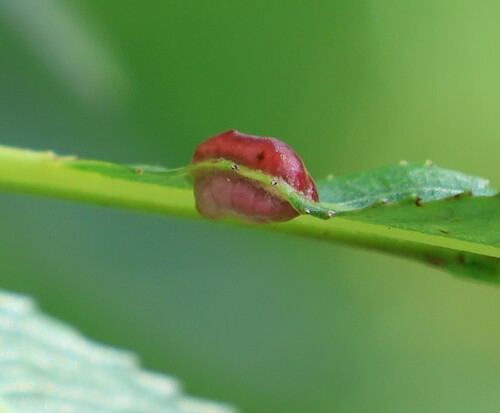
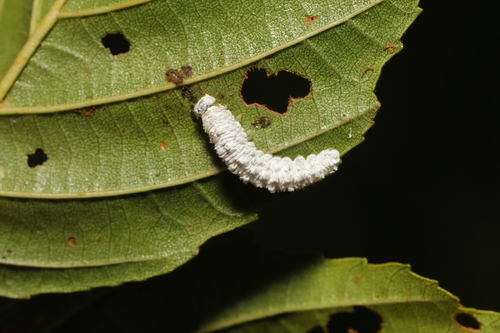
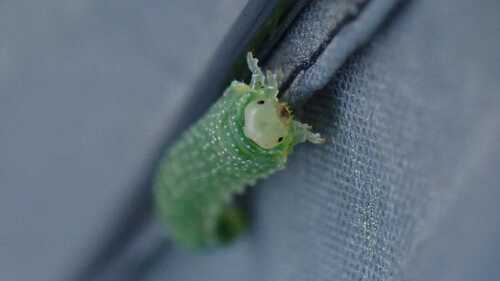
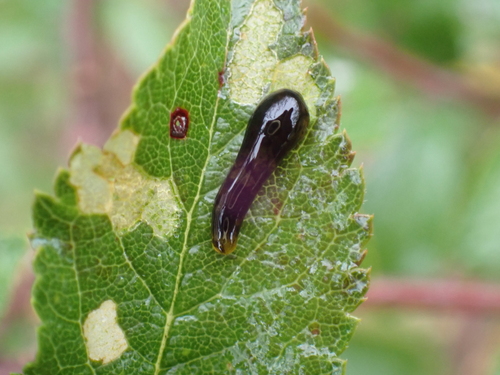

Loosestrife Sawfly

Loosestrife Sawfly

Monostegia abdominalis

Daily sighting probability <5% · Rare
at Bavarian Forest National Park

In 3 days ~10% in a week ~30%

6 Verified sightings at Bavarian Forest National Park From 2019 to 2026
6 In 1 park
September Best month
☀️ Diurnal When it's spotted

About the Loosestrife Sawfly

Monostegia is a genus of sawfly. The authority is based on the description by Achille Costa and Oronzio Costa, although earlier work grants this to Fabricius 1798., though the most common species, M. abdominalis, bears the authority of Fabricius.

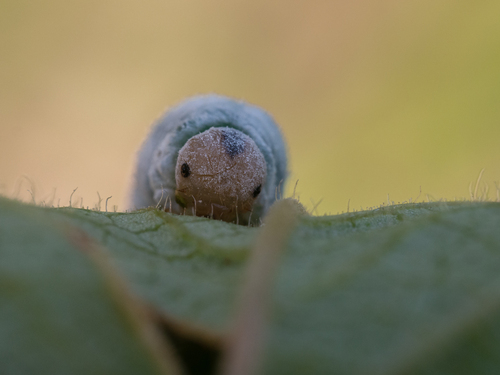
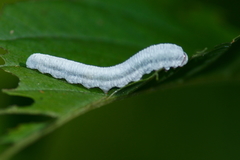
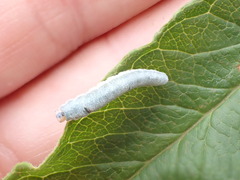
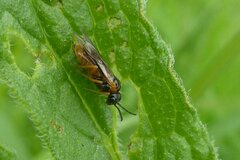
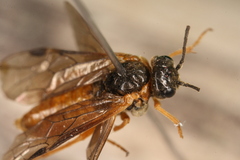
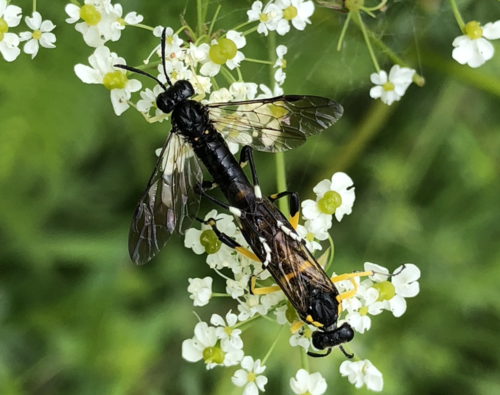
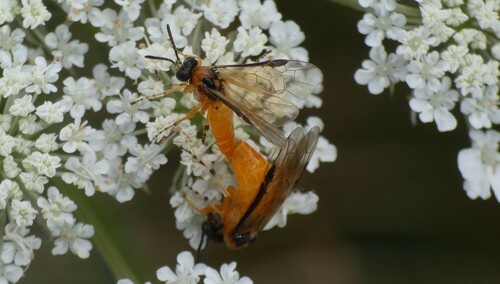
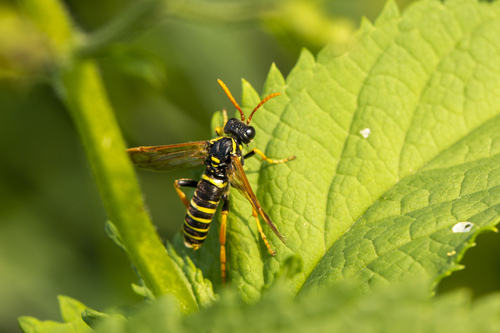
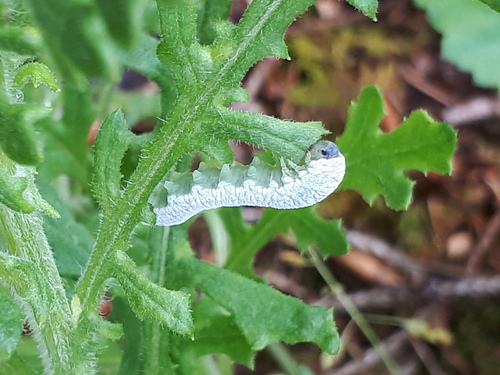
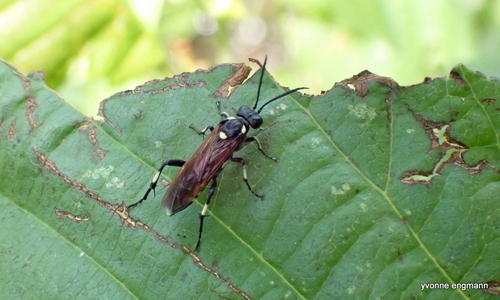
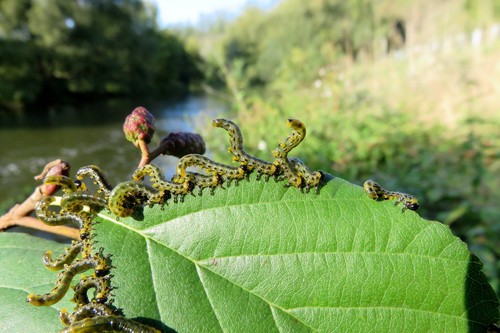
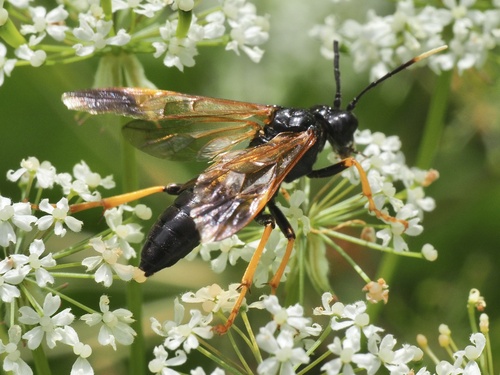
Adults: Head and thorax are black, with some yellow parts including mouthparts. Legs and abdomen mainly yellow, wings suffused with brown. Eggs: Smooth, white and oblong measuring 1 mm by 4 mm. Larvae: Caterpillar-like, growing from 2–4 mm to 16–21 mm. Pupae: Shorter and fatter measuring 8 mm in length, and become increasingly melanized.

Monostegia nigra Konow 1896 Distribution is holarctic, from Europe to Asia Minor and the Caucasus in the south, through to Siberia. Though it was only introduced to North America from Europe in the 1950s, where it naturalised, its range continues to expand. In 1979 its distribution in North America was from Quebec to New Jersey... Wikipedia →

Global Distribution

Parks Where Found

# Park Country Daily sighting probability
1 Bavarian Forest National Park 🇩🇪 Germany
<5%

More parks will be added in future updates.

Cities Where Found

# City Country Daily sighting probability
1 Helsinki 🇫🇮 Finland
<5%
2 London 🇬🇧 United Kingdom
<5%
3 Moscow 🇷🇺 Russia
<5%

Before you go

What are the chances of seeing a Loosestrife Sawfly in Bavarian Forest National Park?

Rare

Under 5% of wildlife watchers report a Loosestrife Sawfly sighting in Bavarian Forest National Park on a given day, based on 6 verified sightings from GBIF citizen-science data from 2019 to 2026. It is the 964th most-seen of the 1115 insects we can rate there. Over three days the chance rises to about 10%, and over a week to about 30%, if each day is a fresh chance.

When is the best time to see a Loosestrife Sawfly in Bavarian Forest National Park?

May and September

In those months about 10% of wildlife watchers report a Loosestrife Sawfly in Bavarian Forest National Park on a given day, against under 5% in June–August and October–April, the lowest months.

What time of day is best to see a Loosestrife Sawfly?

Between 10 am and 1 pm

Across all the parks we cover, that three-hour window holds the most Loosestrife Sawfly sightings with a recorded time, and nearly all of them come between 6 am and 6 pm: it is a daytime animal.

Where else can you see a Loosestrife Sawfly?

Only Bavarian Forest National Park, in our data

Bavarian Forest National Park is the only park on Wallace's Line with enough records to rate Loosestrife Sawfly sightings: under 5% of wildlife watchers there report one on a given day.

Which relatives of the Loosestrife Sawfly live in Bavarian Forest National Park?

Same family: Tenthredinidae

The closest relatives of the Loosestrife Sawfly that you can see in Bavarian Forest National Park (family Tenthredinidae, Common Sawflies) are Yellow-Spotted Macrophya (about 10%), Turnip Sawfly (about 10%) and Figwort Sawfly (about 10%), with each one's daily chance of a sighting.

Where does the Loosestrife Sawfly sighting chance come from?

GBIF citizen-science records

It is estimated from how often the Loosestrife Sawfly is recorded against all the insects logged in Bavarian Forest National Park (6 verified sightings from 2019 to 2026), calibrated against known sighting rates. Figures are rounded to the nearest 10% because citizen-science data supports honest approximations, not decimals, and months with records from fewer than five people show "—". How it works.

← Back to Bavarian Forest National Park