Alder Sawfly

Alder Sawfly

Eriocampa ovata

Daily sighting probability <5% · Rare
at Bavarian Forest National Park

In 3 days ~10% in a week ~30%

6 Verified sightings at Bavarian Forest National Park From 2019 to 2026
23 In all 2 parks
September Best month
☀️ Diurnal When it's spotted

About the Alder Sawfly

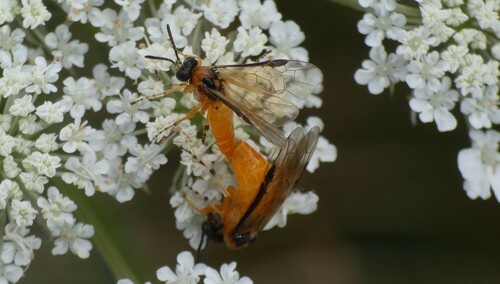
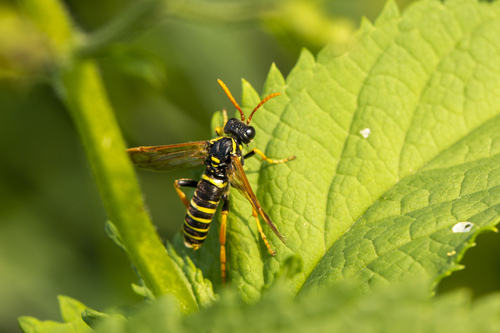
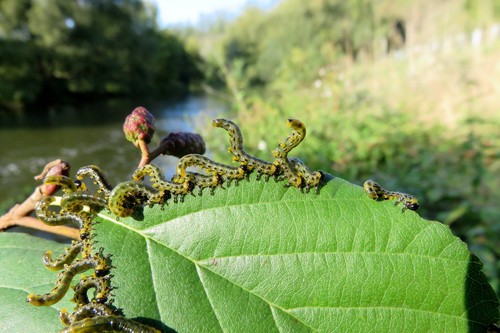
Eriocampa ovata, known generally as the alder sawfly or woolly alder sawfly, is a species of common sawfly in the family Tenthredinidae. The larvae feed on the leaves of the common alder (Alnus glutinosa) and the grey alder (Alnus incana), sometimes causing defoliation.

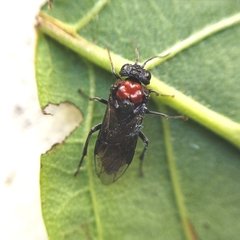
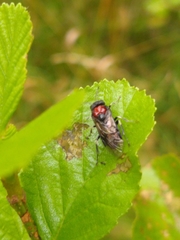
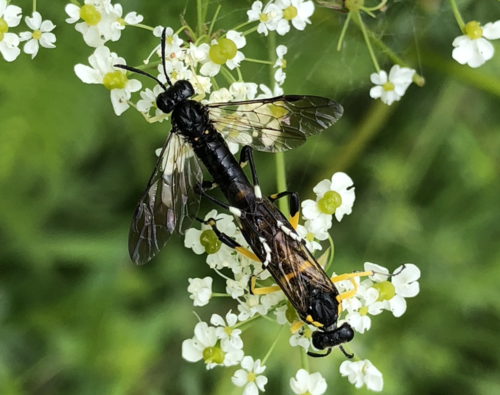
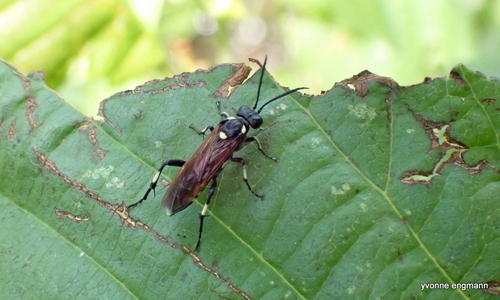
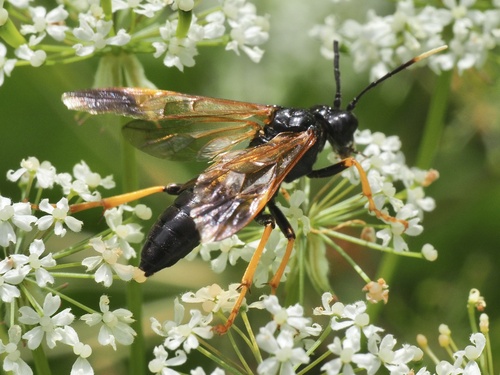
The adult female is about 7 mm (0.3 in) long and mainly black, with the exception of the first two segments of the thorax, which are red, and the underside of the tips of the antennae, the inner side of the fore-tibia and the basal part of the hind femur, which are whitish. The head has numerous large puncture marks while the thorax has scattered smaller ones; the abdomen has faint transverse sculpturings. The wings are translucent with black veins. Adult males are unknown in North America, and rare in Europe, the females breeding by parthenogenesis.

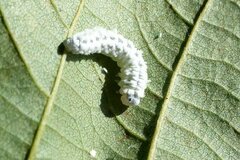
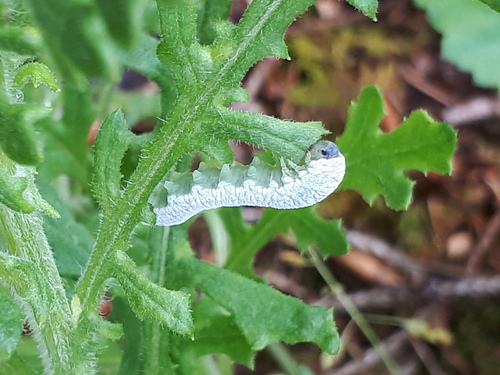
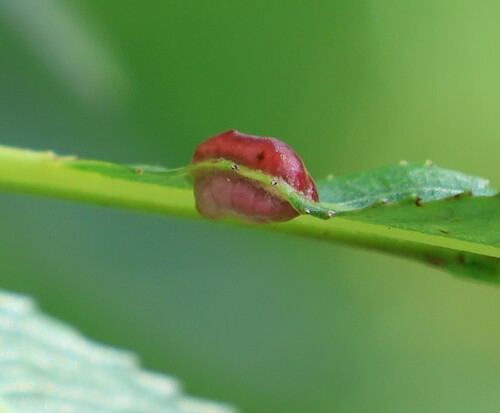
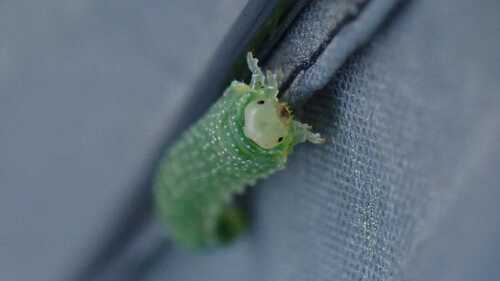
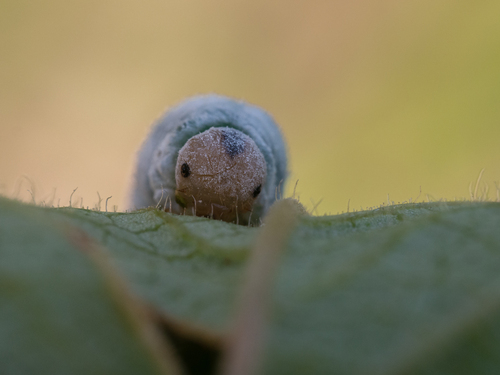
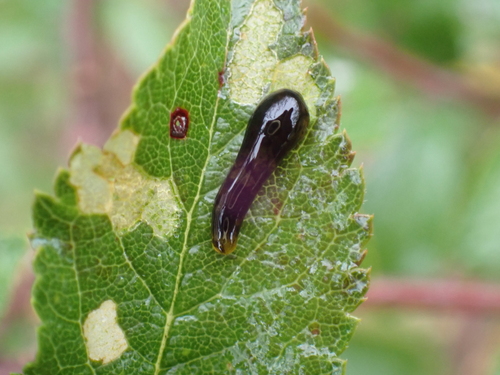
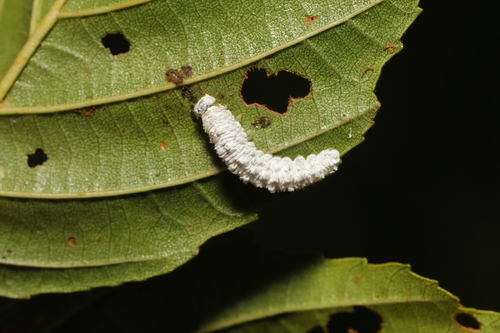
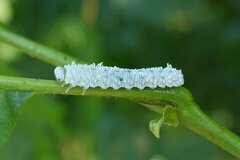
The larvae grow to a length of 5 to 7.5 mm (0.2 to 0.3 in). They are white, apart from a brown mark on the head, and are covered with a glossy, white woolly secretion produced by epidermal glands. The alder sawfly is native to Europe, but has been accidentally introduced into North America, both the Atlantic and Pacific coasts... Wikipedia →
Global Distribution

Parks Where Found

# Park Country Daily sighting probability
1 Wadden Sea National Park 🇩🇪 Germany
~10%
2 Bavarian Forest National Park 🇩🇪 Germany
<5%

Cities Where Found

# City Country Daily sighting probability
1 Liverpool 🇬🇧 United Kingdom
~10%
2 Birmingham 🇬🇧 United Kingdom
~10%
3 Manchester 🇬🇧 United Kingdom
<5%
4 Helsinki 🇫🇮 Finland
<5%
5 Warsaw 🇵🇱 Poland
<5%
6 Copenhagen 🇩🇰 Denmark
<5%
7 London 🇬🇧 United Kingdom
<5%

Before you go

What are the chances of seeing an Alder Sawfly in Bavarian Forest National Park?

Rare

Under 5% of wildlife watchers report an Alder Sawfly sighting in Bavarian Forest National Park on a given day, based on 6 verified sightings from GBIF citizen-science data from 2019 to 2026. It is the 964th most-seen of the 1115 insects we can rate there. Over three days the chance rises to about 10%, and over a week to about 30%, if each day is a fresh chance.

When is the best time to see an Alder Sawfly in Bavarian Forest National Park?

August and September

In those months about 10% of wildlife watchers report an Alder Sawfly in Bavarian Forest National Park on a given day, against under 5% in October to July, the lowest months.

What time of day is best to see an Alder Sawfly?

Between 3 and 6 pm

Across all the parks we cover, that three-hour window holds the most Alder Sawfly sightings with a recorded time, and nearly all of them come between 6 am and 6 pm: it is a daytime animal.

Is Bavarian Forest National Park the best place to see an Alder Sawfly?

2nd of 2

Of the 2 parks where we can rate Alder Sawfly sightings, Bavarian Forest National Park ranks 2nd at under 5%. The best odds are in Wadden Sea National Park (Germany, about 10%).

Which relatives of the Alder Sawfly live in Bavarian Forest National Park?

Same family: Tenthredinidae

The closest relatives of the Alder Sawfly that you can see in Bavarian Forest National Park (family Tenthredinidae, Common Sawflies) are Yellow-Spotted Macrophya (about 10%), Turnip Sawfly (about 10%) and Figwort Sawfly (about 10%), with each one's daily chance of a sighting.

Where does the Alder Sawfly sighting chance come from?

GBIF citizen-science records

It is estimated from how often the Alder Sawfly is recorded against all the insects logged in Bavarian Forest National Park (6 verified sightings from 2019 to 2026), calibrated against known sighting rates. Figures are rounded to the nearest 10% because citizen-science data supports honest approximations, not decimals, and months with records from fewer than five people show "—". How it works.

← Back to Bavarian Forest National Park