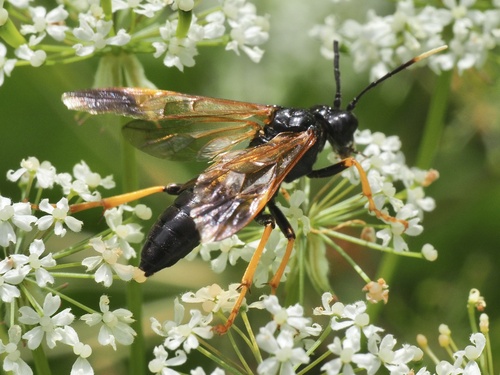
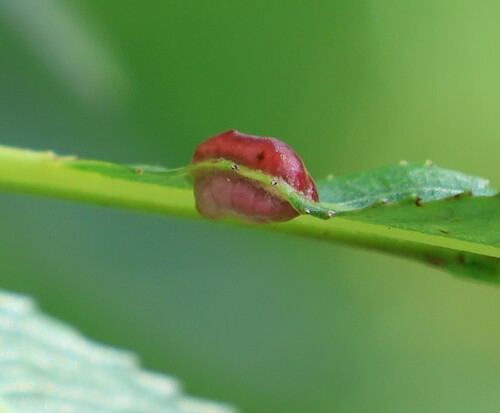
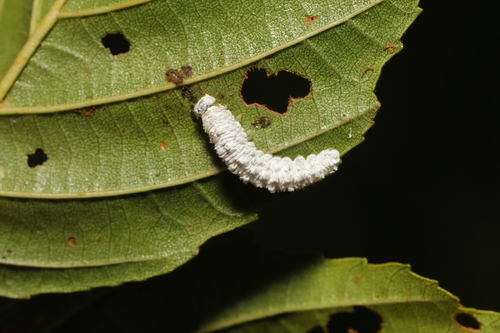
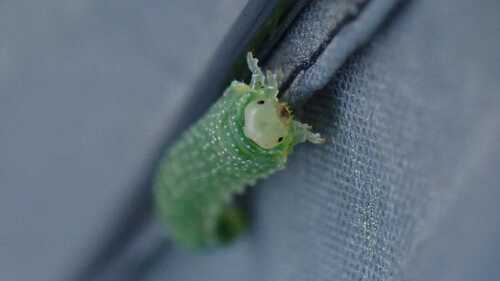
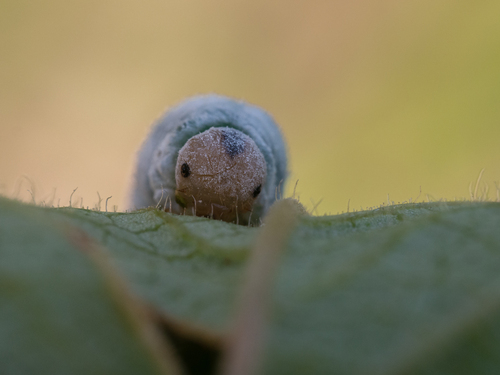

Cherry Slug Sawfly

Cherry Slug Sawfly

Caliroa cerasi

Daily sighting probability <5% · Rare
at Bavarian Forest National Park

In 3 days ~10% in a week ~30%

5 Verified sightings at Bavarian Forest National Park From 2019 to 2026
5 In 1 park
September Best month
☀️ Diurnal When it's spotted

About the Cherry Slug Sawfly

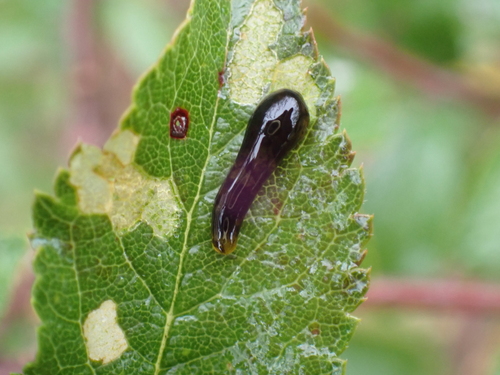
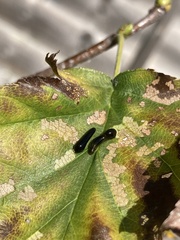
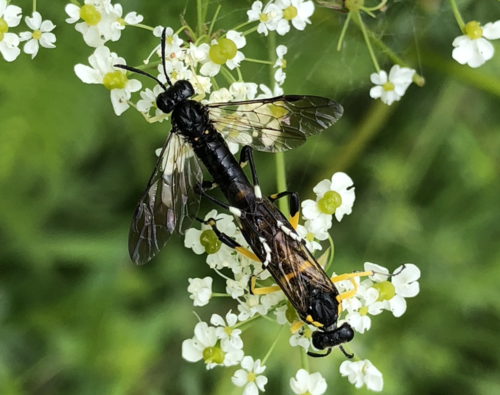
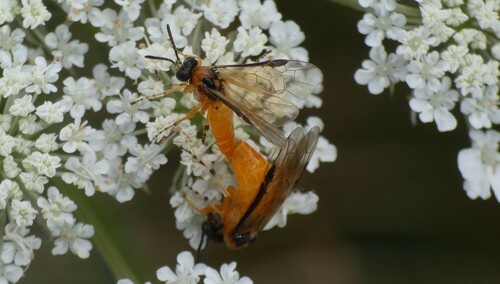
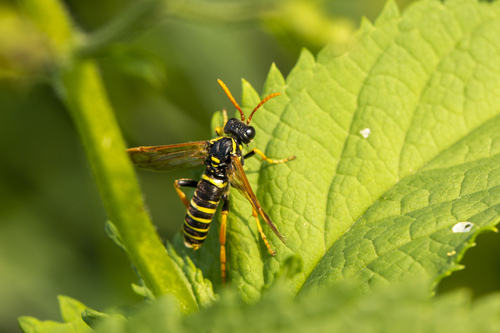
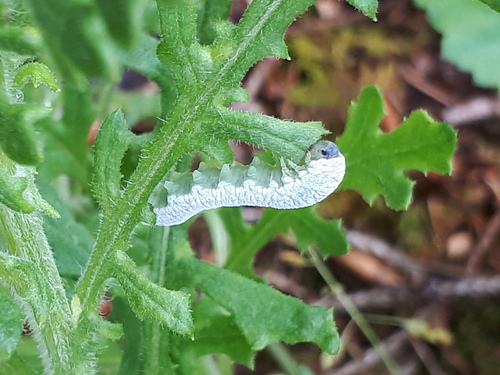
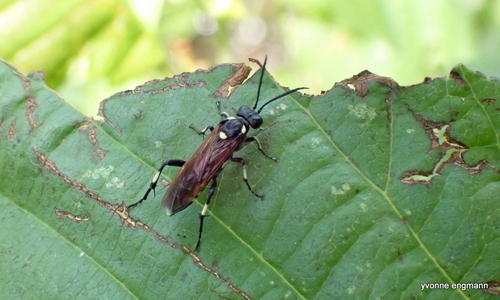
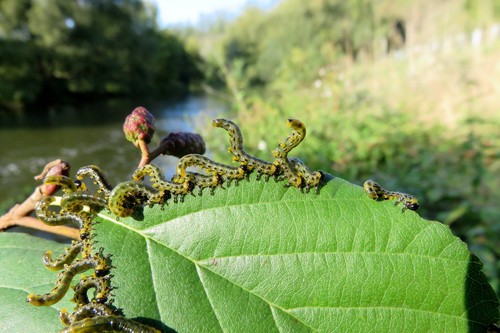
Caliroa cerasi is a species of sawfly belonging to the family Tenthredinidae. The larva of this insect are commonly referred to as the pear slug or cherry slug and are a nearly worldwide agricultural pest. The species was first described by Carl Linnaeus in his landmark 1758 10th edition of Systema Naturae. The pear slug is an important pest that eats leaves of cherry, pear, plum and hawthorn trees, leaving behind a skeleton of veins. The larvae cover themselves in green slime, making themselves unpalatable to predators. They molt between five and eight times before being fully grown. When the larvae are fully grown, they drop from the tree to the ground and pupate underground. The adult sawfly emerges from the pupal case and climbs from the soil to mate and lays eggs on the leaves of the host plant, completing the life cycle.

Other sources dispute the notion that the females climb the tree to lay their eggs, claiming instead that they fly to the tree. This is an important detail in regard to their control in horticultural circumstances where glues are used to control climbing pests.

In New Zealand the biocontrol agent species Lathrolestes luteolator has been released on two separate occasions in an attempt to control this agricultural pest. Wikipedia →

Global Distribution

Parks Where Found

# Park Country Daily sighting probability
1 Bavarian Forest National Park 🇩🇪 Germany
<5%

More parks will be added in future updates.

Cities Where Found

# City Country Daily sighting probability
1 Hobart 🇦🇺 Australia
~10%
2 Birmingham 🇬🇧 United Kingdom
<5%
3 Copenhagen 🇩🇰 Denmark
<5%
4 Helsinki 🇫🇮 Finland
<5%
5 Melbourne 🇦🇺 Australia
<5%
6 Calgary 🇨🇦 Canada
<5%
7 San Francisco 🇺🇸 United States
<5%

Before you go

What are the chances of seeing a Cherry Slug Sawfly in Bavarian Forest National Park?

Rare

Under 5% of wildlife watchers report a Cherry Slug Sawfly sighting in Bavarian Forest National Park on a given day, based on 5 verified sightings from GBIF citizen-science data from 2019 to 2026. It is the 964th most-seen of the 1115 insects we can rate there. Over three days the chance rises to about 10%, and over a week to about 30%, if each day is a fresh chance.

When is the best time to see a Cherry Slug Sawfly in Bavarian Forest National Park?

August and September

In those months about 10% of wildlife watchers report a Cherry Slug Sawfly in Bavarian Forest National Park on a given day, against under 5% in October to July, the lowest months.

What time of day is best to see a Cherry Slug Sawfly?

Between 2 and 5 pm

Across all the parks we cover, that three-hour window holds the most Cherry Slug Sawfly sightings with a recorded time, and about 8 in 10 of them come between 6 am and 6 pm: it is a daytime animal.

Where else can you see a Cherry Slug Sawfly?

Only Bavarian Forest National Park, in our data

Bavarian Forest National Park is the only park on Wallace's Line with enough records to rate Cherry Slug Sawfly sightings: under 5% of wildlife watchers there report one on a given day.

Which relatives of the Cherry Slug Sawfly live in Bavarian Forest National Park?

Same family: Tenthredinidae

The closest relatives of the Cherry Slug Sawfly that you can see in Bavarian Forest National Park (family Tenthredinidae, Common Sawflies) are Yellow-Spotted Macrophya (about 10%), Turnip Sawfly (about 10%) and Figwort Sawfly (about 10%), with each one's daily chance of a sighting.

Where does the Cherry Slug Sawfly sighting chance come from?

GBIF citizen-science records

It is estimated from how often the Cherry Slug Sawfly is recorded against all the insects logged in Bavarian Forest National Park (5 verified sightings from 2019 to 2026), calibrated against known sighting rates. Figures are rounded to the nearest 10% because citizen-science data supports honest approximations, not decimals, and months with records from fewer than five people show "—". How it works.

← Back to Bavarian Forest National Park