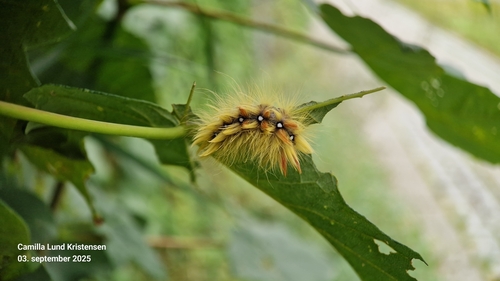
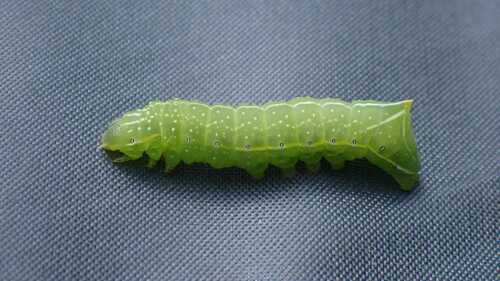
Marbled Clover

Marbled Clover

Heliothis viriplaca

Daily sighting probability <5% · Rare
at Bavarian Forest National Park

In 3 days ~10% in a week ~30%

7 Verified sightings at Bavarian Forest National Park From 2019 to 2026
15 In all 2 parks
July Best month
☀️🌙 Day & Night When it's spotted

About the Marbled Clover

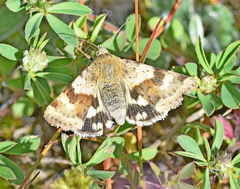
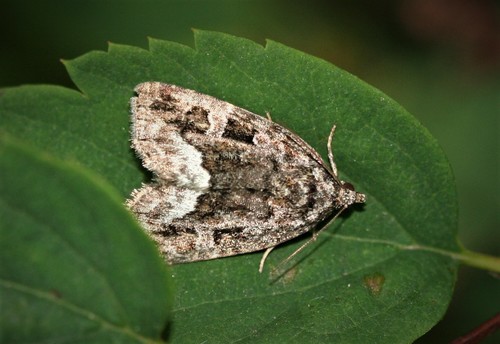
Heliothis viriplaca, the marbled clover, is a moth of the family Noctuoidea. It is found in Europe and across the Palearctic to Central Asia then to Japan, Korea and Sakhalin. In the south, it penetrates to Kashmir and Myanmar. As a migratory moth, it also reaches areas in northern Fennoscandia in some years. North of the Alps, both indigenous and immigrant individuals occur in certain areas. The heat-loving species occurs mainly on dry grasslands, fallow land, heathlands and sunny slopes and slopes and the edges of sand and gravel pits.

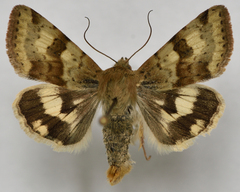
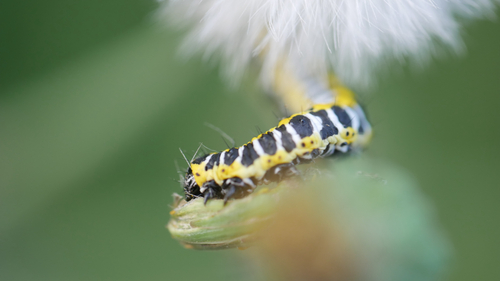
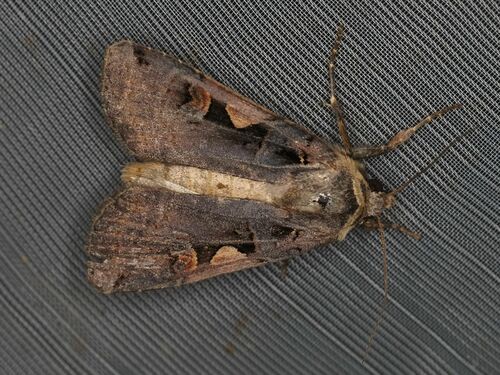
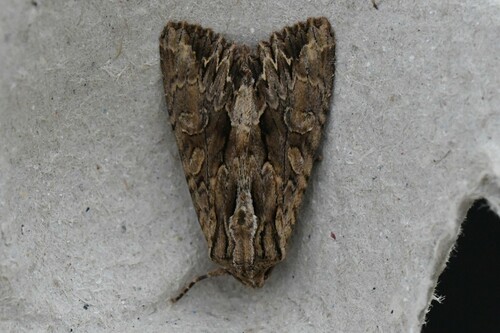
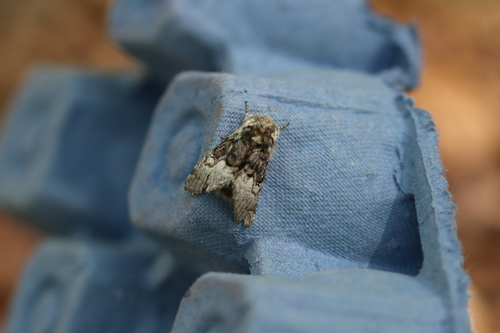
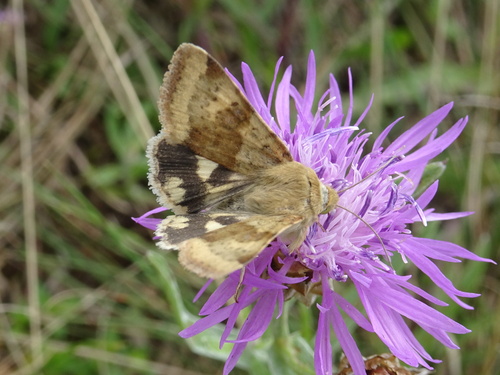
The wingspan is 25–30 mm. Meyrick describes it thus- Forewings greyish-ochreous, slightly greenish -tinged, paler before and beyond reniform; first and second lines indistinct; median shade rather dark fuscous, confluent with large dark fuscous reniform; subterminal line rather paler, preceded by a darker or fuscous fascia, darkest at extremities. Hindwings ochreous-whitish, towards base suffused with blackish; a large discal spot, and terminal band including an ochreous-whitish spot blackish. Larva green to purplish-brown; dorsal line darker-edged; subdorsal whitish, dark-edged beneath; spiracular green or yellowish; subspiracular white; head green, pink, or yellowish, brown -speckled.

The moth flies in two to three generations from May to August. [1]. The larvae feed on species from the genera Crepis, Trifolium, Silene, Ononis and Centaurea. Wikipedia →
Global Distribution

Parks Where Found

# Park Country Daily sighting probability
1 Bavarian Forest National Park 🇩🇪 Germany
<5%
2 Sierra de Guadarrama National Park 🇪🇸 Spain
<5%

Cities Where Found

# City Country Daily sighting probability
1 Berlin 🇩🇪 Germany
~10%
2 Prague 🇨🇿 Czechia
<5%

Before you go

What are the chances of seeing a Marbled Clover in Bavarian Forest National Park?

Rare

Under 5% of wildlife watchers report a Marbled Clover sighting in Bavarian Forest National Park on a given day, based on 7 verified sightings from GBIF citizen-science data from 2019 to 2026. It is the 822nd most-seen of the 1115 insects we can rate there. Over three days the chance rises to about 10%, and over a week to about 30%, if each day is a fresh chance.

When is the best time to see a Marbled Clover in Bavarian Forest National Park?

May and July–August

In those months about 10% of wildlife watchers report a Marbled Clover in Bavarian Forest National Park on a given day, against under 5% in June and September–April, the lowest months.

What time of day is best to see a Marbled Clover?

Between 10 pm and 1 am

Across all the parks we cover, that three-hour window holds the most Marbled Clover sightings with a recorded time, and about 6 in 10 of them come between 6 am and 6 pm: it is seen both by day and at night.

Is Bavarian Forest National Park the best place to see a Marbled Clover?

Yes

Of the 2 parks where we can rate Marbled Clover sightings, Bavarian Forest National Park has the highest daily chance: under 5%. Next come Sierra de Guadarrama National Park (Spain, under 5%).

Which relatives of the Marbled Clover live in Bavarian Forest National Park?

Same family: Noctuidae

The closest relatives of the Marbled Clover that you can see in Bavarian Forest National Park (family Noctuidae, Cutworm Moths and Allies) are Silver Υ (about 20%), Knot Grass Moth (about 20%) and Large Yellow Underwing (about 10%), with each one's daily chance of a sighting.

Where does the Marbled Clover sighting chance come from?

GBIF citizen-science records

It is estimated from how often the Marbled Clover is recorded against all the insects logged in Bavarian Forest National Park (7 verified sightings from 2019 to 2026), calibrated against known sighting rates. Figures are rounded to the nearest 10% because citizen-science data supports honest approximations, not decimals, and months with records from fewer than five people show "—". How it works.

← Back to Bavarian Forest National Park