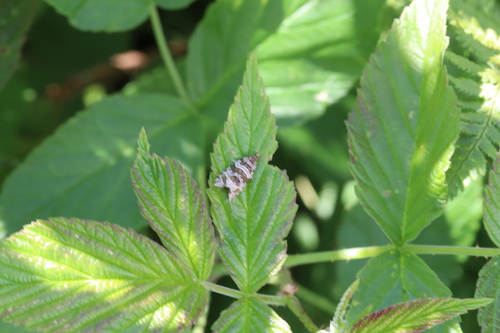
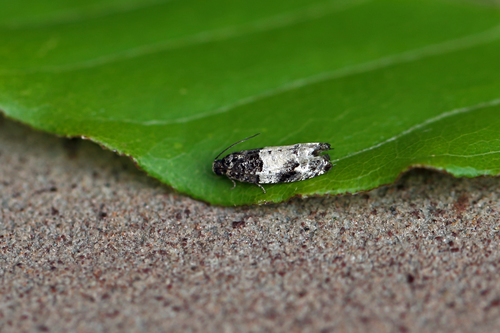
Pale Twist

Pale Twist

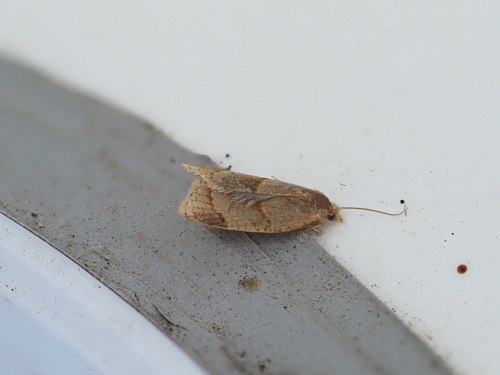
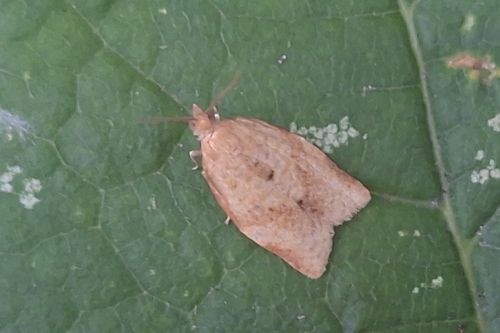
Clepsis rurinana

Daily sighting probability <5% · Rare
at Bavarian Forest National Park

In 3 days ~10% in a week ~30%

6 Verified sightings at Bavarian Forest National Park From 2019 to 2026
6 In 1 park
August Best month
☀️🌙 Day & Night When it's spotted

About the Pale Twist

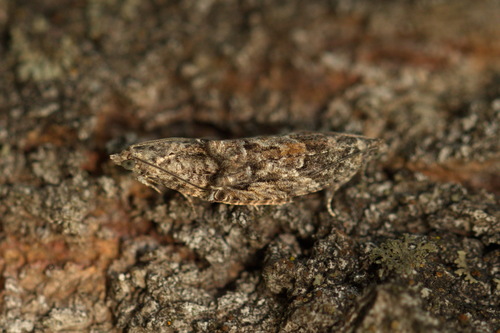
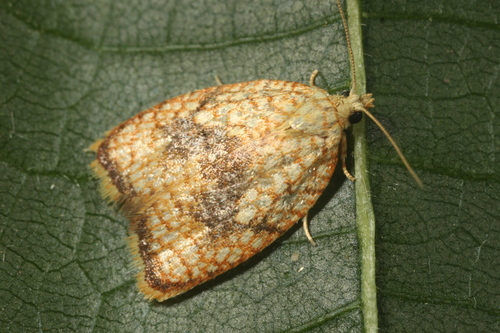
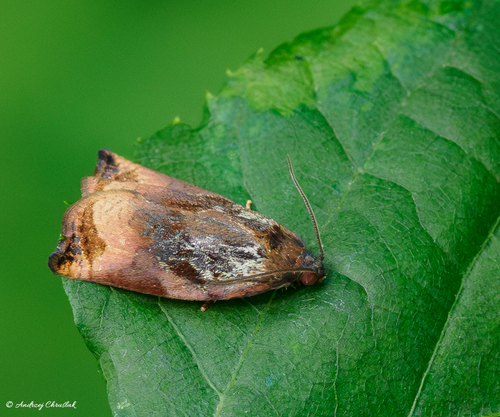
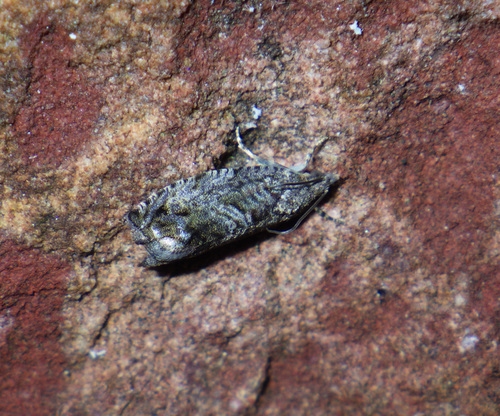
Clepsis rurinana is a moth of the family Tortricidae. It is found in most of Europe, with the exception of Ukraine and part of the Balkan Peninsula, east to the Near East and the eastern part of the Palearctic realm. It is also present in the Indomalayan realm.

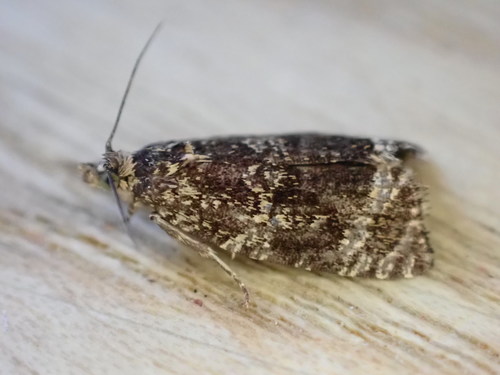
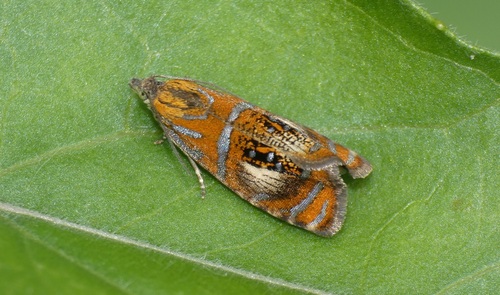
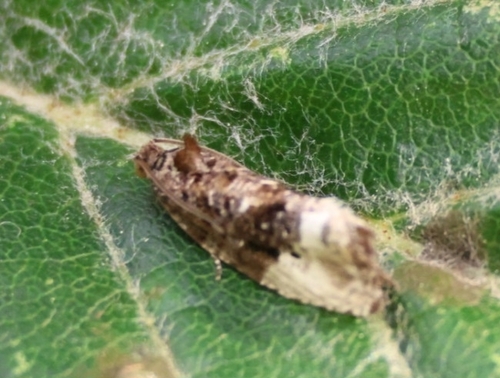
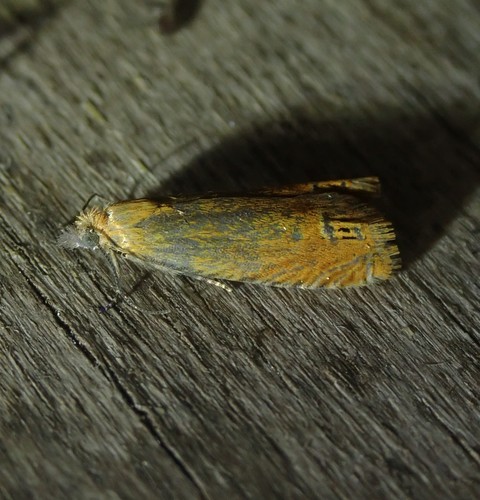
The wingspan is 17–20 mm. The forewings with a hardly sinuate, nearly vertical termen. The costal fold extends from the base to before middle. The ground colour is pale ochreous, somewhat brownish-strigulated. The basal patch is brownish dorsally and the central fascia ochreous-brown, its anterior edge nearly straight. The costal patch is ochreous-brown, emitting a straight stria. The hindwings are whitish, apex ochreous-tinged, dorsal half light grey. The larva is grey-green; head and plate of 2 brown.

Adults are on wing from early June to late August in one generation in western Europe. The moths are active in afternoon and evening. The larvae feed on a wide range of plants, including of Urtica, Chelidonium, Convolvulus, Euphorbia, Rumex, Aconitum, Lilium, Anthriscus, Aster, Rosa, Lonicera xylosteum, Acer and Quercus. They live in spun leaves. Wikipedia →
Global Distribution

Parks Where Found

# Park Country Daily sighting probability
1 Bavarian Forest National Park 🇩🇪 Germany
<5%

More parks will be added in future updates.

Cities Where Found

# City Country Daily sighting probability
1 Vienna 🇦🇹 Austria
<5%

Before you go

What are the chances of seeing a Pale Twist in Bavarian Forest National Park?

Rare

Under 5% of wildlife watchers report a Pale Twist sighting in Bavarian Forest National Park on a given day, based on 6 verified sightings from GBIF citizen-science data from 2019 to 2026. It is the 822nd most-seen of the 1115 insects we can rate there. Over three days the chance rises to about 10%, and over a week to about 30%, if each day is a fresh chance.

When is the best time to see a Pale Twist in Bavarian Forest National Park?

June and August

In those months about 10% of wildlife watchers report a Pale Twist in Bavarian Forest National Park on a given day, against under 5% in July and September–May, the lowest months.

What time of day is best to see a Pale Twist?

Between 8 and 11 am

Across all the parks we cover, that three-hour window holds the most Pale Twist sightings with a recorded time, and about 7 in 10 of them come between 6 am and 6 pm: it is seen both by day and at night.

Where else can you see a Pale Twist?

Only Bavarian Forest National Park, in our data

Bavarian Forest National Park is the only park on Wallace's Line with enough records to rate Pale Twist sightings: under 5% of wildlife watchers there report one on a given day.

Where does the Pale Twist sighting chance come from?

GBIF citizen-science records

It is estimated from how often the Pale Twist is recorded against all the insects logged in Bavarian Forest National Park (6 verified sightings from 2019 to 2026), calibrated against known sighting rates. Figures are rounded to the nearest 10% because citizen-science data supports honest approximations, not decimals, and months with records from fewer than five people show "—". How it works.

← Back to Bavarian Forest National Park