Barred Fruit-Tree Tortrix

Barred Fruit-Tree Tortrix

Pandemis cerasana

Daily sighting probability ~10% · With luck
at Bavarian Forest National Park

In 3 days ~20% in a week ~50%

22 Verified sightings at Bavarian Forest National Park From 2019 to 2026
22 In 1 park
June Best month
☀️🌙 Day & Night When it's spotted

About the Barred Fruit-Tree Tortrix

Pandemis cerasana, the barred fruit-tree tortrix, is a moth of the family Tortricidae. This quite common species is found in Europe, from the Iberian Peninsula to the Ural Mountains and the Caucasus, east to southern Siberia, Kazakhstan, Mongolia, China and the Far East. It is also found in Asia Minor and Iran. It is an introduced species in North America.

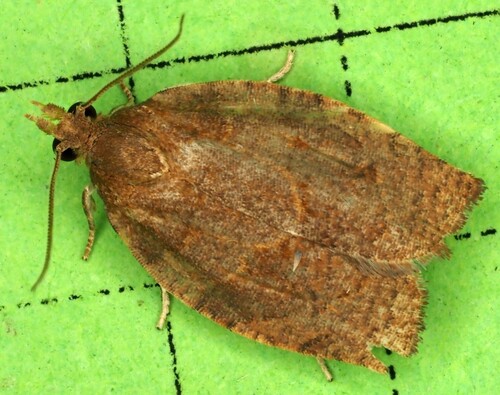
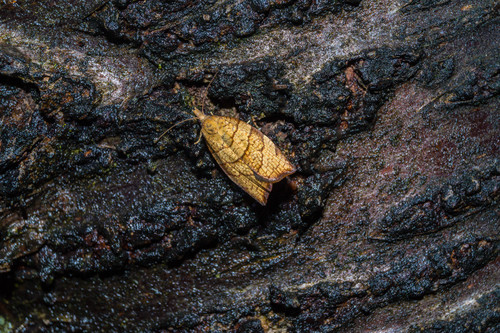
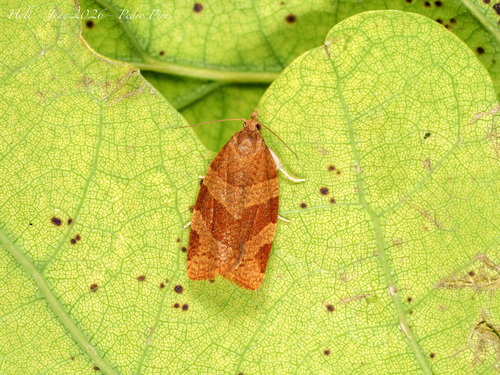
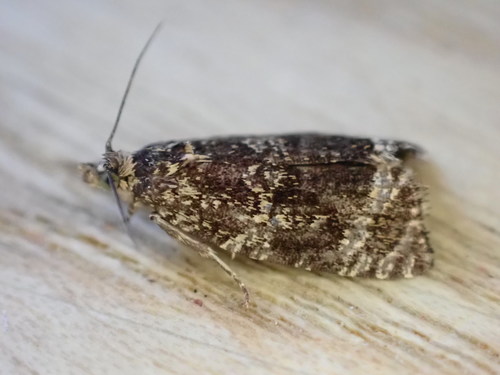
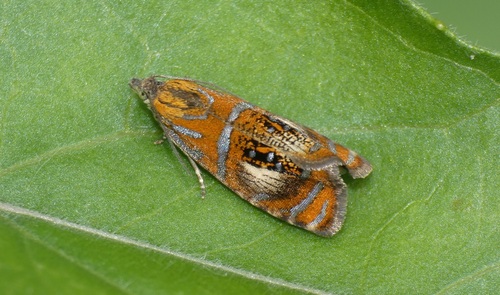
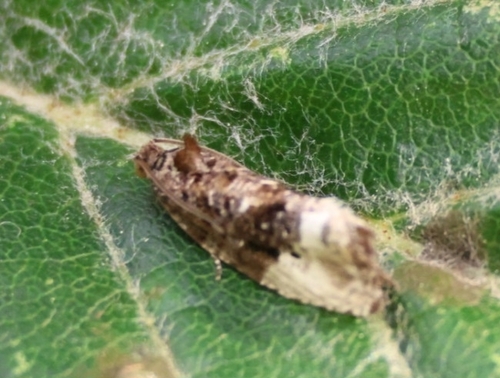
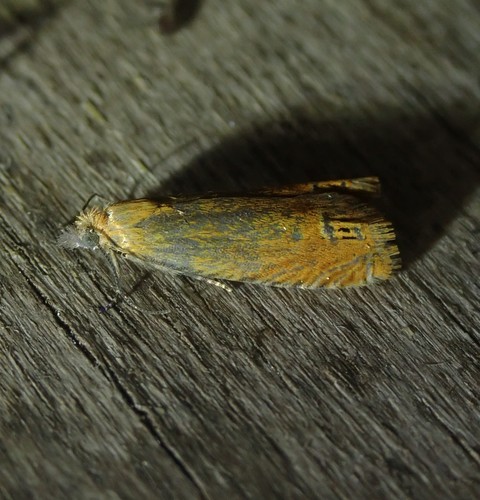
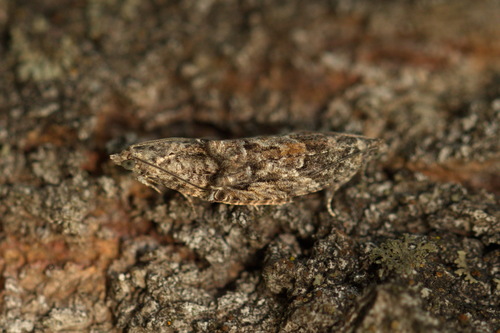
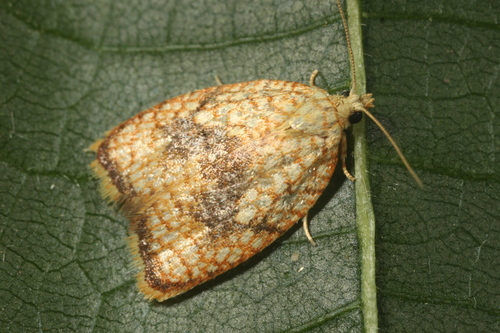
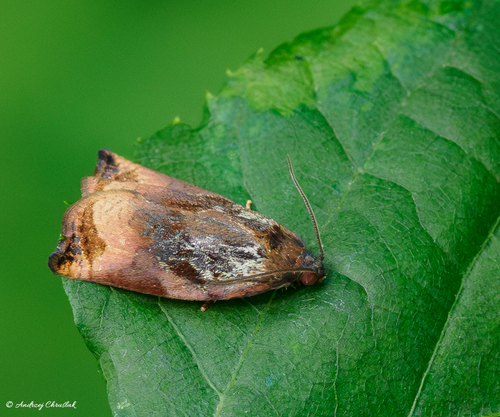
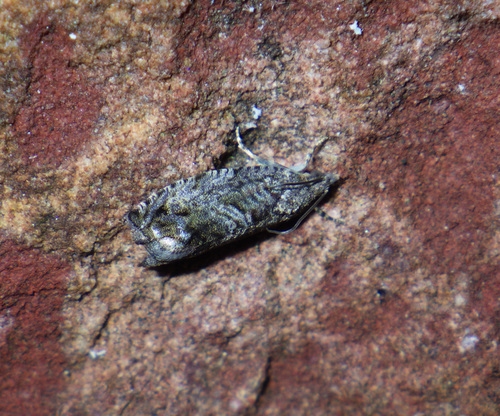
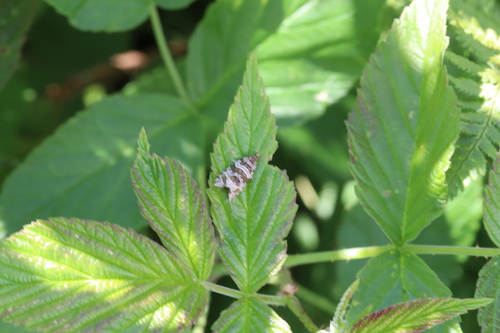
The barred fruit-tree tortrix live in woodland areas, gardens and orchards. The wingspan of Pandemis cerasana can reach 16–25 mm. Forewings ground colour ranges from pale ocher yellow to greyish brown with a large dark chestnut brown V marking and a dark brown lateral spot. The outer margin of forewings is sinuous, slightly oblique.

The hind wings are almost uniform greyish brown. Antennae of the males have a notch near the base. Larvae can reach a length of about 20 millimetres (0.79 in). They are light green, thin and flattened. Pupae are light brown to brownish black and reach a length of 9–15 millimetres (0.35–0.59 in). These tortrix moths usually rest holding their bell-shaped wings in a flattened posture.

In western Europe these moths fly from June to August,... Wikipedia →

Global Distribution

Parks Where Found

# Park Country Daily sighting probability
1 Bavarian Forest National Park 🇩🇪 Germany
~10%

More parks will be added in future updates.

Cities Where Found

# City Country Daily sighting probability
1 Liverpool 🇬🇧 United Kingdom
~10%
2 Birmingham 🇬🇧 United Kingdom
<5%
3 Nizhny Novgorod 🇷🇺 Russia
<5%
4 London 🇬🇧 United Kingdom
<5%
5 Moscow 🇷🇺 Russia
<5%

Before you go

What are the chances of seeing a Barred Fruit-Tree Tortrix in Bavarian Forest National Park?

With luck

About 10% of wildlife watchers report a Barred Fruit-Tree Tortrix sighting in Bavarian Forest National Park on a given day, based on 22 verified sightings from GBIF citizen-science data from 2019 to 2026. It is the 248th most-seen of the 1115 insects we can rate there. Over three days the chance rises to about 20%, and over a week to about 50%, if each day is a fresh chance.

When is the best time to see a Barred Fruit-Tree Tortrix in Bavarian Forest National Park?

June

In that month about 20% of wildlife watchers report a Barred Fruit-Tree Tortrix in Bavarian Forest National Park on a given day, against under 5% in August to April, the lowest months.

What time of day is best to see a Barred Fruit-Tree Tortrix?

Between 9 pm and midnight

Across all the parks we cover, that three-hour window holds the most Barred Fruit-Tree Tortrix sightings with a recorded time, and about 6 in 10 of them come between 6 pm and 6 am: it is seen both by day and at night.

Where else can you see a Barred Fruit-Tree Tortrix?

Only Bavarian Forest National Park, in our data

Bavarian Forest National Park is the only park on Wallace's Line with enough records to rate Barred Fruit-Tree Tortrix sightings: about 10% of wildlife watchers there report one on a given day.

Which relatives of the Barred Fruit-Tree Tortrix live in Bavarian Forest National Park?

Same genus: Pandemis

The closest relatives of the Barred Fruit-Tree Tortrix that you can see in Bavarian Forest National Park (genus Pandemis) are Dark Fruit-Tree Tortrix (about 10%), Chequered Fruit-Tree Tortrix (about 10%) and White-Faced Tortrix (about 10%), with each one's daily chance of a sighting.

Where does the Barred Fruit-Tree Tortrix sighting chance come from?

GBIF citizen-science records

It is estimated from how often the Barred Fruit-Tree Tortrix is recorded against all the insects logged in Bavarian Forest National Park (22 verified sightings from 2019 to 2026), calibrated against known sighting rates. Figures are rounded to the nearest 10% because citizen-science data supports honest approximations, not decimals, and months with records from fewer than five people show "—". How it works.

← Back to Bavarian Forest National Park