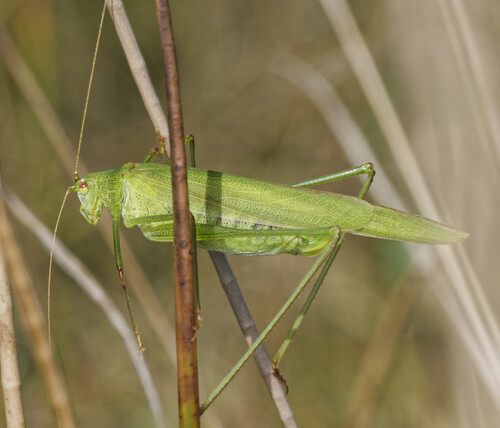
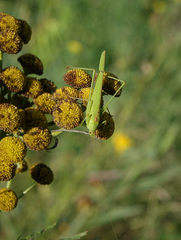
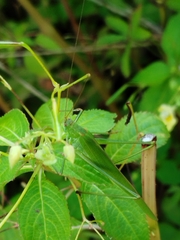
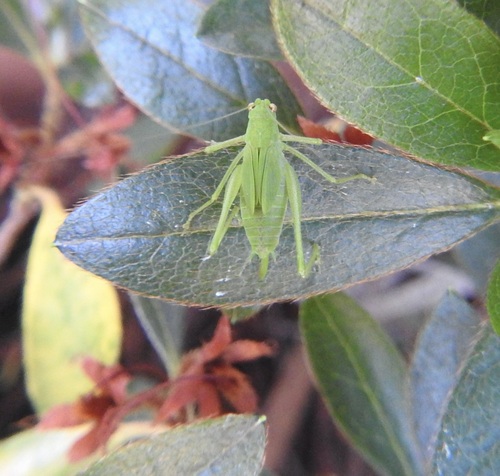
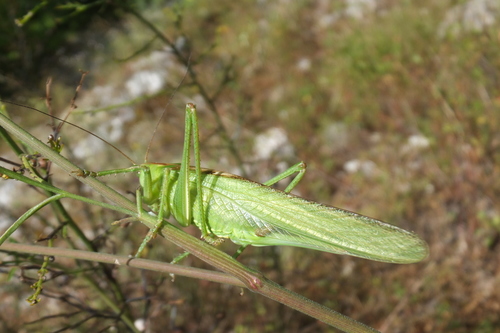
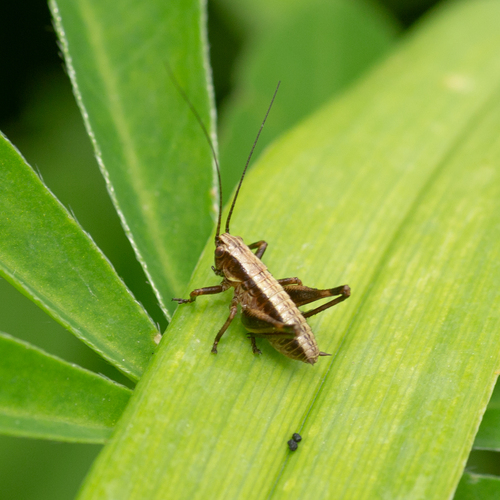
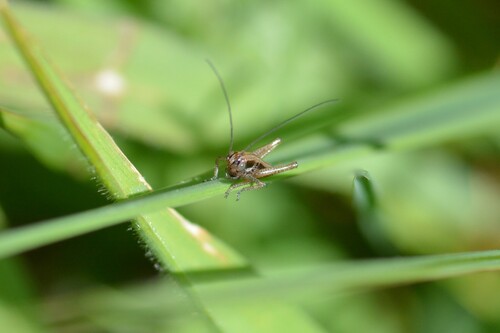
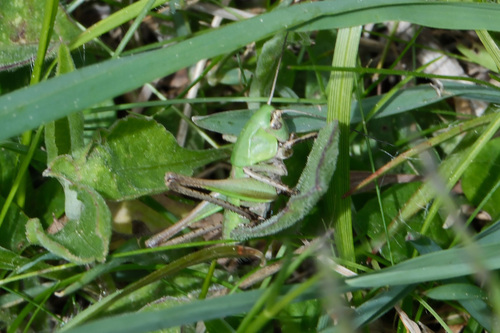
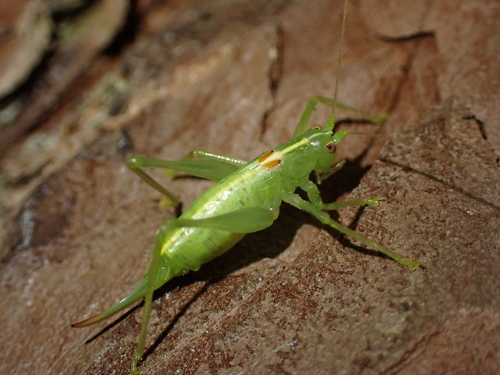
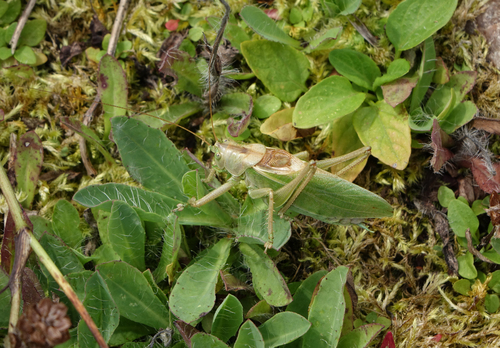
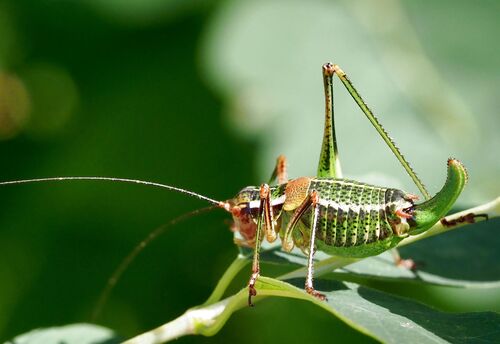
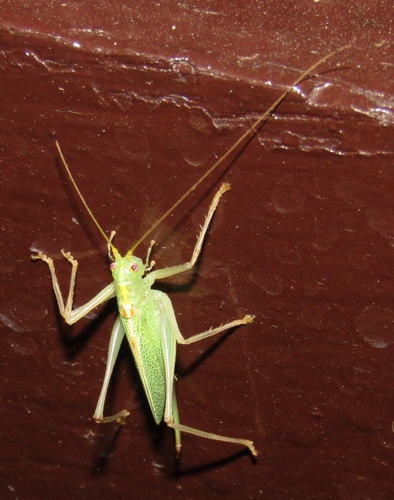
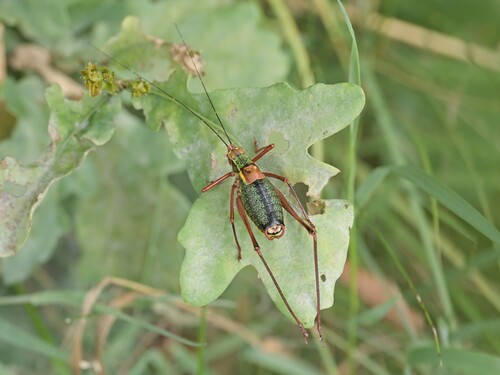
Sickle-Bearing Bush-Cricket

Sickle-Bearing Bush-Cricket

Phaneroptera falcata

Daily sighting probability ~10% · With luck
at Bavarian Forest National Park

In 3 days ~20% in a week ~40%

16 Verified sightings at Bavarian Forest National Park From 2019 to 2026
43 In all 2 parks
August Best month
☀️ Diurnal When it's spotted

About the Sickle-Bearing Bush-Cricket

Phaneroptera falcata, the sickle-bearing bush-cricket, is a species of orthopteran belonging to the subfamily Phaneropterinae. It is mostly herbivorous and commonly measures 24 to 36 mm long. It lives mainly in warm scrub and grasslands areas, also on dry shrubbery and in sand pits and gardens.

Phaneroptera falcata occurs in Europe and has historically been restricted to southern and central parts of the continent. They are absent in the Alpine foothills and in many parts of the Swabian Alps. Phaneroptera falcata has been extending the northern limits of its range in mainland Europe in recent decades; it is now regular in parts of southernmost Scandinavia, despite only spreading to the region quite recently (first record in Denmark in 2010 and in Sweden in 2014). Vagrant adults are occasionally found in Britain, and a small, but apparently established, colony was discovered near Dungeness in Kent in 2015.

Sound recordings of Phaneroptera falcata on BioAcoustica Wikipedia →

Global Distribution

Parks Where Found

# Park Country Daily sighting probability
1 Bavarian Forest National Park 🇩🇪 Germany
~10%
2 Pyrénées National Park 🇫🇷 France
~10%

Cities Where Found

# City Country Daily sighting probability
1 Daegu 🇰🇷 South Korea
~20%
2 Nagoya 🇯🇵 Japan
~10%
3 Seoul 🇰🇷 South Korea
~10%
4 Osaka 🇯🇵 Japan
~10%
5 Warsaw 🇵🇱 Poland
~10%
6 Helsinki 🇫🇮 Finland
~10%
7 Berlin 🇩🇪 Germany
~10%
8 Tokyo 🇯🇵 Japan
~10%
9 Novosibirsk 🇷🇺 Russia
<5%
10 Munich 🇩🇪 Germany
<5%

Before you go

What are the chances of seeing a Sickle-Bearing Bush-Cricket in Bavarian Forest National Park?

With luck

About 10% of wildlife watchers report a Sickle-Bearing Bush-Cricket sighting in Bavarian Forest National Park on a given day, based on 16 verified sightings from GBIF citizen-science data from 2019 to 2026. It is the 347th most-seen of the 1115 insects we can rate there. Over three days the chance rises to about 20%, and over a week to about 40%, if each day is a fresh chance.

When is the best time to see a Sickle-Bearing Bush-Cricket in Bavarian Forest National Park?

May and July–October

In those months about 10% of wildlife watchers report a Sickle-Bearing Bush-Cricket in Bavarian Forest National Park on a given day, against under 5% in June and November–April, the lowest months.

What time of day is best to see a Sickle-Bearing Bush-Cricket?

Between 11 am and 2 pm

Across all the parks we cover, that three-hour window holds the most Sickle-Bearing Bush-Cricket sightings with a recorded time, and about 8 in 10 of them come between 6 am and 6 pm: it is a daytime animal.

Is Bavarian Forest National Park the best place to see a Sickle-Bearing Bush-Cricket?

Yes

Of the 2 parks where we can rate Sickle-Bearing Bush-Cricket sightings, Bavarian Forest National Park has the highest daily chance: about 10%. Next come Pyrénées National Park (France, about 10%).

Where does the Sickle-Bearing Bush-Cricket sighting chance come from?

GBIF citizen-science records

It is estimated from how often the Sickle-Bearing Bush-Cricket is recorded against all the insects logged in Bavarian Forest National Park (16 verified sightings from 2019 to 2026), calibrated against known sighting rates. Figures are rounded to the nearest 10% because citizen-science data supports honest approximations, not decimals, and months with records from fewer than five people show "—". How it works.

← Back to Bavarian Forest National Park