Madagascar Cisticola

Madagascar Cisticola

Cisticola cherina

Silhouette: Sheatherius · PhyloPic

LCLeast ConcernNTVUENCR
Daily sighting probability ~20% · Possible
at Berenty Reserve

In 3 days ~40% in a week ~70%

28 Verified sightings at Berenty Reserve From 2019 to 2026
124 In all 4 parks
October Best month
☀️ Diurnal When it's spotted

About the Madagascar Cisticola

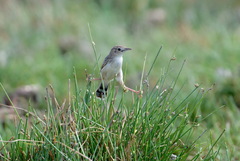
The Madagascar cisticola (Cisticola cherina) is a species of bird in the cisticola family (Cisticolidae). It inhabits areas to the west of the ˞Indian Ocean. It forms a superspecies with the closely related zitting cisticola and the Socotra cisticola.

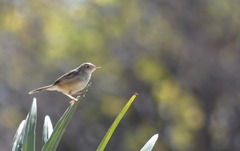
Madagascar cisticolas are small cisticolas, 11 cm long and weighing 8-11 g. Overall they have brownish streaked backs, wings and heads and pale undersides. There are different colour variants, one more brownish, the other paler grey. Its call is described as a loud explosive ticking.

It is found across the whole of Madagascar and the islands of Astove and Cosmoledo in the Seychelles. The Seychelles birds are suspected to be recent arrivals, although there are some early records of the species there. It occupies a range of open habitats, including savannah, grasslands, marshes, pastures, scrublands and forest edges and clearings. It is also found in a variety of human modified habitats, including paddy fields and croplands. The species is sedentary.

Madagascar cisticolas are insectivores. They eat crickets and other insects. They tend to forage near cacti. Wikipedia →

Sounds

Call1:09

Madagascar · 2025

© Frank Lambert · XC1065597 · CC BY-NC-ND 4.0

Song0:29

Madagascar · 2020

© Ken Behrens · XC623673 · CC BY-NC-SA 4.0

Alarm call1:27

Madagascar · 2015

© Patrik Åberg · XC294593 · CC BY-NC-SA 4.0

Global Distribution

Parks Where Found

# Park Country Daily sighting probability
1 Berenty Reserve 🇲🇬 Madagascar
~20%
2 Mantadia National Park 🇲🇬 Madagascar
~10%
3 Ranomafana National Park 🇲🇬 Madagascar
<5%
4 Ankarafantsika National Park 🇲🇬 Madagascar
<5%

Cities Where Found

# City Country Daily sighting probability
1 Antananarivo 🇲🇬 Madagascar
~10%

Before you go

What are the chances of seeing a Madagascar Cisticola in Berenty Reserve?

Possible

About 20% of wildlife watchers report a Madagascar Cisticola sighting in Berenty Reserve on a given day, based on 28 verified sightings from GBIF citizen-science data from 2019 to 2026. It is the 38th most-seen of the 63 birds we can rate there. Over three days the chance rises to about 40%, and over a week to about 70%, if each day is a fresh chance.

What time of day is best to see a Madagascar Cisticola?

Between 8 and 11 am

Across all the parks we cover, that three-hour window holds the most Madagascar Cisticola sightings with a recorded time, and about 8 in 10 of them come between 6 am and 6 pm: it is a daytime animal.

Is Berenty Reserve the best place to see a Madagascar Cisticola?

Yes

Of the 4 parks where we can rate Madagascar Cisticola sightings, Berenty Reserve has the highest daily chance: about 20%. Next come Mantadia National Park (Madagascar, about 10%) and Ranomafana National Park (Madagascar, under 5%).

Which relatives of the Madagascar Cisticola live in Berenty Reserve?

Same family: Cisticolidae

The closest relatives of the Madagascar Cisticola that you can see in Berenty Reserve (family Cisticolidae, Cisticolas and Allies) are Common Jery (about 70%) and Stripe-throated Jery (about 10%), with each one's daily chance of a sighting.

Where does the Madagascar Cisticola sighting chance come from?

GBIF citizen-science records

It is estimated from how often the Madagascar Cisticola is recorded against all the birds logged in Berenty Reserve (28 verified sightings from 2019 to 2026), calibrated against known sighting rates. Figures are rounded to the nearest 10% because citizen-science data supports honest approximations, not decimals, and months with records from fewer than five people show "—". How it works.

← Back to Berenty Reserve