



Completed


Wisent
Bison bonasus
Silhouette: Steven Traver · PhyloPic
- KingdomAnimalia (Animals)
- PhylumChordata (Chordates)
- ClassMammalia (Mammals)
- OrderArtiodactyla (Even-toed Ungulates and Cetaceans)
- FamilyBovidae (Bovids)
- GenusBison
- SpeciesBison bonasus (Wisent)
In 3 days >90%
270 Verified sightings at Białowieża National Park From 2019 to 2026
270 In 1 park
February Best month
☀️ Diurnal When it's spotted
About the Wisent
The European bison (pl.: bison) (Bison bonasus) or the European wood bison, also known as the wisent ( or ), the zubr, or sometimes colloquially as the European buffalo, is a European species of bison. It is one of two extant species of bison, alongside the American bison. The European bison is the heaviest wild land animal in Europe, and individuals in the past may have been even larger than their modern-day descendants. During late antiquity and the Middle Ages, bison became extinct in most of Europe and Asia, surviving into the 20th century only in northern-central Europe and the northern Caucasus Mountains. During the early years of the 20th century, the remaining bison were hunted to extinction in the wild, with domestic bison later reintroduced into the wild.
By the late 2010s, the species numbered several thousand and had been returned to the wild by captive breeding programmes. It is no longer in immediate danger of extinction, but remains absent from most of its historical range. It is not to be confused with the aurochs (Bos primigenius), the extinct ancestor of domestic cattle, with which it once co-existed. Besides humans, bison have few predators. In the 19th century, there were scattered reports of wolves, lions, tigers, and bears hunting bison. In the past, especially during the Middle Ages, humans commonly killed bison for their hide, meat and other uses such as drinking horns.
The Białowieża or lowland European bison was kept alive in captivity, and has since been reintroduced into several countries in Europe. In 1996, the International Union for Conservation of Nature classified the reintroduced European bison as an endangered species, no longer extinct in the wild. Its status has improved since then, changing to vulnerable and later to near-threatened.
European bison were first scientifically described by Carl Linnaeus in 1758. Some later descriptions treat the European bison as conspecific with the American bison. Three subspecies of the European bison existed in the recent past, but only one, the nominate subspecies (B. b. bonasus), survives today. Wikipedia →
Recent sightings of Wisent in Białowieża National Park
LIVEiNaturalistGlobal Distribution
Parks Where Found
| # | Park | Country | Daily sighting probability |
|---|---|---|---|
| 1 | Białowieża National Park | 🇵🇱 Poland |
More parks will be added in future updates.
Zoos & Centres Where Found
Closest Relatives at Białowieża National Park




Before you go
What are the chances of seeing a Wisent in Białowieża National Park?
Very likely
About 90% of wildlife watchers report a Wisent sighting in Białowieża National Park on a given day, based on 270 verified sightings from GBIF citizen-science data from 2019 to 2026. It is the most-seen of the 18 mammals we can rate there. Over three days the chance rises to over 90%, if each day is a fresh chance.
When is the best time to see a Wisent in Białowieża National Park?
December to February
In those months over 90% of wildlife watchers report a Wisent in Białowieża National Park on a given day, against about 80% in May–June and August, the lowest months.
What time of day is best to see a Wisent?
Between 8 and 11 am
Across all the parks we cover, that three-hour window holds the most Wisent sightings with a recorded time, and about 8 in 10 of them come between 6 am and 6 pm: it is a daytime animal.
Where else can you see a Wisent?
Only Białowieża National Park, in our data
Białowieża National Park is the only park on Wallace's Line with enough records to rate Wisent sightings: about 90% of wildlife watchers there report one on a given day.
Which relatives of the Wisent live in Białowieża National Park?
Same order: Artiodactyla
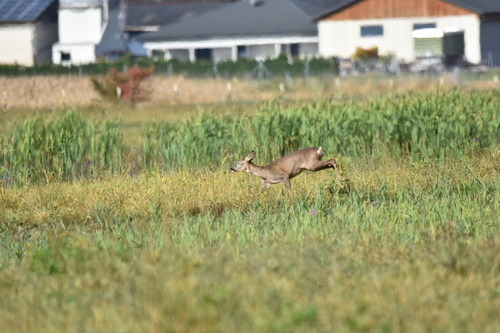
The closest relatives of the Wisent that you can see in Białowieża National Park (order Artiodactyla, Even-toed Ungulates and Cetaceans) are Red Deer (about 60%), Western Roe Deer (about 60%) and Eurasian Moose (about 40%), with each one's daily chance of a sighting.
Where does the Wisent sighting chance come from?
GBIF citizen-science records
It is estimated from how often the Wisent is recorded against all the mammals logged in Białowieża National Park (270 verified sightings from 2019 to 2026), calibrated against known sighting rates. Figures are rounded to the nearest 10% because citizen-science data supports honest approximations, not decimals, and months with records from fewer than five people show "—". How it works.
