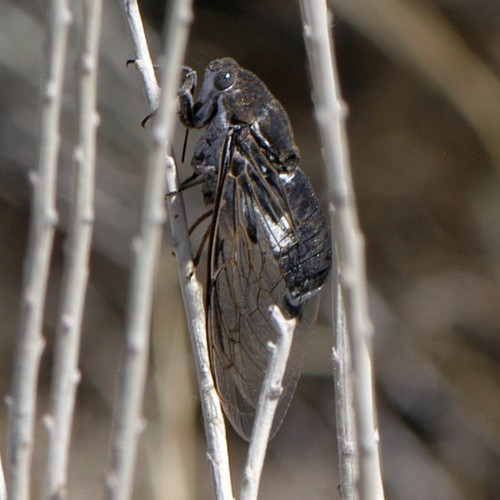
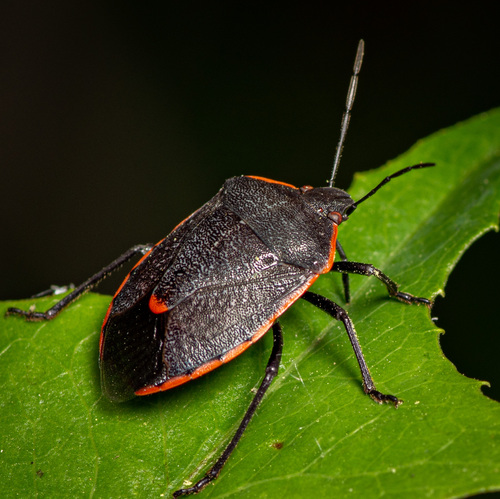
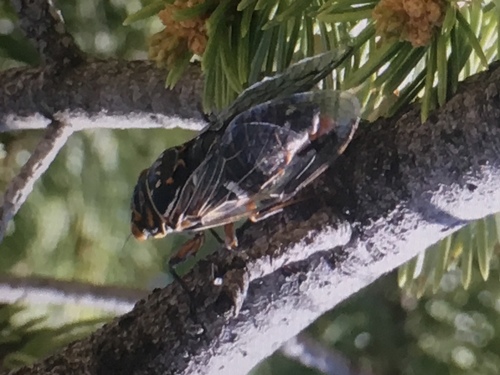
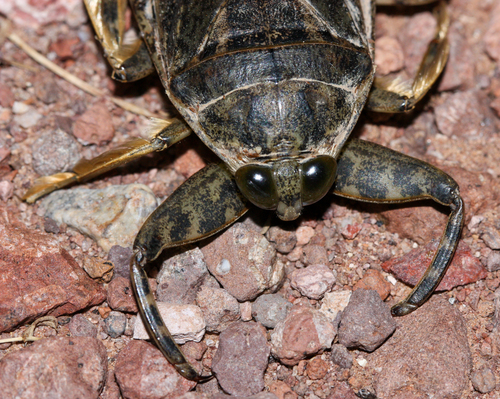
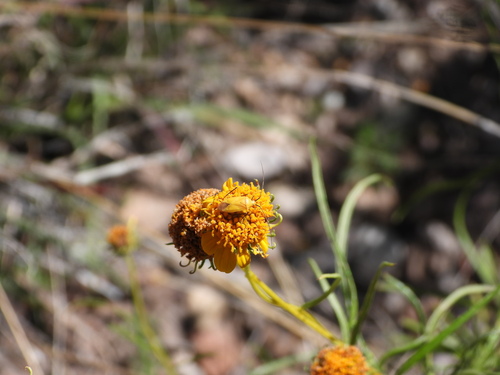
Triatoma gerstaeckeri
Daily sighting probability ~10% · With luck
at Big Bend National Park

In 3 days ~20% in a week ~30%

7 Verified sightings at Big Bend National Park From 2019 to 2026
17 In all 2 parks
July Best month
☀️🌙 Day & Night When it's spotted

About the Triatoma gerstaeckeri

Triatoma gerstaeckeri is an assassin bug in the genus Triatoma (kissing bugs). It is an important vector of Trypanosoma cruzi, the causative agent of Chagas disease. The range of T. gerstaeckeri is from the south-western United States (New Mexico, Texas) to north-eastern Mexico. T. gerstaeckeri goes through three stages during its paurometabolous life cycle: egg, nymphal instars and adult.

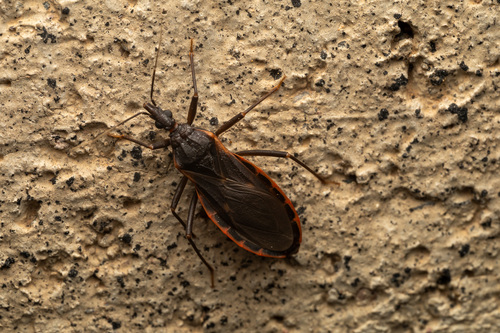
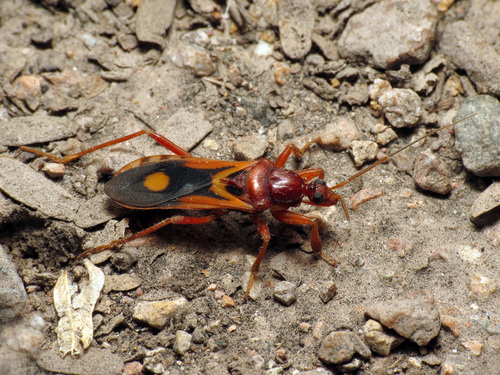
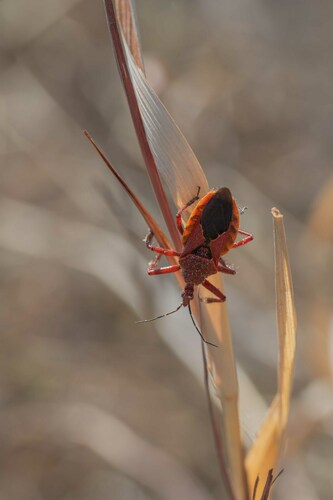
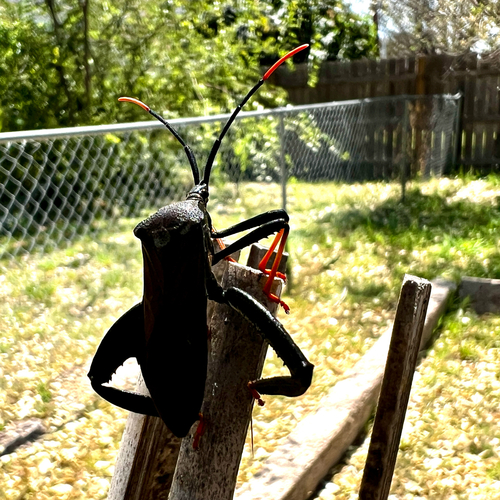
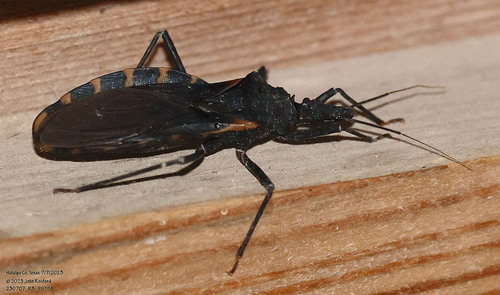
T. gerstaeckeri is between 20 and 30 mm long when fully developed. It is all black except for their yellow horizontal lines outside of the pronotum. The tip of its mouthparts have hairs, but the rest of the mouthparts do not. T. gerstaeckeri have long, narrow legs and a flat head. The first segment of its antennae is shorter than the clypeus on the insect's head. T. gerstaeckeri have tubercles on its sides, and it has a round posterior that is very wrinkly. It has black forewings that cover the abdomen; the base of these forewings are yellowish orange.

T. gerstaeckeri is mostly found in the dry climates of northern Mexico, southern/central Texas and New Mexico where there is a lot of scrubby vegetation. Other Triatoma species are found throughout the... Wikipedia →
Global Distribution

Parks Where Found

# Park Country Daily sighting probability
1 Big Bend National Park 🇺🇸 United States
~10%
2 Cumbres de Monterrey National Park 🇲🇽 Mexico
<5%

Cities Where Found

# City Country Daily sighting probability
1 Monterrey 🇲🇽 México
<5%
2 Austin 🇺🇸 United States
<5%
3 San Antonio 🇺🇸 United States
<5%

Before you go

What are the chances of seeing a Triatoma gerstaeckeri in Big Bend National Park?

With luck

About 10% of wildlife watchers report a Triatoma gerstaeckeri sighting in Big Bend National Park on a given day, based on 7 verified sightings from GBIF citizen-science data from 2019 to 2026. It is the 221st most-seen of the 329 insects we can rate there. Over three days the chance rises to about 20%, and over a week to about 30%, if each day is a fresh chance.

When is the best time to see a Triatoma gerstaeckeri in Big Bend National Park?

July

In that month about 20% of wildlife watchers report a Triatoma gerstaeckeri in Big Bend National Park on a given day, against under 5% in August to March, the lowest months.

What time of day is best to see a Triatoma gerstaeckeri?

Between 11 pm and 2 am

Across all the parks we cover, that three-hour window holds the most Triatoma gerstaeckeri sightings with a recorded time, and about 6 in 10 of them come between 6 pm and 6 am: it is seen both by day and at night.

Is Big Bend National Park the best place to see a Triatoma gerstaeckeri?

Yes

Of the 2 parks where we can rate Triatoma gerstaeckeri sightings, Big Bend National Park has the highest daily chance: about 10%. Next come Cumbres de Monterrey National Park (Mexico, under 5%).

Where does the Triatoma gerstaeckeri sighting chance come from?

GBIF citizen-science records

It is estimated from how often the Triatoma gerstaeckeri is recorded against all the insects logged in Big Bend National Park (7 verified sightings from 2019 to 2026), calibrated against known sighting rates. Figures are rounded to the nearest 10% because citizen-science data supports honest approximations, not decimals, and months with records from fewer than five people show "—". How it works.

← Back to Big Bend National Park