Eastern Glass Lizard

Eastern Glass Lizard

Ophisaurus ventralis

Silhouette: SeismicShrimp · PhyloPic

LCLeast ConcernNTVUENCR Endemic
Daily sighting probability ~20% · Possible
at Big Cypress National Preserve

In 3 days ~50% in a week ~80%

23 Verified sightings at Big Cypress National Preserve From 2019 to 2026
37 In all 2 parks
June Best month
☀️🌙 Day & Night When it's spotted

About the Eastern Glass Lizard

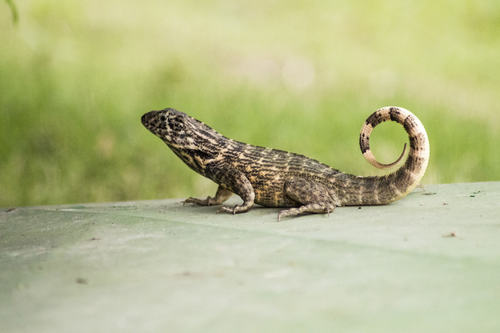
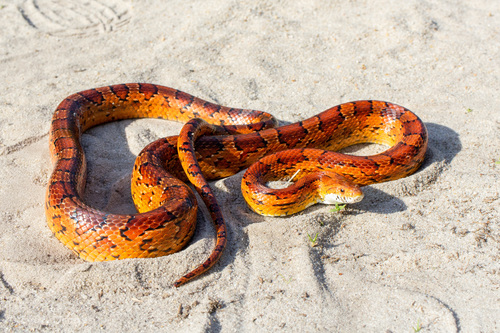
The eastern glass lizard (Ophisaurus ventralis) is a species of legless lizard in the family Anguidae and the longest and heaviest species of glass lizards in the genus Ophisaurus, endemic to the Southeastern United States. The streamlined, legless species is often confused with snakes. Glass lizards differ from snakes as they possess a moveable eyelid and an external ear opening as well as a lateral groove that separates the different types of scales on the animal, while all three of these features are absent in snakes. Snakes also have flexible jaws while lizards do not. Ventralis comes from the Latin "venter" meaning belly; this is in reference to the snake-like movement.

Adults of O. ventralis grow to 46–108 cm (18–43 in) in total length, although the head-body length is only 30.5 cm (12.0 in) at most. There are 99 or more scales along the lateral groove. In this species, no dark longitudinal stripes are present below the lateral groove or under the tail, and there is no distinct mid-dorsal stripe. The tail serves purposes such as balance and defense. The neck is marked with a series of mostly vertical, or highly irregular, white marks, with white markings on posterior... Wikipedia →

Global Distribution

Parks Where Found

# Park Country Daily sighting probability
1 Big Cypress National Preserve 🇺🇸 United States
~20%
2 Merritt Island National Wildlife Refuge 🇺🇸 United States
~10%

Cities Where Found

# City Country Daily sighting probability
1 Miami 🇺🇸 United States
~10%
2 Orlando 🇺🇸 United States
~10%

Zoos & Centres Where Found

# Zoo / Centre Country
1 ZooTampa 🇺🇸 United States In captivity
2 Riverbanks Zoo 🇺🇸 United States In captivity
3 North Carolina Aquarium on Roanoke Island 🇺🇸 United States In captivity

Before you go

What are the chances of seeing an Eastern Glass Lizard in Big Cypress National Preserve?

Possible

About 20% of wildlife watchers report an Eastern Glass Lizard sighting in Big Cypress National Preserve on a given day, based on 23 verified sightings from GBIF citizen-science data from 2019 to 2026. It is the 28th most-seen of the 37 reptiles we can rate there. Over three days the chance rises to about 50%, and over a week to about 80%, if each day is a fresh chance.

When is the best time to see an Eastern Glass Lizard in Big Cypress National Preserve?

June

In that month about 40% of wildlife watchers report an Eastern Glass Lizard in Big Cypress National Preserve on a given day, against under 5% in August and October–November, the lowest months. That is one of Big Cypress National Preserve's wettest months, with about 260 mm of rain against 40 mm in March.

What time of day is best to see an Eastern Glass Lizard?

Between 7 and 10 am

Across all the parks we cover, that three-hour window holds the most Eastern Glass Lizard sightings with a recorded time, and about 7 in 10 of them come between 6 am and 6 pm: it is seen both by day and at night.

Is Big Cypress National Preserve the best place to see an Eastern Glass Lizard?

Yes

Of the 2 parks where we can rate Eastern Glass Lizard sightings, Big Cypress National Preserve has the highest daily chance: about 20%. Next come Merritt Island National Wildlife Refuge (United States, about 10%).

Where does the Eastern Glass Lizard sighting chance come from?

GBIF citizen-science records

It is estimated from how often the Eastern Glass Lizard is recorded against all the reptiles logged in Big Cypress National Preserve (23 verified sightings from 2019 to 2026), calibrated against known sighting rates. Figures are rounded to the nearest 10% because citizen-science data supports honest approximations, not decimals, and months with records from fewer than five people show "—". How it works.

← Back to Big Cypress National Preserve