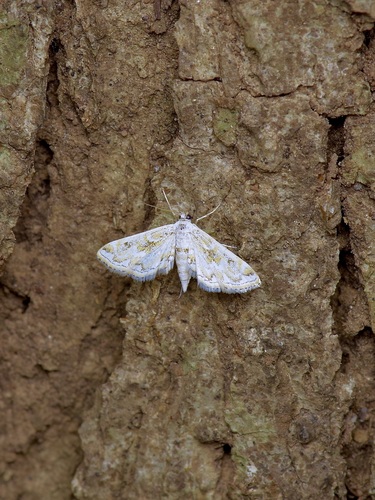
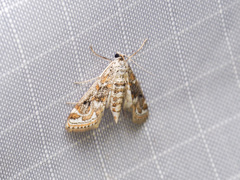
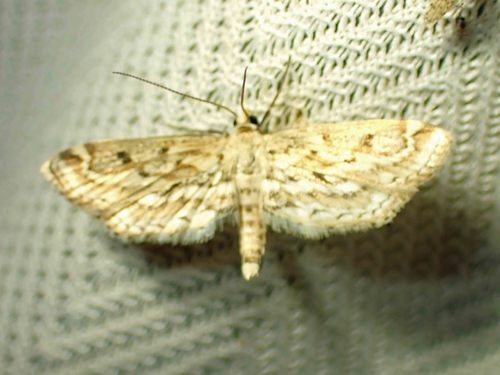
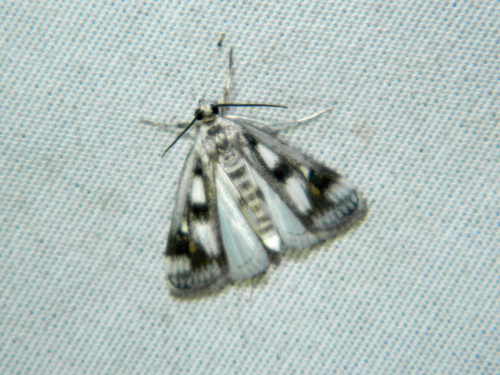
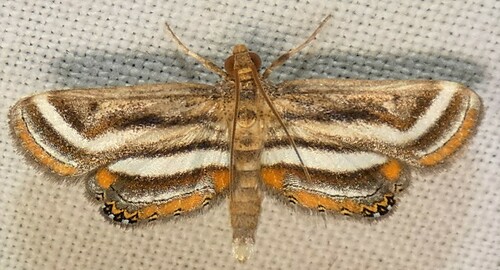
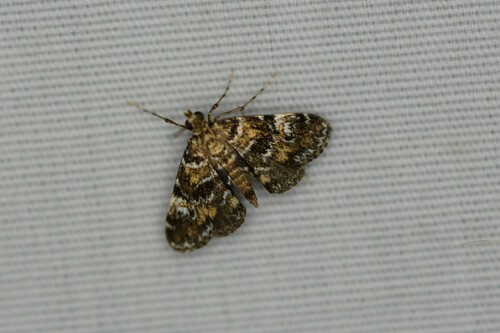
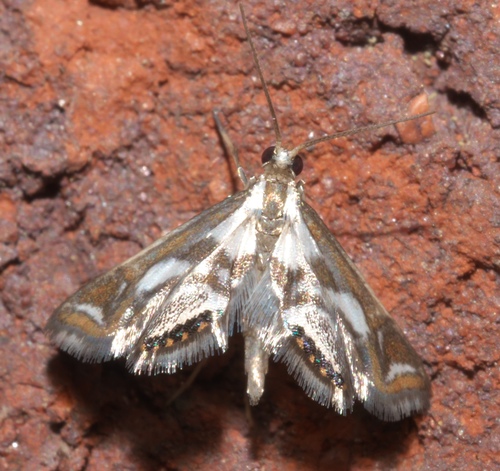
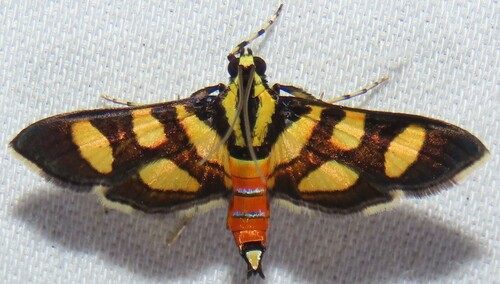
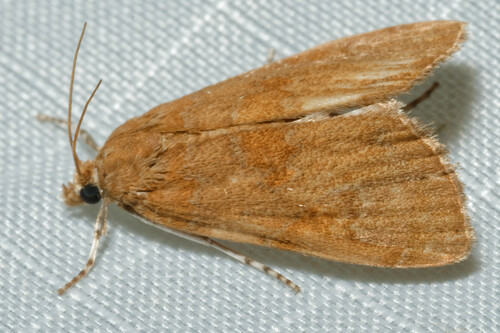
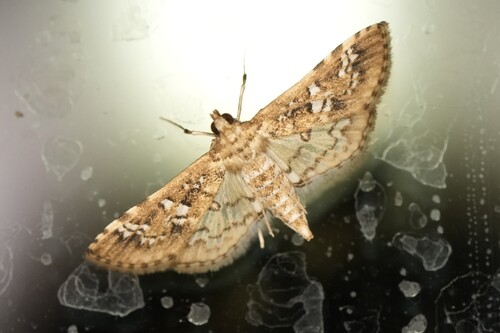
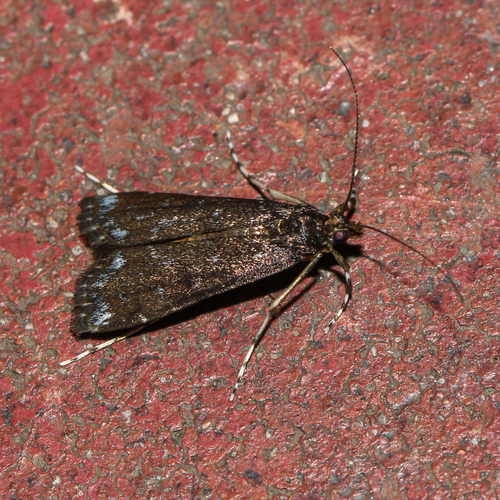
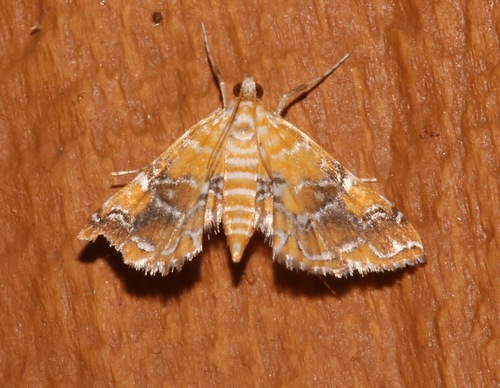
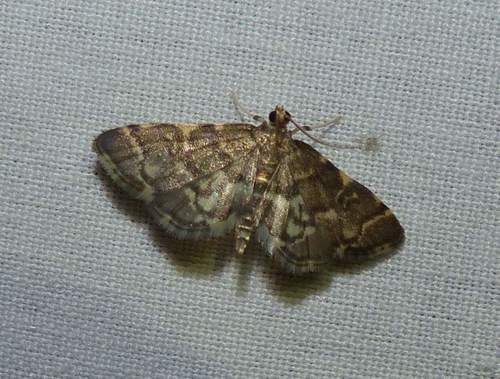
Hydrilla Leafcutter Moth

Hydrilla Leafcutter Moth

Parapoynx diminutalis

Daily sighting probability ~10% · With luck
at Big Cypress National Preserve

In 3 days ~20% in a week ~40%

6 Verified sightings at Big Cypress National Preserve From 2019 to 2026
78 In all 6 parks
June Best month
🌙 Nocturnal When it's spotted

About the Hydrilla Leafcutter Moth

Parapoynx diminutalis is a species of moth of the family Crambidae described by Pieter Cornelius Tobias Snellen in 1880. It is endemic to south-east Asia, including the Northern Territory, Queensland and New South Wales in Australia, but has since been found in the United Kingdom and the United States. It is also found in Africa, where it has been recorded from Egypt, Sudan, Ethiopia, Kenya, Uganda, Tanzania, Zambia, Zimbabwe, Malawi, South Africa, Botswana, Angola, the Republic of the Congo, Nigeria and Madagascar.

The wingspan is 11–14 mm for males and 16–23 mm for females. The larvae feed on Hydrilla and Nymphaea species. Wikipedia →

Global Distribution

Parks Where Found

# Park Country Daily sighting probability
1 Kanha National Park 🇮🇳 India
~20%
2 Daintree National Park 🇦🇺 Australia
~10%
3 Soberanía National Park 🇵🇦 Panama
~10%
4 Big Cypress National Preserve 🇺🇸 United States
~10%
5 Kaeng Krachan National Park 🇹🇭 Thailand
~10%
6 Kruger National Park 🇿🇦 South Africa
<5%

Cities Where Found

# City Country Daily sighting probability
1 Kochi 🇮🇳 India
~10%
2 Kolkata 🇮🇳 India
~10%
3 Chennai 🇮🇳 India
~10%
4 Austin 🇺🇸 United States
~10%
5 Hyderabad 🇮🇳 India
~10%
6 New Delhi 🇮🇳 India
<5%
7 Hong Kong 🇨🇳 China
<5%
8 Bengaluru 🇮🇳 India
<5%
9 Singapore 🇸🇬 Singapore
<5%
10 Mumbai 🇮🇳 India
<5%

Before you go

What are the chances of seeing a Hydrilla Leafcutter Moth in Big Cypress National Preserve?

With luck

About 10% of wildlife watchers report a Hydrilla Leafcutter Moth sighting in Big Cypress National Preserve on a given day, based on 6 verified sightings from GBIF citizen-science data from 2019 to 2026. It is the 220th most-seen of the 262 insects we can rate there. Over three days the chance rises to about 20%, and over a week to about 40%, if each day is a fresh chance.

When is the best time to see a Hydrilla Leafcutter Moth in Big Cypress National Preserve?

June

In that month about 20% of wildlife watchers report a Hydrilla Leafcutter Moth in Big Cypress National Preserve on a given day, against under 5% in August to March, the lowest months. That is one of Big Cypress National Preserve's wettest months, with about 260 mm of rain against 40 mm in March.

What time of day is best to see a Hydrilla Leafcutter Moth?

Between 8 and 11 pm

Across all the parks we cover, that three-hour window holds the most Hydrilla Leafcutter Moth sightings with a recorded time, and about 9 in 10 of them come between 6 pm and 6 am: it is mostly seen at night.

Is Big Cypress National Preserve the best place to see a Hydrilla Leafcutter Moth?

4th of 6

Of the 6 parks where we can rate Hydrilla Leafcutter Moth sightings, Big Cypress National Preserve ranks 4th at about 10%. The best odds are in Kanha National Park (India, about 20%), Daintree National Park (Australia, about 10%) and Soberanía National Park (Panama, about 10%).

Where does the Hydrilla Leafcutter Moth sighting chance come from?

GBIF citizen-science records

It is estimated from how often the Hydrilla Leafcutter Moth is recorded against all the insects logged in Big Cypress National Preserve (6 verified sightings from 2019 to 2026), calibrated against known sighting rates. Figures are rounded to the nearest 10% because citizen-science data supports honest approximations, not decimals, and months with records from fewer than five people show "—". How it works.

← Back to Big Cypress National Preserve